Company News

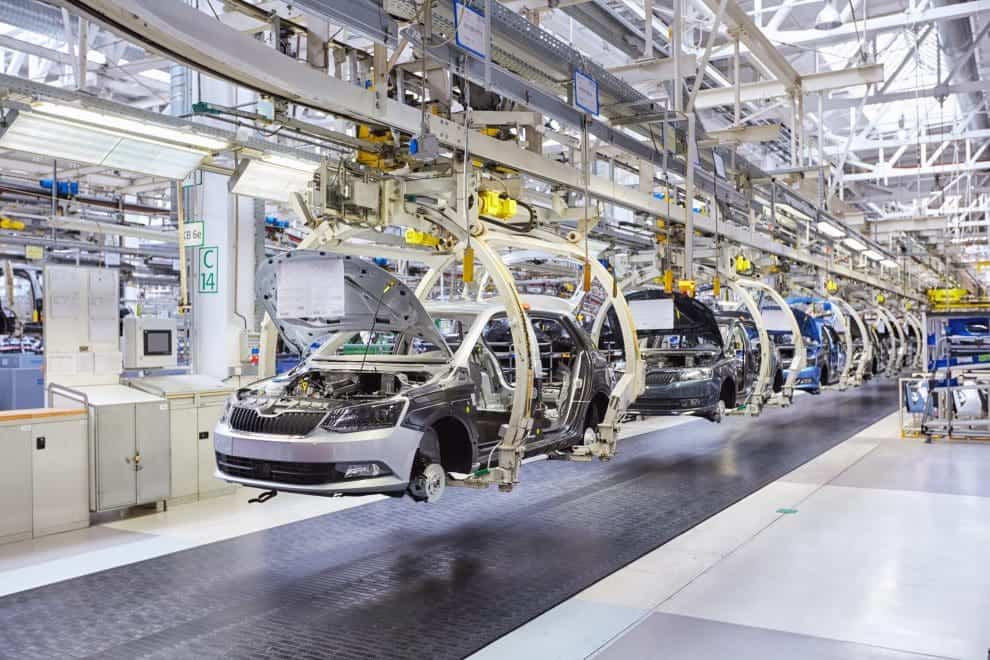
Jim Hackett, Chief Executive of Ford Motor Co, said on Thursday that the company would be aiming to double its annual operating profit this year. Ford, the No.2 automaker in the U.S. had mediocre gains last year. Hackett’s comments on the coming year’s profits were made in an email to the employees at Ford.

Ford has been restructuring its operations worldwide, including plenty of cuts in Europe. The company also recently announced its new alliance with Germany’s Volkswagen to introduce self-driving and electric vehicles. This move will help both the companies save billions of dollars.

Ford’s fourth-quarter results announced on Wednesday, comprised of $7 billion operating profit in 2018 along with a profit margin of 4.4 percent, which is comparatively lower than the 6.1 percent reported in 2017. Ford has announced that it is targeting 8 percent operating margin in the upcoming quarter.

According to the email Hackett sent to the employees, 2018 was considered a mediocre year. He thinks the $7 billion which comes to 4.4 percent operating margin to be only half of the appropriate margin. He also mentioned that the company would be aiming for $14 billion although he has not given a timetable as to when the $14 billion targets will be hit. A Ford spokesman clarified that Ford was demonstrating to the employees how the margin target translates to the overall profit.

With 20 months experience on the job, Hackett said that it is time to bury 2018 in a deep grave and mourn over what could have been and focus better on the coming year.

Ford did not share a specific financial forecast for 2019 with Wall Street. It only mentioned that there is a potential for improving earnings and revenue. This is in stark contrast to General Motors Co, which is Ford’s larger U.S. rival. General Motors forecasted higher 2019 earnings on Jan 11, surpassing analysts’ estimates.

Hackett also said that he was angry at himself while looking through the 2018 results of the company. He speaks in his email about the competition which is better and how he believes that Ford is better than its 2018 results.

According to Hackett’s email, Ford is considering moving its timeframe to introduce electric and self-driving cars in its portfolio. He is trying to find out why it missed the trends in China, where Ford is losing money.  With China being the world’s largest auto market, this issue needs to be tackled quickly if Ford plans on doubling its revenue in the coming year.

Company News

Aimed at funding balance sheet expansion and accelerating growth of Iwoca’s product offerings and market share. The SME lender will use its award-winning technology to break the barriers obstructing access to finance for over 20 million European small businesses. While many firms are addressing the SME lending market, very few have a credit-product as advanced as Iwoca. Their industry-leading analytics and financial technology give them a competitive edge others will find hard to replicate.

The investment is preceded by another 7 million pounds invested in three European Financial Technology which are Tide, Previse, and DueDil as well as a 2.5 million in Unmortgage. The fintech venture capital firm Augmentum confirmed that these investments would allow exponential growth in the financial technology market worldwide. Augmentum is a unique fintech-focused venture capital firm in the UK, having launched on the main market of the London Stock Exchange in 2018. It gives various businesses access to patent funding and support, unrestricted by conventional funding timelines. The conglomerate of finance industry professionals specializes in investing in initial stage fast growing financial technology start-ups. They have globally selected a pool of disruptive start-ups that are innovating the banking, insurance, asset management, and wider financial sectors.

Iwoca is dedicated to providing fast, flexible source of business finance for all UK and European continental businesses. Their expertise range from retailers, restaurants, hotels to service providers that use Iwoca’s platform to fund various financial problems such as bridging short term cash flow gaps to investing in stock opportunities. From new start-ups to established businesses, Iwoca helps businesses from all walk of life secure funds and keep their ever going concern running. However, you must have a UK-based business and operate as a sole-trader, partnership or limited company to be eligible for membership. Start-ups on this lending platform have a limit of 10,000 pounds. Iwoca sheds visibility into the firm’s online accounts and bank statements, VAT returns and company accounts. Once approved, loans are transacted quickly without the usual complex paperwork which is synonymous with traditional business loans. The financial technology firm has funded more than 25,000 small and medium enterprises across UK, Germany, and Poland. This investment from Augmentum will give much-needed momentum to Iwoca and other financial technology start-ups that are looking for funding across the European continent.

Company News

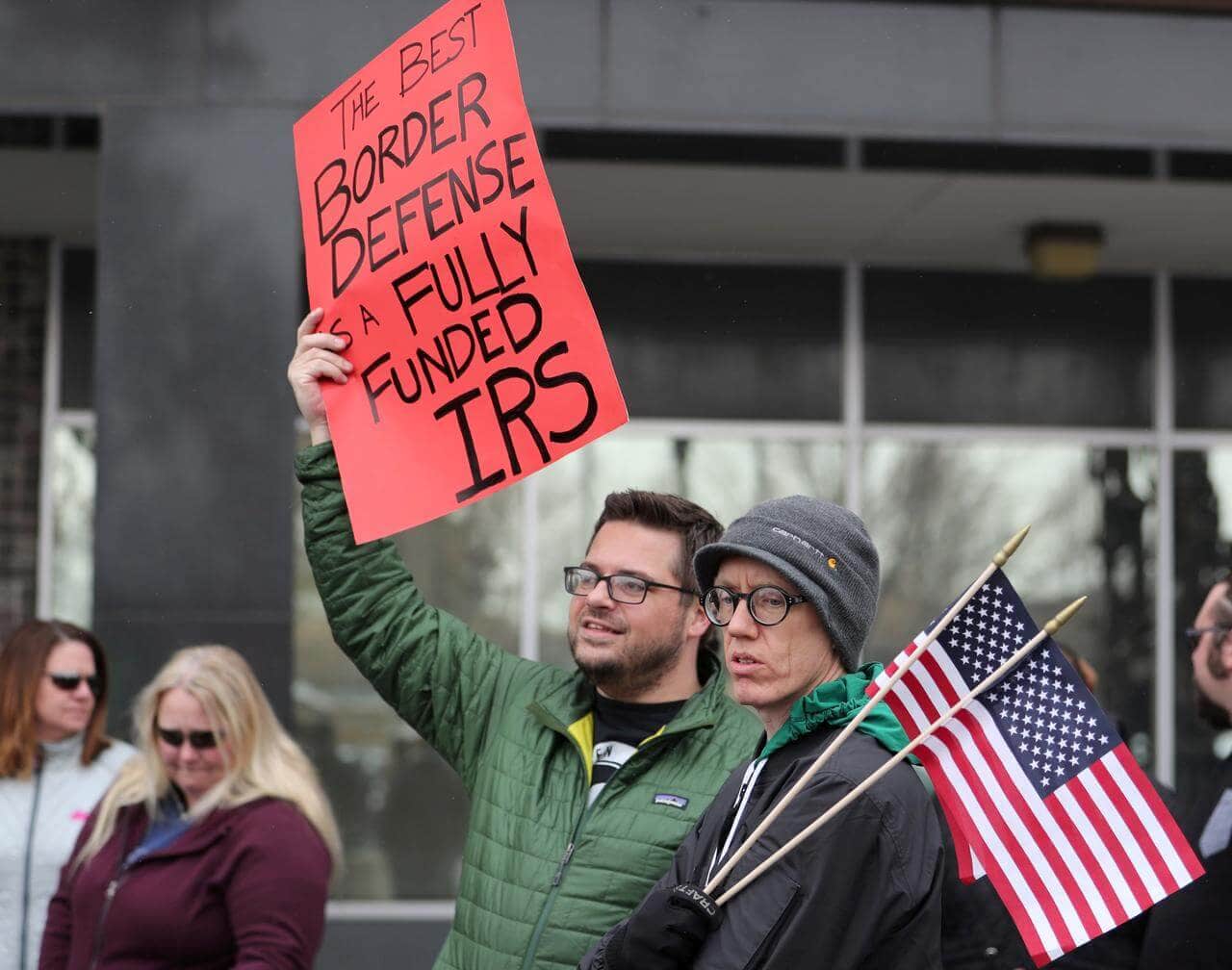
The United States Internal Revenue Service (IRS) will be starting tax filing season on the next Monday. There is a high chance of the season to become chaotic as the IRS is hard-pressed on workforce by the on-going shutdown.

This could be the worst chapter of the current shutdown which has been dragging for 34 days. As per analysts, one in every ten taxpayers could face problems with their returns due to the IRS funding shortfall. Analysts also added that the situation might worsen if the shutdown drags for a more extended period.

The annual tax filing season for Americans to file their 2018 returns is starting from January 28 to April 15. And due to the partial shutdown, the IRS has designated more than 46,000 employees, or nearly 60 percent of its workforce, to work without pay on jobs such as staffing taxpayer help lines and processing tax returns and facilitating refunds.

Representative Richard Neal, Democratic chairman of the House of Representatives Ways and Means Committee, which oversees tax policy, said, “People have figured out how explosive it could be, regarding not being able to pay down Christmas debt.”

Neal also added, “But when you call back 40,000 people arbitrarily, without any guarantee of remuneration, and ask them to pay for gas and things of that sort, their lives aren’t getting any easier because of it.”

Lawmakers on Neal’s committee hoped to learn more about the whole tax filing situation by a hearing with Treasury Secretary Steve Mnuchin this week. But, the hearing has to be canceled as Mnuchin, a top adviser to President Donald Trump, declined to attend. Neal said he would be proposing more dates as per the convenience of Mnuchin.

“The fact that they’ve called people back is an indication of a chaotic situation,” Representative Bill Pascrell, a committee Democrat, said of the IRS. “It’s not just getting returns back to people in time, but getting the taxes reviewed in time. That’s very, very important.”

Representative Kevin Brady, the panel’s top Republican, said lawmakers should be aware of the impact of the shutdown on the IRS from the administration. Brady told reporters, “This is a bipartisan area of interest, to make sure this tax-filing season goes well.”

In the meantime, IRS has issued a statement stating it continues to prepare for the next week’s start of the tax filing season and it has started calling back its employees to be able to work efficiently.

As per analysts, the taxpayers filing electronically or with the help of professionals should not face any difficulties, but the lower-income filers are those who will be mainly impacted as they depend on the IRS for guidance to file tax.

There could also be problems as it will have to guide the taxpayers about the new tax policy landscape created by Trump’s sweeping 2017 tax overhaul.

Howard Gleckman, a senior fellow at the nonpartisan Tax Policy Center think tank said, “The longer you make people work without paying them, the more problems you’re going to have.”

The National Treasury Employees Union, a union that represents IRS employees and has sued in court to prevent the government from forcing them back to work without pay, said the number of workers working without pay is increasing and they are facing financial hardships to pay the mounting bills.

Representative Vern Buchanan, a Florida Republican, said he expects the shutdown to end soon and he wants good coordination between the Congress and Trump to do that. Buchanan said, “If it doesn’t, we’re going to have to find a way to work with people financially because there are a lot of people living paycheck to paycheck.”

The shutdown has been affecting not only the lives of federal workers but also the American economy. The Trump administration and the Congress should soon reach a consensus so that the health of the economy is not damaged for a longer term.

Company News

After the global disruptions through trade wars and local issues like Brexit, the moods of the businessmen have indeed gone down. The on-going World Economic Forum is also not prone to that change. Many business elites from across the globe who have raised doubt over the performance of economy this year. The head of world’s largest hedge fund also has explained about the state of the economy in the forum.

“We are in this Goldilocks period right now. Inflation isn’t a problem. Growth is good, everything is pretty good with a big jolt of stimulation coming from changes in tax laws,” Bridgewater Associates founder Ray Dalio said in Davos, Switzerland.

He also added in an interview with CNBC, “There is a lot of cash on the sidelines. … We’re going to be inundated with cash if you’re holding cash; you’re going to feel pretty stupid.”

But, he is not the only leader who had expressed confidence in the economy last year at the same forum. Tax cuts by President Trump and the Jobs Act had somewhat cooled the fears stemming from trade protectionism and tough immigration policy. The then CEO of Goldman Sachs also talked about animal spirits being out last year.

But, now the situation has changed a lot. The stock market has recently taken a plunge forcing the S&P to post worst year in the decade.

This year World Economic Forum has seen the mood and expectations of the business elites going to the opposite direction.

“Everybody’s skittish, you talk to enough people, and you express your skittishness, and it echoes, and it just keeps compounding,” Morgan Stanley’s chief executive, James Gorman, who’s led the bank since 2010, told CNBC on Thursday. “By the third day everybody’s a little depressed, and I spoke at a dinner we hosted last night with a bunch of CEOs and clients, and I said I don’t get it, I mean I don’t get it, we’re not living in a depressing economic world at the moment,” he added.

When asked about the potential trouble in the economy for this year, Bridgewater’s Dalio reversed his tone of last year and said he sees a significant risk for the year 2020 in the form of Recession.

“It’s going to be globally a slow up. It’s not just the United States; it’s Europe, and it’s China and Japan,” the billionaire investment titan said, “Where we are in the later [economic] cycle and the inability of central banks to ease as much, that’s the cauldron that will define 2019 and 2020.”

Contradictions-

Every year’s pessimism and the opposite state in the U.S. economy has become a trend in WEF. This is also criticized this year including Guggenheim’s global chief investment officer.

“Coming

[to Davos]

last year, there was such euphoria after the tax cut, the stock market was making new highs,” said Scott Minerd, global CIO for $265 billion at Guggenheim. “This year, everybody’s concerns about an economic slowdown, recession, the trade war. So I’m thinking to myself, time to go the other direction.”

“I got suspicious that this place is the land of contraindication,” he added.

As of now, the U.S. economy is not in a total bad shape. The numbers of Americans applying for the unemployment benefits decreased to a 49-year low last week, as per the Government data. Meanwhile, country’s GDP grew at 3.4 percent in the third quarter of 2018 and job creation has been on the brighter side for last year.

The current earning scenario also is telling a similar story. More than 70 percent of companies in the S&P 500 that have reported earnings have topped consensus profit expectations on the growth of about 11 percent, according to FactSet.

“I think we’ve got to put things in perspective. Davos people are in an environment of world leaders, and they’re talking on a high level, ” said Jack Kleinhenz, chief economist at the National Retail Federation, the world’s largest retail trade association. “When I talk to my retailers, they’re asking me ‘how do you see the consumer’ and ‘how might they be positioning themselves in 2019?’”

He continued, “The consumer is not overleveraged, balance sheets are in a good position and gas prices are lower, I think you have to make a lot of assumptions if you think we are on a path to recession.”

Not Rosy-

The situation all across the world is very uncertain.

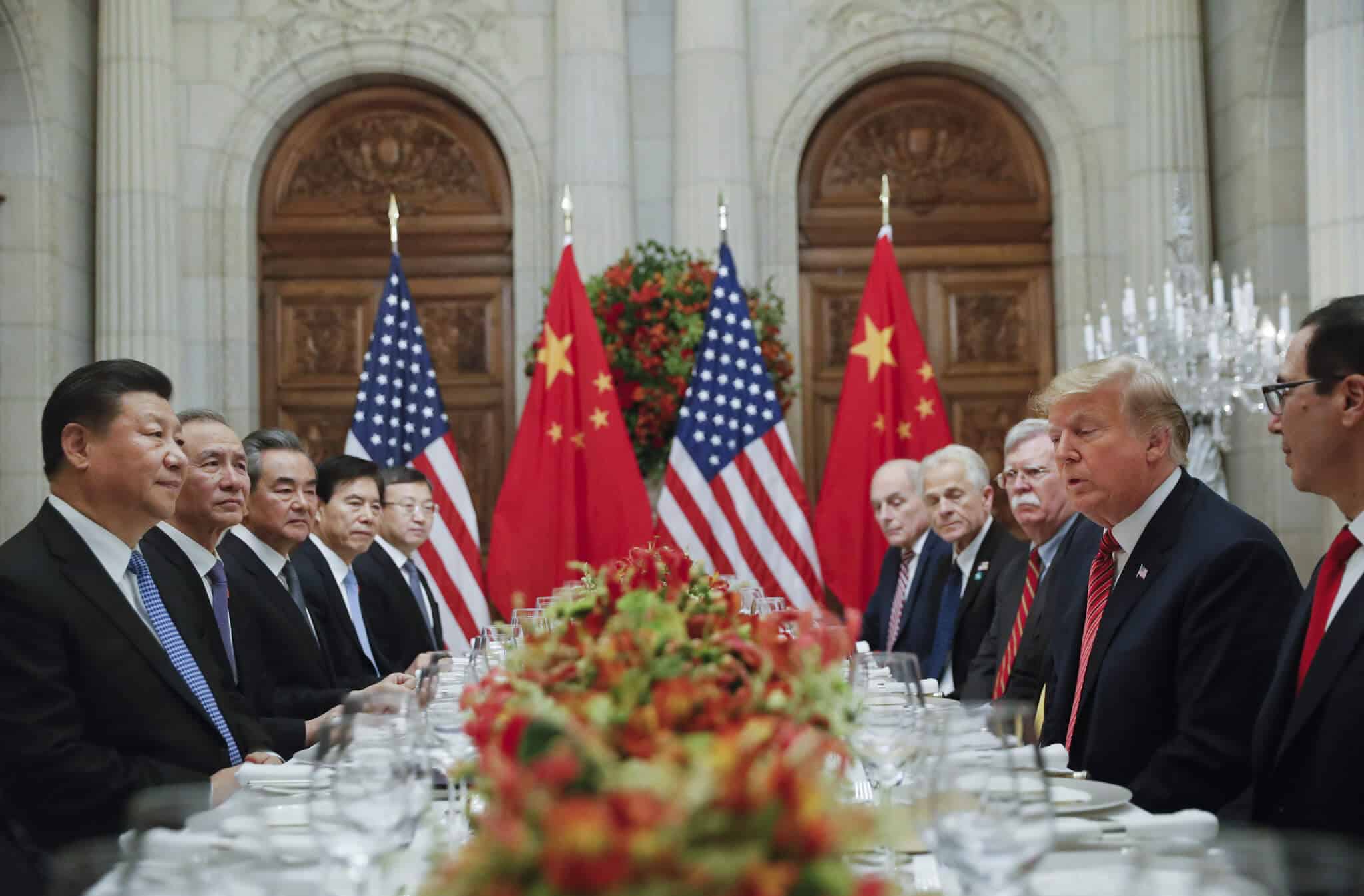
World’s second largest economy has slowed down in growth. The country’s benchmark Shanghai Composite is down by more than 26 percent over the last year. China and the United States have engaged themselves in a bitter trade war over tariff and balance of trade.

The scenario in Europe is no better. The pan-European composite is also down by 10 percent in the last 12 months.

Bank of America economist Michelle Meyer said, “The global backdrop is more concerning now than it was last year. We’ve seen a steady weakening in China and the Euro area; I think that last year there was lots of optimism about what would come from the [federal] stimulus. It’s certainly helped support growth, and consumer spending got a nice bump, but that growth has really slowed since then.”

Yet, Meyer said recession prediction would be premature. She also added this year’s WEF would let us know more about leader’s feelings than expectations.

Company News

Amid trade tensions between the United States and China, China has blocked the access of Microsoft’s search engine Bing. And with the blocking of Bing, China blocked all major non-Chinese search engines that had been operating there.

And according to the reports from the sources, the order to block the search engine had come from the Government.

Microsoft Spokesperson in reply said they have confirmed that Bing is currently not accessible in China and they have engaged experts to determine the next step.

It should be reported here that the Internet is heavily censored in China as a form of information control. Many non-Chinese techs and social media giants like Facebook and Twitter are blocked there.

The report of blockage of Microsoft’s Bing engine comes in the time of on-going negotiations for tariff between the two largest economies of the world. And experts believe that the trade war may have spillover effects on the technology world turning it into a tech war.

On Tuesday, the former deputy governor of the People’s Bank of China, Zhu Min said that China is also considering completely cutting investment into the Silicon Valley after the scrutiny episode with world’s largest telecom equipment maker, Huawei.

The issue with Huawei aggravated when its Chief Financial Officer was arrested in Canada last year. It is believed that the arrest was made on the request of Washington. The allegations on him were he violated American sanctions on Iran. Though he has been released on bail, the possibility of extradition is still substantial.

The United States along with many western countries including Canada, Germany, Britain, and Australia accuse China of data theft through its link with Huawei. They have even blocked Huawei’s equipment from sensitive infrastructure projects. However, Beijing denies these allegations.

In the past couple of years, China has declared openly its intention to become a world tech leader over the next decade, and it has been investing hundreds of billions of dollars in technologies like Artificial Intelligence and autonomous vehicles.

News

The Tamil Nadu government in considering an investment of worth $15 billion in the aerospace and defense department during the next 15 years to enable the State the most popular hub for both the sectors.

When Nirmala Sitharaman revealed the most awaited desirous aerospace and defense policy, the Defence Minister investment of $15 billion was informed. During the opening day of the Global Investors Meet the second edition on Wednesday, it was mentioned.

The main goal of the policy is to shape Tamil Nadu as the most preferred hub for aerospace and defense industries across India especially in the areas of design engineering, allied operations, and manufacturing.

In Tiruchirappalli, on January 20 the Defence Minister Sitharaman has unveiled the Tamil Nadu Defence Industrial Corridor which is about 300km away from Chennai. Investment of worth more than Rs 3,038 crore, at this defense corridor it was stated among them the majority of them were from public sector undertakings.

The objective of the Aerospace and Defence policy is to draw investment of around $5 billion in the next 5 year and later investment of another $10 billion by ten years mainly in the aerospace and defense department

The government also intends to create more job of around 1 lakh during the initial ten years especially in the field of aerospace and defense sectors.

Apart from this Aerospace and Defence sectors will be boosted, the policy will also control the strengths of Tamil Nadu mainly in the automotive manufacturing industry.

Tamil Nadu is home for most popular automobile companies. These companies have established themselves in the State among them the most popular are the following one’s Ford, BMW, Hyundai Motor India, and India Yamaha Motors.

The government also desires to develop Center of Excellence, Skill development institutions and Research and Development centers within the State by drawing the attention of global OEMs [Original equipment manufacturers] and top Indian companies across Tamil Nadu.

Some of the important benefits about Tamil Nadu in boosting the industries have covered in the policy. Namely, the state will rank first depending upon the number of factories and industries employees.

Tamil Nadu’s Gross State Domestic Product has increased at an annual growth rate of around 9 percent during the year 2004-2005 and during 2016-2017 average rate of around 7.5 percent growth higher than the national growth rate.

In India, Tamil Nadu is the third largest manufacturer of electronic and hardware, and the electronic hardware companies of the State noticed a growth, the annual growth rate from 2008 was around 30 percent.

In State, fortune 500 companies have established the manufacturing facilities which includes companies like Dell Computers, Motorola, Foxconn, Flextronics, Samsung Sanmina-SCI and other it mentioned.

To build the aerospace and defense industry in the State, the government is considering undertaking Cluster development and use appropriate approach to develop the aerospace and defense manufacturing unit by building the most needed infrastructure.

Some of the government agencies like the Tamil Nadu Industrial Government Corporation and SIPCOT will develop parks related to aerospace and defense industries using adequate infrastructure within the State.

The government will establish single window clearance facility through the Tamil Nadu Industrial Guidance Bureau that will look after the overall industry of aerospace and defense mostly associated with the infrastructure and manufacturing projects regardless of the size of the investment, it stated.

The formal launch of the aerospace and defense policy was revealed by the Defence Minister Sitharaman and the first copy of the policy was accepted by the Chief Minister of Tamil Nadu K Palaniswami.

Trading News

American trade peacemakers were informed by two US business groups that the Hi-tech initiative of Beijing is moving ahead as illustrated in the Made in China 2015 plan. Made in China is a policy whose objective is to concentrate on the tasks that are assumed to be resumed by next week in an attempt to end the trade war.

American Chamber of Commerce that was held in China along with a joint report said that the US Chamber of Commerce had recognized more than 100 policies within 24 provinces and cities such that they create rules, either set goals or furnish the initial guidance that will instantly initiate or are directly associated to MIC 2025. MIC 2025 is an essential initiative which is backed by Xi Jinping the Chinese President focused mainly on developing technology sectors which compromise semiconductors, aviation, robotics, and AI.

The group’s results were later rendered to the US Trade Representative Office a few days back The Wall Street Journal first mentioned about it in its report.

Is it made in China 2025 Plan How is Beijing going to direct the world?

According to the data that was published by South China Morning Post says that positive Chinese approach seems to be occurring at a regional level.

Outstanding individual innovations, developing and intellectual property is the main goal while the local government is vigorously trying to promote and develop their specific plans along with the MIC 2025 plan with the help of the state government, declaration according to the US Chamber of Commerce.

Is this the turning phase for the US-China relations and trade war?

It is recommended for in-depth, constant and combined effort within the sub-central authorities to execute and also accept profit about the incentives ties of Made in China 2025 plan stated in a report.

Systematic challenges must be addressed by the Chinese government at all levels whatever the solution could be.

Apart from lowering the trade deficit of US with China as per the reports titled on Washington to priorities outcomes to address the fundamental challenges related to China’s economic policies and habits while the groups claim are unjust and limiting for the US companies.

With the help of Made in China in 2025, China intends to govern the Hi-tech sector hit a stumbling block

Little progress was made at the time of negotiations which has led for high concerns. In Beijing during the recent time, Beijing has approached the issue related to the deep-rooted conflicts about China’s state-approved industry policies and the Hi-tech development program.

The countdown for Trade War Agreement

During talks, sources informed the Post that the plans related to scaling up of buying the American goods were discussed by the Chinese negotiators, which would intent to help the trade imbalance by lowering it and further preventing the issues related to structural challenges of the Chinese economy.

Financial Times stated in its report that Chinese proposal of sending vice minister-level officials to Washington to make the we have rejected arrangement for the visit of Chinese Vice-Premier Liu He’s which is scheduled next week this has further led for doubts and confusion as to whether or not the countries intend to meet the March 1 deadline which is fixed by the US President Donald Trump and by Chinese President Xi Jinping ahead of the traffic increases resumes.

China’s Economy Slows Downs Further, Lowest ever compared with Quarterly Growth

The President of the US-China Business Council Craig Allen moved away from such issues quoting it as a simple logistics that keeps on changing over the time.

While planning its quite not essential to have a face to face consultation Craig stated.

Craig further believed that there is no need to worry about such developments at all and we should concentrate on the bigger picture.

The White House Chief Economic Adviser Larry Kudlow on Tuesday spoke to CNBC stating that no meeting has been lined-up during this week although both the countries are constantly in touch with each other before the talks that are scheduled in next week.

Chinese foreign ministry spokeswoman Hua Chunying In Beijing replied to Kudlow’s statement saying that she has observed the statement given by an American official and he has clarified the issue. Both the countries are in touch with each other related to trade talks. There are no changes that I have noticed or heard. Hua said it in a press conference that was held on Wednesday.

The joint report suggests that China should make changes in policy guidance and regulations to remove technology transfer, further coping with the market barriers and unfairness related to hi-tech development plans that are incorporated by MIC2025.

We request the US government authorities to make a comprehensive approach that will accomplish concurrent and distinct changes governing to regulations, laws, standards, and performance after that within China’s policy landscape it was mentioned.

Further, it also mentioned that China’s assurance to reform should be linked to free guidelines, timelines, and intense monitoring.

The report also suggests for the removal of obstacles related to cross border data flowed and approached the US negotiators to claim that the US digital service providers have objected about the China address security requirements, which are biased and harms the competition in the Chinese market.

Company News

After the banking and financial technology firms, the blockchain technology has found a new client in the automobile industry. SEAT, a Spanish car maker, has joined hands with the Alastria consortium to develop products and services based on blockchain technology. The carmaker is looking to develop a system for exchanging its various product and services without the need of any third party, and hence, it has decided to embrace the concept of the blockchain. The company is of the view that the adoption of blockchain will help enhance procedural security of the system and make the transactions far safer for its clients.

SEAT and Alastria

SEAT is looking forward to testing and further developing its platform of blockchain-based products and services while seeking cooperation and synergies from the other participating companies in the consortium. So that you know, Alastria is a first blockchain infrastructure consortium promoted by the Spanish business institutions and companies belonging to a range of different business sectors. The primary objective of this consortium is the establishment and promotion of independent and neutral blockchain infrastructure that will work under the legal framework of Spain besides complying with regulations of the European Union. The consortium will help to make the funds and contacts available for the community members. It aims to develop a holistic blockchain ecosystem that will not only help the member companies but will also ensure that the benefits reach users and organizations outside the consortium.

Application Areas

The carmaker SEAT wants to make sure that different divisions in the company apprise themselves with the blockchain and the potential benefits they can derive from the technology. In the first phase of blockchain implementation, SEAT has chosen finance and production division for the blockchain implementation to improve the efficiency of procedural standards in the organization. The carmaker is looking forward to develop and implement digital solutions for improving the process of producing cars that will subsequently help it to become more flexible, agile, and efficient in the long run.

SEAT has already initiated the process of adopting and implementing blockchain technology. The company has recently collaborated with Telefonica, a Spanish telecommunication company, to implement the blockchain-based project to improve supply chain management at its Martorell factory. The project will help in traceability of the parts in the factory and will help SEAT to drive up the overall efficiency of its supply chain.

Stocks

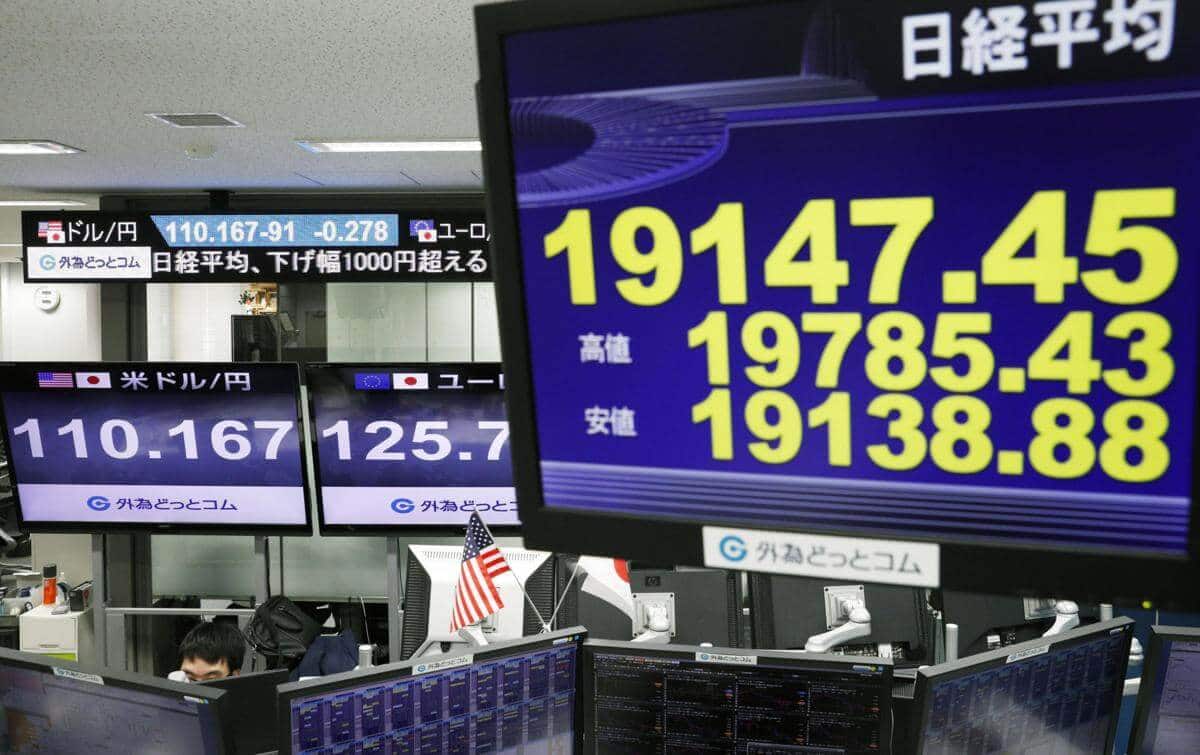
On Tuesday, the shares of the Asian countries collapsed, and the prices of oil further slipped down. This has led for discouragement about world growth, and a group of investors is staying away from the risky assets whereas sterling ticked lower during the recent twists and turns that appeared in the Brexit.

After the announcement of Beijing, the world’s second-largest economic growth in 2018 has declined to its weakest level lowest in the decade since the report on Monday China started with an unstable week. Adding to this, the International Monetary Fund has lowered the global growth predictions while a survey that was conducted showed increased grief within business organization executives due to the overshadowing of the trade tensions.

The joyless news emphasized that policymakers from around the world are facing challenges and need to deal with the crisis especially with a current crisis or potential crisis from among the US-China trade war and with Brexit.

The ANZ analysts in morning news reported that it is the second decline of IMF in a row.

According to spreadbetters, there is another weak for Europe to start. During US stock futures the FTSE futures[FF1c1] was down by 0.2 percent that showed a sign regarding Wall Street and how the Wall Street will open, the [Esc1][1YMc1] were off to around 0.7 percent.

In Asia, most of the losses were headed by the Chinese shares and the blue-chip index showing at <.CSI300> which was off by 1.2 percent. The Hong Kong’s Hang Seng Index [.HSI] also noticed a downfall of more than 1 percent and Australia’s main Share Index [.AXJO] trembled at 0.5 percent

On Tuesday the broadest Index of Asia Pacific MSCI’s located outside Japan <.MIAPJ0000PUS> was dropped by 0.9 percent. It was almost top for seven weeks in its recent times.

Japan Nikkei [.N225] which had noticed a strong opening also dropped by 0.7 percent.

Due to the holiday, the US markets remained closed on Monday, so the trading was normally weak through the night. Although, due to inappropriate Chinese data the equity price in Europe and Latin America slipped down.

Nick Twidale is a Sydney based analyst working at Rakuten Securities Australia stated that because of the financial markets the stress related to slow global growth have started to trickle.

The worries made money to be sent for copper by using used electrical wire, vehicle and drifting lower.

To overcome the threat new strategy was used, the Australian dollar [USD=D3] most preferably used a liquid proxy for China investments which put the investment on track for almost three straight sessions of losses and eased it by 0.3 percent to around $0.7134.

No Brexit Deal?

The analyst Twidale of Sydney mentioned that once the London market opens then the focus will be totally on the UK while the Brexit news remains in the minds for investors.

Brexit still remains crucial for the UK markets, and the progress seems to be limited. The due date is approaching very fast, and everything looks like a real concern as there is no progress at all between the various aspects involved, the possibility is of the hard kind that seems like no deal will appear in Brexit and this is more like to happen in real time.

Teresa May the British Prime Minister declined to prevent the no- deal Brexit which further made the sterling to be weak at $1.2872. There are few indications that the Prime Minister can crack the deadline along with the parliament members only after the rejection of the Brexit deal last week.

May further offered to make some improvements in her rejected deal by allowing concessions from the European Union; this was a backup plan to escape the hard border of Ireland.

Liam Peach, the Capital Economic analyst, said that any upside for sterling could be limited in the coming days. Confusion will continue to remain throughout the long negotiations process, and there seems to be no assurance that the process will last for a short period.

The investors are in distress about creating positions in the pound because of Britain going away from EU without making any deal the analyst announced the state.

There was a demand for the safe haven that made greenback to stay under pressure beside the Japanese Currency was last bought at 109.41 per dollar. The euro was close to its last trading range and currently is trading at $1.1358[EUR=] range against different currencies, the dollar was stable and remained unchanged at 96.393[.DXY].

The global growth was a huge concern that pulled down the oil prices further lowering them in commodities. In stock Brent [LCOc1] was nearly down by 55 percent at $62.19 and the US crude futures [CLc1] falls off by 39 percent at 53.41 [O/R].

News

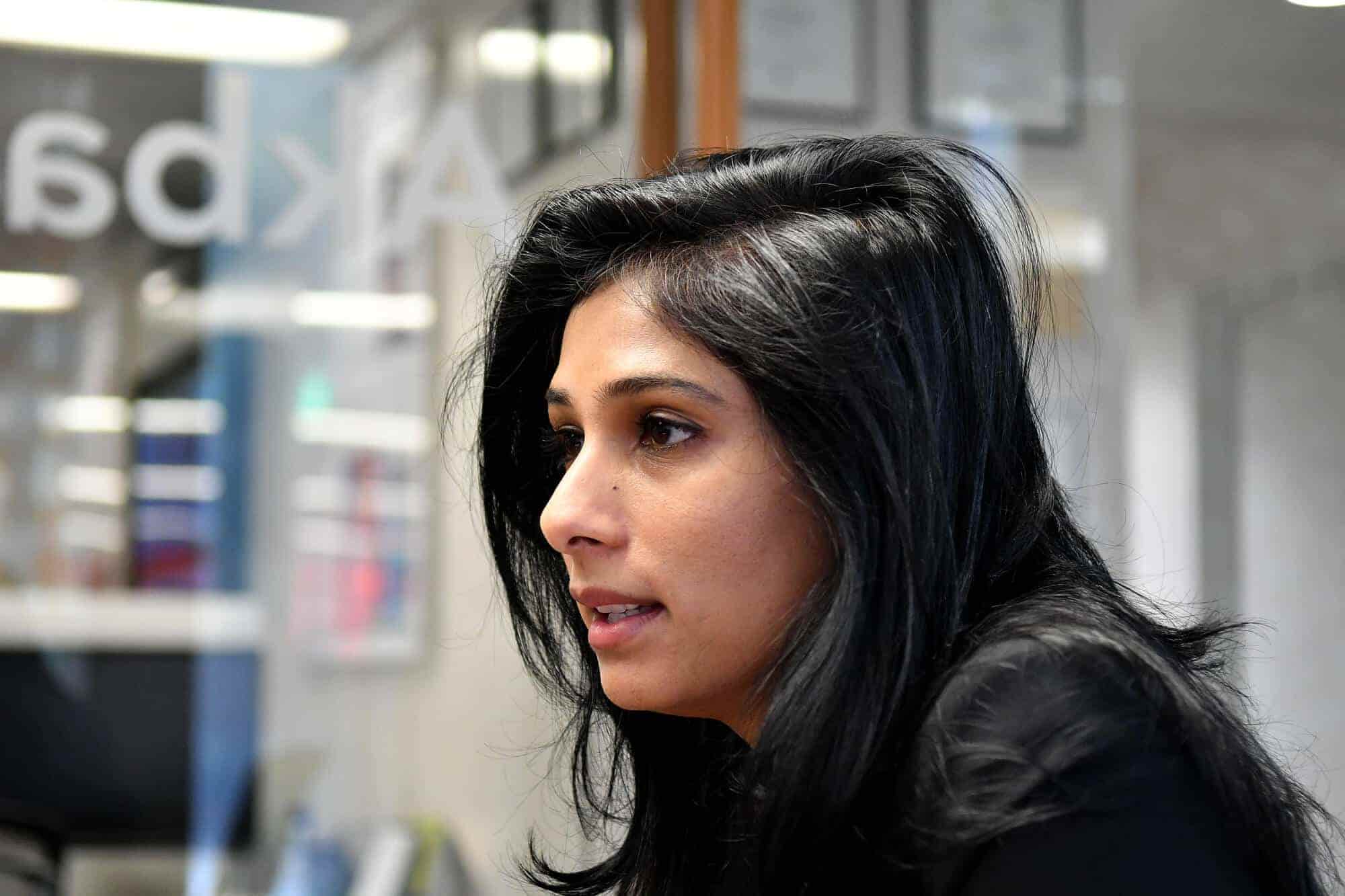
Gita Gopinath, the Chief Economist of IMF in Davos on Monday signaled that due to weak global growth at a rate greater than expected the emerging economies are facing huge risks which are caused by weak capital flow mainly because of US activeness and due to a decrease in currency value.

In 2018 the global growth remained close to post-crisis highs, the global expansion is weakening, and the rate is at some extent greater than the expectation. During the IMF’s World Economic Outlook Gita Gopinath made these statements by briefing the current updates.

The Global growth prediction made by IMF is around 3.5 percent for the year 2019 and around 3.6 percent for the year 2020 if compared to October predictions they are below 0.2 and 0.1 points. Despite the modest declining revisions Gopinath further mentioned that numerous downward corrections are at greater risks and are soaring high.

While back when the financial market appeared in advanced economies, in most of 2018, the financial market seems to detach from trade pressures. Adding to this she said, although in recent times both of them have lined up together to improve the financial circumstances and to strengthen them, also intensifying the global growth risks.

The expansion of US is proceeding ahead. However, the prediction remains for the deceleration while unwinding of economic stimulations. Due to rising economic activities and growing economies, it is predicted that the rate could be down to 4.5 percent during 2019 and may bounce up-to 4.9 percent during 2020.

By the opinion for growing markets and developing economies continuous headwinds are reflected due to weak capital flow as a result of higher US policy rates and deduction in the exchange rate, in spite of being less extreme Gopinath stated.

Gopinath further added that from across the emerging economies some economies picked the inflation that was reserved towards the end of 2018. The Increase trade tensions and the deteriorating financial condition are the primary threats to the outlook. Gopinath even added that the un-prediction of higher trade will further hamper the investment process and will also violate the global supply chains.

In countries, it is too costly to tighten the financial situations more securely and complexly in consideration with the high volumes of debt related to the public and private sector. Christine Lagarde, the Managing Director along with the first women chief economist of IMF, announced by sitting at her side. China’s growth has declined, and if the trade tension escalates then, we may notice much faster slowdown than expected. Further, there can be a sudden spark and a decline in the market, especially in the financial and commodity markets. Same was the situation during the year 2015 to 2016, Gopinath mentioned.

Excitement over Brexit continues in Europe and is too costly to spread over other areas. The sovereign and financial risk remain a threat in Italy. There are huge difficulties and threats in the US which can last for a longer time than expected if the US federal government shutdowns.