Stocks

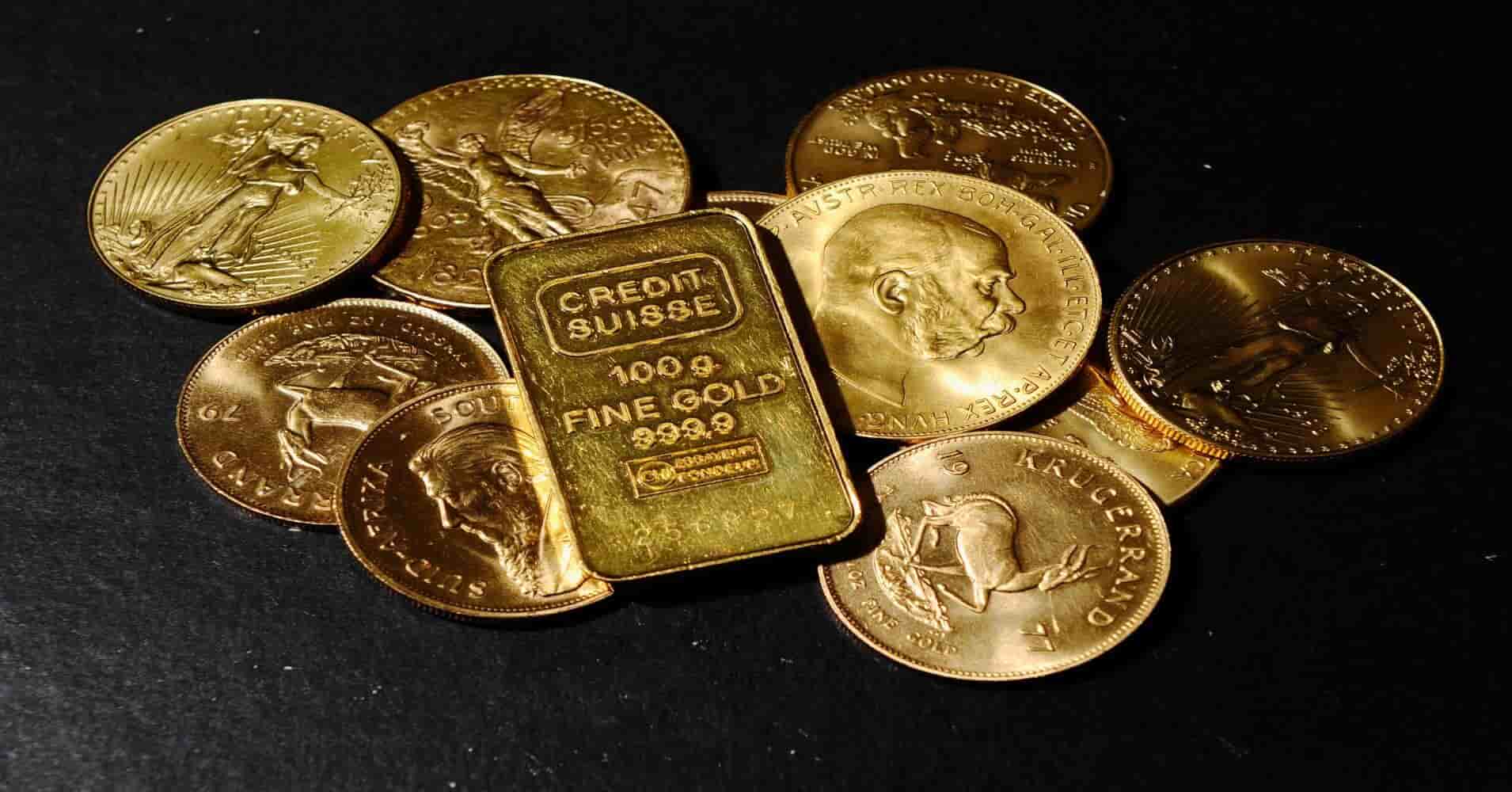
Gold prices on Thursday dropped to a two-week low, as the dollar recovered losses after cautious comments from the US Trade Representative Robert Lighthizer which dented investors’ hope for ending the tariff war with China.

As of 0340 GMT, sport gold and the US gold future slipped by 0.1% to $131850 and $1320.10 per ounce respectively. The metal considered to be safe heaven, has dipped to its lowest point since February 15 at $1316.43 in the previous session slipping for the first time in five months.

MCX Gold was trading at 0.11% down at Rs 33248 per 10gm at around 10:30 AM IST. On the other hand, MCX Silver jumped by 0.12% at Rs 39809 per 1kg around the same time.

In an address to a Congressional hearing, Lighthizer told that it was too early to predict the outcome of ongoing trade talks with China, and the United States would need to maintain the threat of tariffs on Chinese goods for years to come even if the two parties strike a deal.

An economist at the National Australian Bank, Jon Sharma said that there is some amount of uncertainty about the trade deal which has led some of the demand for gold to go to the US dollar. He said that this shift of demand has taken a bit of bid from gold. Sharma further added that gold is expected to come up with some corrections and that prices will move around the $1310-$1330 bracket depending on the dollar. He claimed that main support for gold comes from Federal Reserve’s dovish stance and that a lot if central banks are keen on accumulating gold.

Federal reserve chairman Jerome Powell said on Wednesday that the US Central Bank would stop shrinking its $4 trillion balance sheet later this year, ending a process that investors say works at cross-purposes with the Fed current pause on interest rate hikes. During his testimony to the Senate Banking Committee on Tuesday, Powell reaffirmed that the Federal Reserve would maintain patience in hiking interest rates.

Back in India GDP of the third quarter will be focused on, as a disappointing growth figure will keep the rupee under tension. This could restrict any major fall in gold prices on the domestic exchanges. Motilal Oswal Financial services stated that Gold on MCX is expected to quote in the range of Rs 33030 and Rs 33450 for the day.

Edward Moya, a senior market analyst at OANDA, said in a note that the precious metal’s recent consolidation is supported by hesitation the financial markets have in pricing in what will be the Fed’s next move. He noted that Gold may struggle climbing higher until the market sees further deterioration in US data, which would seal the market expectation for the next move to be a rate cut.

Spot silver slipped by 1% to $15.72 per ounce, on the other hand, platinum dipped by 0.4% at $861.80. Moreover, spot palladium dipped further down from its all-time peak of $1565.09 per ounce that it hit earlier this week and was down by 0.1% on Thursday at $1527.50.

Company News

On Wednesday, the domestic airline firm in India, Jet Airways has grounded seven more aircraft as the carrier has failed to make the payments to its lessors, taking the tally of planes hamstrung by the defaults to thirteen. On an official press release, “Jet Airways is currently is actively engaged with all its aircraft lessors,” adding that its aircraft lessors have been supportive of the company’s efforts to improve liquidity.

Jet Airways is now having debts of more than 1 billion dollars, Jet has defaulted on loans and has not paid pilots, leasing firms and suppliers for many months. The loss-making Indian airline approved a rescue deal in mid of February after months of talks to plug an 85 billion rupees ( which approximately equal to 1.2 billion dollars) funding hole.

The plan has been approved by the shareholders of Jet Airways that includes selling off a majority stake to a consortium led by State Bank of India, the airline’s biggest creditor, at 1 rupee. Reuters had previously reported that international lessors had grounded more Jet Airways planes before potentially moving them out of India, as skepticism built over whether the bailout of the carrier can clear their dues on time. However, on Saturday the airlines revealed that it had grounded two more aircraft in addition to the four earlier this month over default to its lessors.

According to the sources, currently, Jet Airways has a total of 123 fleet that includes most of the Boeing planes, including 16-owned aircraft. However, the rest are leased from a range of lessors including GE Capital Aviation Services, US-based BBAM and Japan’s SMBC Aviation Capital.

Trading News

The United Kingdom and the United States entered in an agreement on Monday for a long-term pact to ensure that the $2 trillion a day transatlantic derivatives market remains uninterrupted by Brexit. The transactions in London and New York account for 80% of all global off-exchange trade contracts.

Derivatives are extensively utilized by companies to protect themselves against unexpected fluctuations in borrowing costs, currencies or raw material prices. However, at present, derivatives trading in the UK confirms no rules written by the European Union, which is set to exit on March 29. Bank of England Governor, Mark Carney told reporters on Monday that the derivative traders in the market can be confident that the trading between the UK and the US will not be affected even by a no-deal Brexit, and the high standards will continue to prevail.

Christopher Giancarlo, Chairman of the US Commodity Futures Trading Commission (CFTC), stated that the agreement highlights London’s status as a global financial center for a long time to come. Measures announced on Monday by the CFTC, the UK Financial Conduct Authority and the Bank of England were aimed at reassuring markets that derivatives will not be affected even if there is a “hard” Brexit. He also added that the London derivatives market could not be readily replicated anywhere else.

Giancarlo assured that these measures provide a “bridge over Brexit” through a sustainable regulatory framework which the booming transatlantic derivatives market may continue and endure. He said that the steps taken are to ensure continuity, and will be implemented regardless of the form of Brexit, and are taken from a long-term perspective. Time for Brexit is ticking away, with just a month to go, however, uncertainty over an exit with transition agreement continues to threaten with economic disruption.

The transatlantic deal makes room for both, trading and clearing of derivatives, by institutions like the London Stock Exchange’s LCH clearing arm, ICE and CME. Andrew Bailey, Chief Executive Officer of the UK’s Financial Conduct Authority, claimed that the agreement is an indication that they want economic cooperation to continue.

Head of the global derivatives industry body, ISDA, Scott O’Malia opined that the agreement between the US and the UK would ensure safe, efficient and uninterrupted functioning of the market.

The European Union, too, has taken steps to ensure cross-border derivatives clearing are not affected in a “no-deal Brexit” scenario, as London dominates clearing of euro-denominated interest rates swapping. However, it still needs to strike a long-term relationship. Police Chief of City of London financial district, Catherine McGuiness said it is extremely important that the EU regulators immediately address critical issues that might arise after a no-deal Brexit, like the continuity of derivative transactions.

Steps taken by the US are permanent covering derivative transactions, while those taken by the EU are temporary and cover only clearing. Meanwhile, EU regulators are framing stricter requirements for foreign clearing houses that want to cater EU customers by insisting it could tell them what to do in a crisis, a step which both UK and US are opposing. This is being considered as an attempt to coerce some derivative businesses to move in the EU.

Trading News

As soon as US President Donald Trump announced that the trade talks were progressive and are ready to the extent the tariff hike on Chinese goods, the Indian shares reached another high level along with Asian stocks.

When the news arrived about the trade talks between Beijing and Washington has achieved substantial progress during the high-level trade talks between the delegates, the Asian share was up and crossed the 5-month peak level on Monday. Three years record high gain in Chinese shares was noticed after the tariff hike delay announcement, the market was flooded with funds over the positive trade talk news.

The Nifty noticed a rise of around 0.16 percent to 10,809.30 at 0626 GMT and the Sensex was up by 0.26 percent to 35,965.83.

There was also a rise in the financial stock of the country namely the ICICI Bank and HDFC Bank. The ICICI bank shares were up by 1.5 percent and HDFC Bank shares up by almost 1 percent.

IT stocks also noticed a gain in its shares. More than 2 percent each increased shares of Tata Consultancy Services and Infosys, the top IT companies of India.

Shares of other companies like Sobha Ltd, Godrej Properties Ltd, and Oberoi Really Ltd were up by nearly 3.5 percent to 4.4 percent during the trading hour.

Meanwhile, the shares of Adani Ports and Special Economic Zone Limited were trading low by almost 9.1 percent.

The Indian Market is looking out for cues from the global market especially on the news like parliamentary elections and government policies which are still far to take place, vice president of Kotak Securities, Sumit Pokarana informed.

Pokharana also said that there are geopolitics tensions in India especially after the suicide attack that almost killed 40 Indian troops in India planned by Pakistan. Also, there are risks related to it, and market participants want some actions to be implemented by the government before the general elections.

China’s Shanghai Composite Index significantly reached another level and was up by 5.6 percent to 2,915.28. The gain was the highest recorded one after November 2015.

Financial Planning

Cost cutting has often been regarded as a tried and tested method by large corporations, which want to generate bigger profits. Sometimes, those measures work, but sometimes they don’t, and in the case of American food and beverage, it hasn’t. The plunge in revenues and billions in write-offs for two of its biggest brands has cratered the stock since Thursday. Following the debacle, experts are now questioning whether the firm’s aggressive cost-cutting techniques are to blame for their declining fortunes.

On Friday, the Kraft Heinz’s stock plunged by as much as 27% amid widespread panic sell off and the announcement from the company that they were writing down $15.4 billion from the brand value of two key brands- Oscar Mayer and Kraft. Additionally, dividends had also been slashed from 63 cents to 40 cents and needless to say, investors are far from thrilled.

Kraft Heinz’s troubles regarding cost-cutting can be traced to the company’s decision to resort to zero-based budgeting, and many believe that this particular approach is at the basis of the company’s troubles. As per the zero-based budgeting approach, executives sit down and start budgeting with a clean slate, rather than using the budget from the previous year and while that has been successful for many companies, it has not been so for Kraft Heinz. The perils of zero-based budgeting were pointed out consultancy firm BCG back in 2017. According to the report, “The cuts can be impressive, and that’s a big win. When it’s applied clumsily, ZBB can have a demoralizing impact that distracts the organization from growth and value creation.” It seems the executives at Kraft Heinz have not been able to apply it well and according to many experts, cost cutting is something that is tough in the food industry. Any change in an ingredient can often lead to an alteration in the product, and it can be rejected by consumers.

That being said, it is important to point out that many other consumer giants like Mondelez International and Unilever have used this strategy. None of them have had such poor results thus far. According to many analysts, the executives at Kraft Heinz could be the fault here, and an analyst at Investec said as much. He said, “I think it’s a black eye for Kraft Heinz management for not implementing it in as a sophisticated way as might be necessary, or maybe they just implemented it too hard, too fast. I don’t think ZBB per se is the problem.”

Company News

Swiggy is reportedly closing on a deal to acquire Uber Eats, the food delivery arm of online cab booking company Uber. The business was launched in January 2017 and is currently worth over $330 million.

At the time of launch, Uber India had high hopes from Uber Eats, however stiff competition from established giants like Zomato, and Swiggy made the journey quite difficult. Therefore, the San Francisco based company has decided to sell the ailing business to curb losses. The move will also help the Uber go for IPO with a targeted valuation of $120-$150 billion. Apart from Swiggy, reports have suggested that Gurugram based Zomato is also in contention to acquire Uber Eats. Swiggy and Zomato are arch-rivals in the online food delivery space; both of them are fighting very hard to increase their market share.

Uber Eats India is currently executing around 150,000 to 250,000 deliveries per day, generating around $200-$300 million in sales. On the other hand, Swiggy and Zomato manage to squeeze out business almost four or five times of Uber’s numbers. Uber’s delivery arm is currently ranked 3rd, ahead of Foodpanda, owned by rival ride-booking company Ola.

Uber reported a loss $1.8 billion for 2018, and it desperately wants to shed loss-making units away before it goes for the IPO in India. Reports have surfaced that Uber Eats in India was losing about $15 to $20 million per month. Contrasting to the recent developments, Uber Eats had said last year that India is one of the fastest growing markets, claiming that it was adding 4,500 delivery personnel per week, an adding 100 restaurants a day in the country.

India is one of the markets where Uber still suffers high losses. It has already sold businesses in China, Russia, and Southeast Asia to rivals, to curb losses. Contrastingly the market leaders, Swiggy and Zomato are reportedly losing $30-$40 million each month. The two main reasons for these losses are the regular discounts given to customers to attract them, and high incentives to delivery personnel.

Experts have been projecting a market consolidation, sooner or later. The food delivery space offers razor-thin margins; large scale competition is causing companies to bleed. Uber Eats was also rumored to consolidate with Ola’s Foodpanda, as both have a common investor in Softbank which holds substantial shares in both firms.

The transaction, if completed, will be the first move towards sector consolidated of food delivery space in India. Though Zomato is trying too, Swiggy is expected to close the deal as early as next month. This will be the Bangalore based company’s largest acquisition till date, and will also be Uber’s first divestment of its food business globally. Uber its is estimated to be valued at around $20 billion, and the business generates $1.5 billion in revenues.

The transaction is most likely to be structured as a share-swap deal, with Uber accepting shares in Swiggy as contract remuneration. Uber is expected to get 10% shares in Swiggy. The Indian food delivery service company is valued at around $3.3 billion.

Trading News

The world’s biggest manufacturer of computers, Lenovo Group, shrugged off the United China-China trade tensions to post a handsome profit in its quarterly results. The Chinese companies results beat the estimates of analysts, and this is an important development since many would have expected the computer maker’s results to be disappointing due to the trade war. Following the results, the Lenovo stock rose sharply and at one point rose by more than 11%.

The average of the estimates by 10 analysts pegged the company’s net profit at $207 million for the quarter, but Lenovo beat these numbers comfortably with a net profit of $233 million. The quarterly results show the sort of turnaround that Lenovo has enjoyed. In the same quarter last year, they had posted a $289 million loss. The company’s revenues stood at $14.04 billion, which reflects a handsome rise of 8.5%.

Lenovo announced that its foothold of the global computer market now stood at 24.6% and in addition to that, the companies smaller smartphone business also recorded a profit. The mobile phone unit recorded a profit of $3 million, before taxes. On the other hand, the company’s loss-making data center unit reduced its losses by a big margin in the latest quarter. It recorded a loss of $55 million, which is a healthy 31% drop from a disappointing $86 million loss in the same quarter last year.

All this is particularly heartening for a Chinese company, which delivered this strong result at a time when many other companies have gone into a bit of a meltdown. According to Gartner, which tracks the personal computer industry, shipments fell in 1.3 percent during the course of 2018, and despite that, Lenovo managed to grow its market share to 24.6%.

However, the Chief Executive Officer of Lenovo, Yang Yuanqing pointed out that there is still scope for massive growth for the company in China. He stated that despite being the world’s biggest market for smartphones, China has not yet toppled the United States when it comes to personal computers and that is not ‘not consistent’ with the population of the country. He went on to state that the company would look for more consolidation and have a bigger focus on the premium personal computer business. That being said, the shadow of the US-China trade talks looms large over most companies, and Yang stated that it is something that hurts all companies. He said, “Definitely we don’t want to see more trade war, political tension. If that continues, that will affect everyone, not just us, all multinationals.”

Financial Planning

International Monetary Fund (IMF) economists have come up with the idea of separating electronic money and cash as a way of securing future stability of the world economy. Doing so will give the central banks a way to enable the negative interest rates needed to combat future recessions of the world economy? Base interest rates have been at an all-time low around the world since the last financial crash in 2008. Historically every major financial crash has resulted in a 3-6% cut from interest base rates. If a future financial recession was to happen now, there isn’t much room left for economies to introduce interest base rate cuts. Cash the current base currency is designed to have a lower bound interest rate of zero. In such a situation, the negative base rate will force central banks around the world to either compress their margins or introduce interest rates on bank deposits.

Charging negative interest rates on deposits will invariably result in a worldwide mass withdrawal of cash. The IMF notes that instead of paying negative interest, one can simply hold cash at zero interest. Acting as a free option on zero interest, cash will be the interest rate floor around the world. A predominantly e-money economy will not be limited by a lower bound on an interest rate of zero percent. The central banks would reduce the rate to a negative figure forcing consumers to invest in the economy or simply spend money as a preferable option, boosting the economy and acting as a normalizing agent.

Many countries such as Sweden have driven the e-money economy and pushed rates slightly below zero. The negative interest rate has made it difficult to hold cash and deterred most depositors from doing so. But cash still plays a major role in world economies like Japan, Switzerland, and Hungary where people prefer the person to person nature of cash transactions.

According to an IMF excerpt, “While a dual currency system challenges our preconceptions about money, countries could implement the idea with relatively small changes to a central bank operating frameworks. In comparison to alternative proposals, it would have the advantage of completely freeing monetary policy from the zero lower bound. Its introduction would reconfirm the central bank’s commitment to the inflation target, rather than raise doubts about it.” Such as dual currency system will allow the central banks to introduce an exchange rate for cash to e-money. Countering a recession of the future would require central banks to introduce a negative interest rate on cash as a measure to ensure that cash is being spent and the economy is well fed.

Company News

With the recent enactment of EU’s Payment Service Directive (P2D2) requirement for banks to create APIs that let third parties initiate payments on behalf of consumers. Adyen has become an early adapter to this by introducing a new open banking payments method that will enable authentication of payments between the consumer and the bank avoiding chargebacks generated due to card frauds or an inability to capture funds. Upon selecting the payment type, the customers will be redirected to their bank’s online environment to securely confirm the transaction. Adyen with its latest financial technology will handle the payment flow between banks and merchants. Their latest offering is suggested to decrease transaction processing costs for higher value transactions while at the same time open banking will offer real-time credit transfers guaranteeing payments and enabling merchants to confirm payments and ship orders immediately.

It is constantly striving to innovate and simplify the payments process for consumers and merchants. Adyen is a unique payment solution provider that is the choice for many of the world’s leading companies. Fraud protection has been an increasing priority in today’s digital economy. Traditional card transactions are slow, charge higher processing costs and are prone to frauds. With this latest addition in the company’s offerings, Adyen has become the first payments provider to offer a fully compliant, direct payment solution in the UK and it has been continuously working with Open Banking Implementation Entities to bring the benefits of a digitized payments system to consumers and merchants alike.

“It is exciting to see another great example of open banking powering innovation and leading to new services which ultimately help drive efficiencies in payments,” said Imran Gulamhuseinwala OBE, Trustee of OBIE (Open Banking Implementation Entity). “Adyen is a great example of how consumers and organizations can benefit from increased collaboration and secure data sharing between financial institutions.”

Dutch airline KLM is the first major brand to roll out the new offering. The service is now live and accessible to all UK customers. After Brexit, UK has become the most important foreign market for EU nation companies. “It is great to see that KLM is the first airline to offer this open banking payment option to our UK customers. BY working with Adyen’s payment initiative, we are offering customers a wider choice of payment options securely and seamlessly,” said Pieter Groeneveld, Senior Vice President at KLM Royal Dutch Airlines.

Company News

Air France and KLM have to manage to agree on strengthening ties between the airlines, putting an end to a power struggle that had been bothering the Dutch government, staff, and shareholders.

In the process, Air France has secured a salary agreement with pilots after an elongated protest which saw them college strike last year, which caused €335 million ($380 million) to evaporate from the 2018 profits. The truce between the two airlines was declared on Wednesday morning by company officials.

Specifics of the deals, however, weren’t released, though the group Chief Financial Official Frederic Gaygey stated that the Air France-KLM plans would boost both the companies’ prospects despite high fuel prices and other obstacles ahead. Gaygey also said that the group was “absolutely not” considering a merger between the two airlines completely.

The Franco-Dutch airline group pledged new efficiency games to tackle higher fuel costs this year with a motive to deepen cooperation between two of its main careers, Air France and KLM. While presenting 2018 earnings of the group, Chief Executive Officer Ben Smith assured Better coordinated network and fleets after subsiding KLM resistance against closure integration with Air France in a new deal. Smith said these achievements pave the way for the group’s ambition to regain a leading position in Europe and across the globe.

Rivals like Lufthansa and British Airways continue to maintain a profitability lead on Air France and KLM due to restrictive French union deals, and strikes that took away a substantial chunk of profits last year forcing out the previous CEO. Ben Smith joined the group, hit by internal conflicts in September 2018. Smith, an ex-Air Canada veteran, has successfully resolved labor issues by granting wage hikes in return for increased flexibility, which now give hopes to make better and more profitable use of the group aircraft and networks.

The board of Air France-KLM has also agreed to reappoint Pieter Elbers as KLMs chief executive officer.

Ben Smith met with the Dutch government Ministers of Finance and infrastructure last week to discuss the future of the Air France-KLM alliance. Dutch Prime Minister Mark Rutte, while addressing journalists in a press conference on Friday, said that it was extremely important for the Dutch economy that KLM functions well. However, he refrained from giving out any details from the discussion between his Ministers and Ben Smith. He further added that the esteemed organization was out of danger though not functioning as brilliantly as other airlines.

As per the new deal, Air France pilots will get a 4.3% hike in return for concessions including extended flexibility on leave and sharing routes with KLM. The dominant SNPL pilots union signed the deal after received 85% support in a ballot.

Conflicts between the two flagship airlines began last year as Smith, after his appointment in September, started pushing for a more concerted decision making between the two brands as well as his seat on the KLM board. This development encountered resistance from KLM’s workforce, including CEO Pieter Elbers. Due to this, a possible departure of Elbers started to hover especially after his contract would expire in April. This led to a show of public support by the Dutch career’s employees last week, which triggered talks between Smith and Dutch ministers.