Trading News

Declaring the annual financial report card for 2018, HSBC on Tuesday admitted falling short of expectations on several fronts, following a challenging fourth quarter. Markets across the globe experienced sharp falls in business activity during the last quarter.

Europe’s largest bank’s reported pre-tax profits for 2018 stood at $19.89 billion, a 15.9% jump from the previous year. Total revenue reported for the last year was $53.78 billion, 4.5% higher than in 2017. However, the London based bank’s pre-tax profit for the year gone by was expected to be at $21.26 billion, a 23.8% hike from 2017. Revenue projections were at $54.674 billion, 6.28% higher than the previous year.

The lender bank warned that it might have to scale down investment plans to avoid missing a key target known as ‘positive jaws,’ tracks whether banks are growing revenues faster than costs, for a second straight year. The share prices of HSBC fell by 3%. The bank has attributed the shortfall of expectations to the slowing trade in China and the UK.

HSBC CEO John Flint said on Tuesday that the bank would be proactive in managing costs and investments to meet risk to growth ratios where necessary. However, he assured that they wouldn’t take short term decisions that would hurt business interests in the longer run. He stated that the key focus would be to moderate investments and not to cancel or change the shape of investments.

The Chinese economy has slowed down to a 28-year low at 6.6%. This has challenged HSBC’s plans to increase investments in Asia, from where the banking giant accumulates 90% of its total profits. One of the major reasons for the slowdown of China is its elongated trade tussle with the United States. And if Beijing and Washington don’t reach the point of mutual consent, businesses will continue to suffer in both countries.

Asian markets contributed $17.8 billion to the bank’s profits, 16% more than what they did in 2017. Flint said that though the profits from Asia would continue to grow, the growth rate will dip a little due to the Sino-US trade war.

On the other hand, business back home continues to suffer. The sword of a no-deal Brexit is hanging on the UK as the deadline for Britain’s exit from the European Union is approaching. HSBC recently set aside $165 million against possible future bad loans in Britain, which reflected potential economic suffering due to a no-deal Brexit. Commenting of UK figures, Flint said that the longer uncertainty hovers around, the worse situations will continue to be for their customers. Due to uncertainty, the majority of the bank’s customers are postponing investments, which has resulted in the slowdown of the UK economy.

The core capital ratio of HSBC dropped to 14% for December 2018, a 0.5% drop from the previous year’s corresponding period, mainly due to adverse foreign exchange movements. Nonetheless, the bank has announced that it will be paying the yearly dividend at $0.51 per share, which is more or less in line with what markets analysts had predicted.

Company News

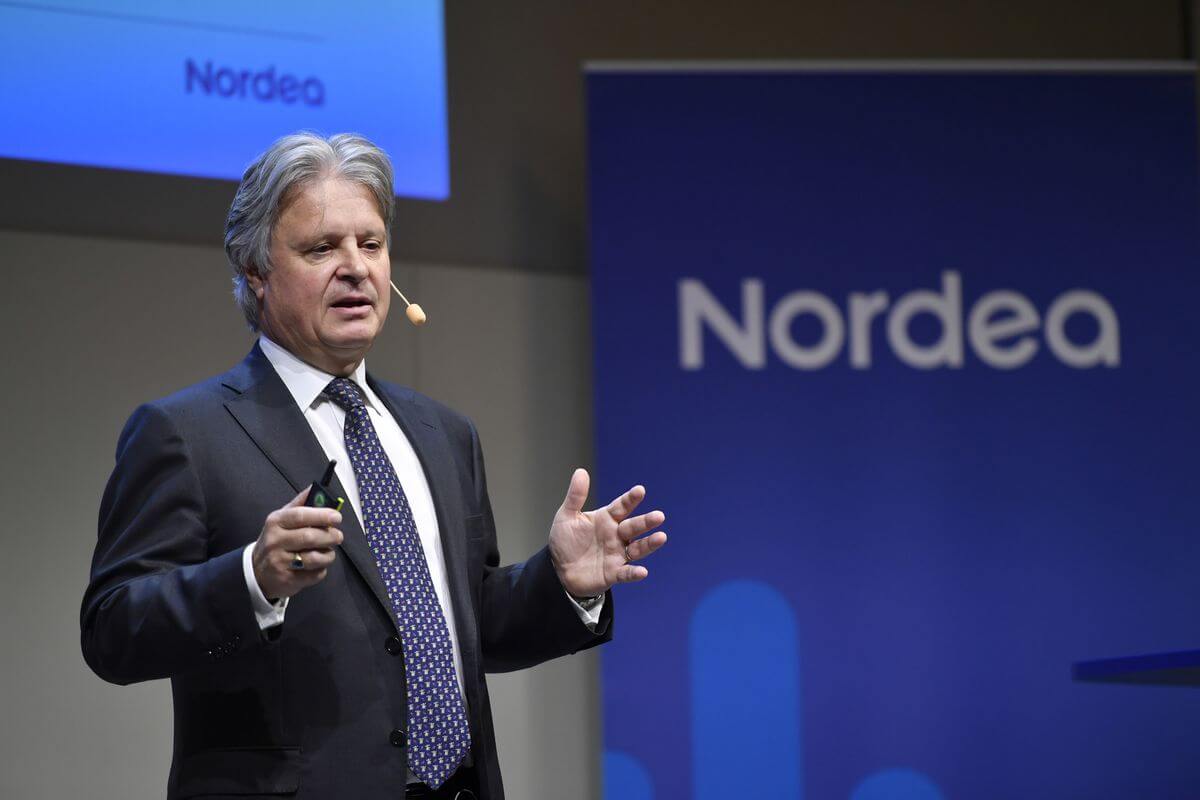
The Chief Executive Officer of Nordea Bank Abp Casper von Koskull has called on the critics of Finland based back to show patience and added that bank is well on its way to staging a turnaround in the fiscal year 2020. Nordea Bank has been in doldrums for some time, and in recent years, the bank went on an aggressive cost-cutting spree. The bank laid off workers, embraced technology and generally tried to turn it into a much more efficient organization.

However, the recent fourth quarter result has not gone down well with key investors and angry investors even went on to state that the less than satisfactory results were a sign that enough progress had not been made. Sampo, which holds around 20% of the bank’s shares, stated that the bank’s most important ‘performance indicators’ did not meet the standards of Nordic banks. Another investor simply said that the profit recorded by the bank in the fourth quarter was too low.

The bank’s CEO has now taken a swing at the investors and called them impatient during the course of an interview. Koskull said, “When I look at 2019, my clear ambition is that we have growing income and reduced costs. Markets are always impatient.” He went on to state that the bank is going to stage a comeback in 2019 and Nordea’s asset management division is going to have a big say in it. The CEO stated that the asset management business is poised to swing into profits.

The bank’s income has gone down drastically and has dropped to 9 billion Euros in 2018. However, Koskull has assured that the bank is looking at plenty of new avenues through which income could be boosted. Other than asset management, he believes the bank has the chance to get into segments in which it did not venture before. For instance, private banking in Norway and Sweden is one of the options he spoke about. He went on to state that the bank has a huge room for improvement and growth is around the corner. He said that in 2018, the bank’s traditionally strong asset management earnings did not go as planned and that gives Nordea an excellent opportunity to raise income in the coming year. Koskull is bullish about his hopes regarding the asset management business. He said, “I’m convinced we can get the asset management that has been shrinking. We will get that back; now we have a new starting point. We have the products, the capabilities in place. It doesn’t need magic to get that back.”

News

The uncertainty surrounding Brexit and a gloomy job outlook have plunged the household income outlook index in the United Kingdom to an 11-month low. The IHS Markit’s Household Finance Index tracks the sentiments of people regarding their income expectations, and it is indicative that the index has plunged to its 11-month low just as the Brexit deadline approaches on 29th of March. The index is created after gathering information from respondents through a survey. Needless to say, the slowdown in the British economy is much to blame regarding the income outlook for many households. In 2018, the economic growth slowed to a dead stop at one point, and the growth rate was the lowest since the dark days of 2012.

The index reached its lowest in January, and it has plunged again this month, despite the fact that unemployment levels in the UK are currently at record lows. Joe Hayes, an economist at IHS Markit, said that worries about job security and Brexit uncertainty are the reason behind the current state of the index. He said, “The impact on confidence caused by Brexit uncertainty continues to pose a notable risk to the domestic economy, also highlighted by job security perceptions becoming increasingly negative in February.”

According to the Bank of England, the British central bank, the growth rate of the UK economy is going to slow down drastically, and there are fears that the rate of growth might be as slow as that in 2009. In addition to that, the great of the UK exiting the European Union without a deal is very much there, and if that happens, then the economy is expected to plunge into complete chaos. The trade tensions between the United States and China and a global economic slowdown has not helped matters either for the British economy. Additionally, many companies which had set up operations in the UK are planning to move jobs abroad, and it is hardly a surprise that the British citizens are worried about their employment in a post-Brexit world.

However, it needs to be stressed that the sentiments expressed in the index are largely to do with some of the most recent events that have been plaguing the economy. According to analysts, the official government data that is going to be published on Tuesday is all set to reflect the fastest wage growth in a decade, and maybe the situation might not be as gloomy once everything blows over.

Opinion & Analysis

The Royal Bank of Scotland (RBS) has reported profits of £1.62 billion for the year ending 2018. The year on year profit growth has been over 200% from £752 million in the preceding year. The Bank has revealed a near £1 billion windfall for the taxpayer.

This is the bank’s second consecutive year yielding profits, and its performance allows it to pay a more than expected dividend, with £977 million returning to the treasury. This is the first time since 2007 that the RBS has posted profits for two years in a row.

He further added that the bank is also announcing an intention to pay back more capital to shareholders, and claimed that £1 billion is about to be returned to the UK taxpayers for 2018.

The RBS will be paying a final ordinary dividend of 3.5p per share and a 7.5p special dividend. Ross McEwan, chief executive officer of RBS, said in a statement that this was a positive performance in times of economic and political uncertainty, commending the bottom-line profits than doubled from what the bank achieved in the preceding year. Apart from the profit figures, the annual report published by the RBS also showed that the pay package of McEwan from £3.5 million in 2017 to £3.6 million in 2018.

He further added that the bank is also announcing an intention to pay back more capital to shareholders and claimed that £1 billion is about to be returned to the UK taxpayers for 2018. McEwan said that they are very well positioned to support the UK economy accompanied by strong capital and liquidity levels. He also said that the total banks lending to business and commercial clients crossed the £100 billion mark at the end of 2018.

However, McEwan has warned against a no deal Brexit. In a recent interview, he opined that uncertainty over Brexit was hitting investments, and urged politicians to come up with a conclusion as early as possible. He stated that larger businesses have been pausing investments in the UK for the last few quarters. This might adversely affect small businesses who cater to the large ones, ultimately trickling down jobs and money that comes into the economy. He expressed his concerns on the approaching deadline of March end and felt that certainty over the big fallout is extremely crucial for business.

Nonetheless, the RBS has declared that it would pay £355 million as bonuses to staff. Past week RBS acquired shareholder approval to buy back shares of up to £1.5 billion value from the Treasury. The move aims to accelerate the privatization process by buying back 4.99% of the government’s stake per year. Currently, the British Government owns 62.4% shares in the RBS. As on today, the bank’s stock is trading around 240p per share, which is far less than 502p that the government paid as a bailout (£45b) during the peak of the 2008 financial crisis.

The Treasury plans to sell its stake in the RBS by 2024, with expected losses amounting to billions.

Opinion & Analysis

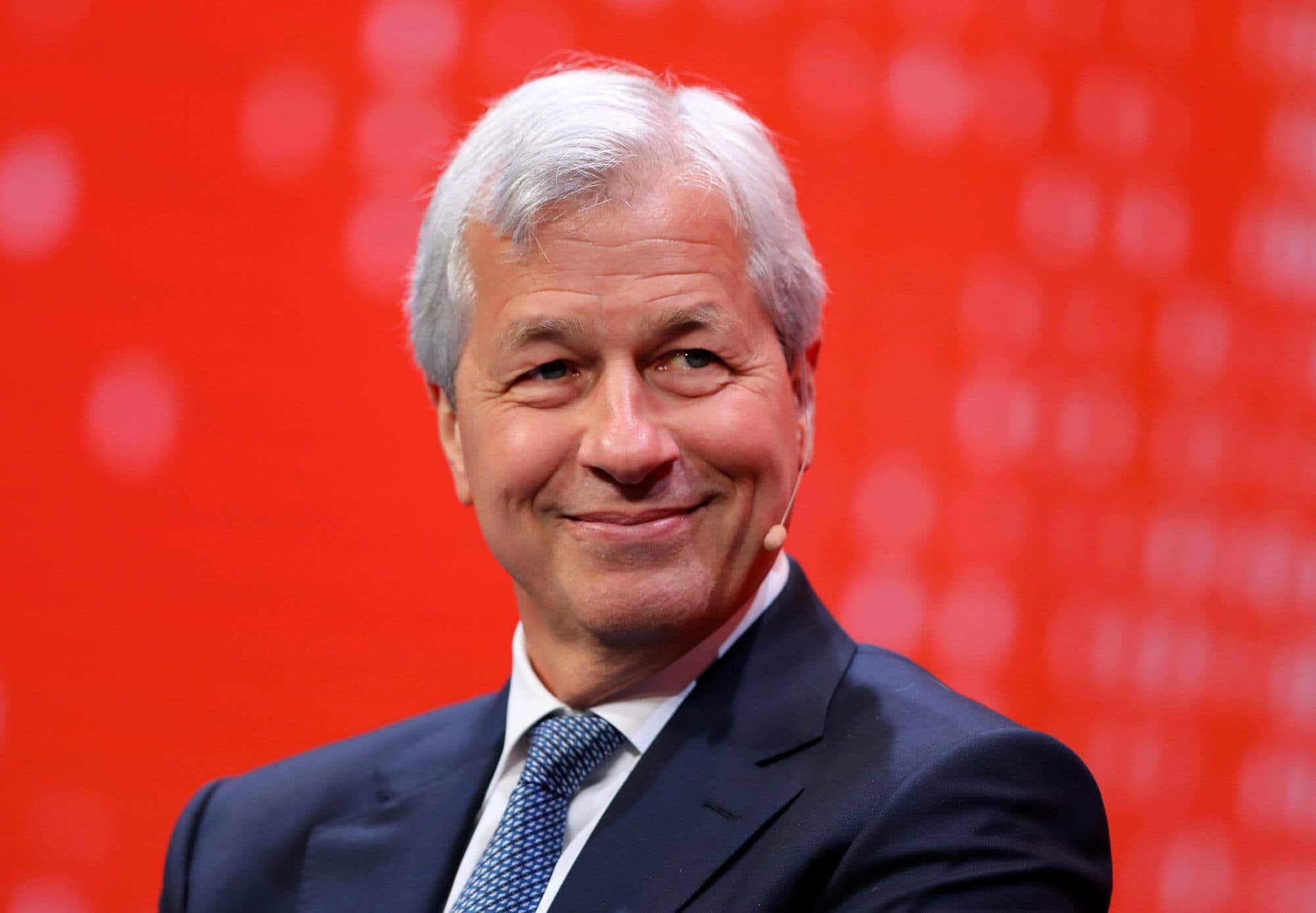
The $340 billion banking giant, JP Morgan launched a stablecoin called JPM Coin. Industry experts have foreseen the stablecoin to thrash Ripple in the long run.

Co-host of Bloomberg’s What’d You Miss? Joe Weisenthal said, “If it turns out that the blockchain framework turns out to be a good one for banks transferring money around, then the JPM Coin should entirely obliterate Ripple.”

Weisenthal started his argument with the premise of blockchain becoming a more effective way of moving money for banks. With that, he states it would be more reasonable for banks to use the JPM stablecoin than to use Ripple’s XRP. The suggestion that the XRP cryptocurrency might be obliterated is hinged on the fact that Ripple counts on regulated institutional customers.

The argument was further reinforced with the exchange rate volatility risk associated with using XRP as a bridge currency. He suggests that the fiat-backed JPM coin sounds to be far more appropriate for the customer-base Ripple is targeting.

The Ripple blockchain network is an advanced payment infrastructure for cross-border transactions used by banks and financial institutions to send and receive payments with low costs and faster clearing time. For more details visit https://www.ripplenews.world

The JPM coin can be considered as a form of short-term credit that is moved instantly. However, the underlying transaction goes through the settlement process. Also, when the actual money goes through, the coins are destroyed, as the funds replace them. Hence, the JPM coin may not be in direct competition with other cryptocurrencies but might steal the entire target market of Ripple.

RippleNet and XRP serve as the primary tools on the Ripple blockchain network. Any valuable settlement requires liquidity. However, on a banking network, the cash comes directly from many banks, which exists on the network.

Ripple had its vision clear in establishing partnerships with both banks and fintech service providers throughout the past several years, mainly to improve the liquidity of the network.

The CEO of JP Morgan has made notable remarks in the past about the blockchain trend, saying Bitcoin is a fraud at one point. However, JP Morgan seems to be leading the charge of the banks into blockchain.

The primary concerns of the industry’s executives and experts for the growth of XRP are that if JPMorgan uses JPM Coin to settle payments between its clients, then as the bank said, it will eventually put XRP in competition with JPM Coin directly.

Speaking to CNBC, JPMorgan’s blockchain projects head, Umar Farooq said that JPM Coin would have three core use cases and the primary use case is international payments for corporations.

Ripple CEO Brad Garlinghouse said the technologies banks use today was developed by Swift decades ago and hasn’t evolved since then or kept up with the market. Swift quoted that not so long ago that he didn’t see blockchain as a solution to correspondent banking.

Technically, JPM Coin and Ripple have the same use, targeting the same market, and are both battling to take hold of the SWIFT network.

JPMorgan would “wipe the floor with Ripple,” emphasizing that banks would instead use a technology developed by banks rather than a company outside of the traditional financial sector, said Tushar Jain, a general partner at Multicoin Capital.

Some stakeholders in the crypto space have weighed in their opinion on the matter, questioning the purpose of the XRP coin going forward. Tushar Jain, a managing partner at Multicoin Capital, stated that banks would not allow Ripple Inc. to become enriched by using XRP for settlements. He went further to hint that other banks will produce their form of coin like JP Morgan just did.

While this development brings institutional legitimacy to the blockchain industry, it remains to be seen how cryptocurrencies like Ripple’s XRP will navigate this new trend and stay relevant.

Company News

Apple’s former lawyer was charged by the U.S. Department of Justice for insider trading ahead of six of the iPhone maker’s quarterly earnings this Wednesday

Reports say Gene Levoff exploited his position as corporate secretary, head of corporate law and co-chairman of a committee that reviewed draft copies of Apple’s financial results to trade illegally between 2011 and 2016.

Levoff was sole in charge of Apple’s insider-trading policy and was Apple’s named representative on many of its corporate acquisitions and subsidiaries. Levoff was familiar with the company’s trading policies, routinely sending emails to workers, reminding them not to buy and sell stock amid earnings announcements, the SEC said.

Prosecutors said that before Apple terminated his decade-long employment in September, Levoff made around $604,000 in illegal gains, including realized profit and avoided losses.

Levoff has one count of securities fraud, carrying a maximum 20-year prison term and a $5 million fine.

However, the U.S. Securities and Exchange Commission filed related civil charges in the case as this was one of the rare instances of a senior lawyer at a major U.S. company being implicated in a crime. According to the filing, Levoff exploited his well-placed position to manage his Apple shares trading privately. He would gain access to the company’s periodic earnings results and draft public filing before release.

Antonia Chion, an associate director of the SEC’s enforcement division, said in a statement, “Levoff’s alleged exploitation of his access to Apple’s financial information was particularly egregious given his responsibility for implementing the company’s insider trading compliance policy.”

Apple said in its statement that they have terminated Levoff after an internal probe.

Authorities also quoted that Levoff belonged to Apple’s general counsel and has long been a corporate officer of most of the major subsidiary of the Cupertino, a California-based company.

According to authorities, Levoff helped Chief Executive Officer Tim Cook and his predecessor, Steve Jobs, ensuring the timeliness, accuracy and proper oversight of the company’s disclosures, including financial results.

The SEC mentioned that Levoff had broken Apple’s insider-trading policies on at least three accounts. For instance, in July 2015, he had allegedly learned about Apple’s poor iPhone sales report. At that time, Levoff almost sold his entire Apple holding, which was worth $10 million. After Apple released the quarterly report, its share plunged by over 4 percent. To that end, Levoff avoided a potential loss of approximately $345,000.

Apart from this, prosecutors also claimed Levoff bought and sold more than $14 million of Apple stock, including $10 million in July 2015 alone, after being given draft earnings materials but before the results were made public.

Apple confirmed that Levoff conducted illegal trades during his tenure at their company.

The tech giant clarified that it had initiated an internal investigation against Levoff after receiving a tip from the SEC in 2017. They ended up terminating him in September 2018 after placing him on a two-month leave.

Josh Rosenstock, Apple’s spokesperson, told Bloomberg that, “After being contacted by authorities last summer, we conducted a thorough investigation with the help of outside legal experts, which resulted in termination.”

The US attorney has also filed criminal charges against Levoff which could have him face up to 20 years in jail and a $5 million fine.

Charges against Levoff were levied in New Jersey, where authorities said the servers were located for firms that handled Levoff’s illegal trades.

The cases are the U.S. v. Levoff, U.S. District Court, District of New Jersey, No. 19-mag-03507; and SEC v. Levoff in the same court, No. 19-05536.

These allegations are a black spot for Apple, which mostly had a clean record over financial reporting issues.

Company News

The earnings report of the previous year was released on Thursday evening, and it revealed that Canopy, the leading pot seller, showed a 300% growth in revenue. The company’s shares also rose by 4.4% the same day following the announcement of the earnings report.

Co-Chief Executive Bruce Linton came out saying that the company hoped to continue being the leading pot producer in the world. He also says that they have a clear plan to stay at the top.

He caught up with MarketWatch on the phone the Friday morning and revealed the top three priorities that would help the company to achieve its targets.

According to him, a combination of the right people, good capital expenditures, and appropriate allocation of the company’s supply of cannabis will make the business hit all the necessary heights.

Those three things go together — they have a synchronizing effect,” Linton said.

Canopy has reportedly invested largely in increasing its employee base. The number of employees grew from 700 to 27,00 which is a whopping 285% growth.

“You do what can be done, by a group of people,” Linton said. “We are constantly scanning for new personnel — working against evolving priorities. There is never a week that goes by that we don’t.”

The recent success of the company is due to the legalization of recreational Marijuana in Canada last year.

Revenue for the fiscal third quarter hit as high as 282% compared to the previous year. Chairman and Co-CEO Linton said that the key to succeeding in the market was to make early calculated investments that would help the company to grab the share of the market while the law took effect.

Canopy Growth had claimed a wider loss this year following its heavy investment on research, development, and marketing. However, this did not bother the investors as the company’s stock rose 4% Friday. The shares are up by 80% this year.

Last year, the company managed to lock down a third of its rising recreational cannabis market. The company was confident that the investments and product development campaigns would keep it in that position.

BMO Capital Markets released a note on Friday saying that Canopy’s sales volume in terms of recreational Marijuana showed a market share of 30%.

Mr. Linton was asked if this was the position the company was expecting to hold on to in the coming years. He said that talk in the coming quarters would shift more towards the possibility of converting cannabis into more consumer products.

Meanwhile, there is a visible inclination towards legalization of recreational Marijuana in the United States. More states are legalizing the drug’s use for recreation. Besides, many brokerage firms have shown interest in the companies too.

Company News

Reports and speculation about Apple’s video streaming subscription where going around the corners for years now and finally Apple is all set to launch its new TV subscription service. Reports say that Apple is expecting to launch its new service in April or in May.

Apple currently is working in the final development phase and getting its new video streaming services ready for deployment. The new video streaming services include free original content feature basically for device owners and offer subscription service for users to subscribe to other digital services. Subscription TV series are offered by Viacom Inc., CBS and Lions Gate Corp’s Starz along with its original content.

Major video streaming partners like Netflix and HBO are not expected to be the part of it, while the services of Netflix Inc. and Amazon.com Inc. Prime video is most likely to be damaged, reports according to a few reliable persons.

Apple had planned about the new video services and is spending almost $2 billion in Hollywood to form its video content and singing content with star-like Oprah Winfrey. The new video streaming is to be launched worldwide.

The main goal of the service is to enable customers to sign up for the existing streaming products and allow them to access it on their iOS TV application, just like Amazon’s Prime Video Channels. Apple seeks to simplify the mobile video viewing feature by assembling all video content in a single app rather than allowing the user to install various apps for every service. It is quite an important step to counter its rivals Amazon’s Prime and Netflix Inc.

According to Bloomberg, Apple is expected to launch both of its service namely, new video service and subscription service on March 25 at a service event. Apple Inc. has already invited big Hollywood celebrities like Reese Witherspoon, Jennifer Aniston, director JJ Abrams and Jennifer Garner for the event.

The service is likely to be distributed across the various Apple App stores and will be available in 100 + countries.

Apple Inc. is careful about the plans and how is it going to distribute the shows is still a secret. The investors have started to focus on the revenue from the paid subscriptions as an alternative means for the increase in iPhone sales. From the holiday season onwards there is a decline in the sale of iPhone’s for the first time in its history during last year.

Some people say that Apple Inc. is negotiating with HBO, WarnerMedia owned by AT&T Inc. to be a part of its new service, although it is not yet been decided and may take a call before the launch of the new service while HBO has not rendered with the same terms that Amazon Inc. has offered it.

Apple Inc. has developed its own service segment which helped them for the plan to launch the television service; the service segment brought $37.1 billion during 2018 fiscal.

The accurate details about the disagreement between Apple Inc. and HBO are not known; however, media companies are worried about the data sharing and revenue split as Apple tries to offer the existing services to the customers in all new way.

Those customers who will subscribe for top video service by using it new streaming services will be applicable for 30 percent cut and Apple is pushing this plan forward. At present, Apple Inc. takes 15 percent cut on revenue from the users who have signed up to HBO Now and Netflix and also other video streaming apps via the App store, people mentioned.

People also say that neither Netflix nor Hulu are part of the Amazon Prime Video Channels and they are even not going to be the part of Apple’s product.

However, CBS, HBO, Starz, Viacom, and Netflix have not responded to the comments.

Apple has worked with various media companies for over the years now, only to access its content. Apple CEO Tim Cook, last month during its earnings conference call has viewed the new service offering.

The customer behavior has changed over time and is currently changing, we believe the change will be significant in the years to come, and there will be a decrease in the use of the cable bundle. We believe that the change will take place at a much faster level during the year, Tim Cook mentioned. We will be stepping into original content world.

We have signed a long partnership deal with Oprah, and as of now, I don’t want to go in-depth about the conversation. Highly motivated people have been hired who are superb confident enough and will be able to talk more on it later.

Apple has decided to play various movies and series on its new service which includes animated movies, reality shows, dramas and comedies which will be collected by Macworld.

Company News

European aircraft manufacturing giant Airbus has decided to no longer produce the A380 Superjumbo, according to an announcement made by the company on Thursday. The cruise liner was Airbus’ big bet on its quest to become the king of the skies, but the sales figures have not quite been up to the company’s expectations. The Superjumbo is the world’s biggest airliner, and Airbus wanted it to be a direct competitor against the iconic 747 that is produced by rivals Boeing. However, the plan completely backfired as the airline industry went in a different direction altogether. Airlines are nowadays buying smaller aircraft, and consequently, the demand for large planes like the Superjumbo has nosedived. It is not a surprise that the company decided to cut its losses and stop production altogether.

According to the statement delivered by the company, the last Superjumbo would be rolled out in 2021 and no more after that. However, ending the A380 Superjumbo production also places thousands of jobs at risk and Airbus did say in its statement that they would soon dive into discussions with the unions regarding the matter. Over the years, Dubai based Emirates Airlines was the company’s biggest client and had ordered the highest number of Superjumbos. However, the airline decided to reduce the number of orders for the A380 Superjumbo and instead decided to go for smaller airlines produced by Airbus. That has, without a doubt, been the biggest reason behind this decision. The other major client is Japanese airline ANA, and according to the statement, Airbus will make 3 more A380 Superjumbo planes for them and 17 more for Emirates before ceasing production altogether.

The chairman of Emirates Sheikh Ahmed bin Saeed al-Maktoum expressed his disappointment about the developments. He said, “Emirates has been a staunch supporter of the A380 since its very inception. While we are disappointed to have to give up our order, and sad that the programme could not be sustained, we accept that this is the reality of the situation.”  The Superjumbo had been one of the most ambitious projects by Airbus that was aimed at ending the near monopoly of Boeing in the large commercial aircraft space and after a good run since 2005; the development of twin-engined planes badly hit the demand for aircraft like the A380. The talks about the end of production had been in the works for quite some time now, and it remains to be seen what the company does next to boost revenues.

News

Information that has been gathered from various sources has confirmed that Seoul city’s (South Korea) government has been turning in to a public blockchain for favoring few administrative applications.

Out of all the blockchain projects that South Korea has, ICON is its largest project, and the Government of Seoul has chosen this project to process information, issue documents and help in performing various administrative tasks. A special governance team has also been created by the Seoul Metropolitan Government on the 8th of February to further bring a blockchain ecosystem with the help of citizens of Seoul. This team comprises of 40 college students, 30 normal residents, 20 blockchain developers, and ten industry experts. For the Government, they will perform operations on the distributed ledger based systems by developing, testing, deploying. Finally, the Government associates all the blockchain applications created by this team with the core operating IT systems of the government that generally carry out the administrative tasks. To further stabilize this movement of the Seoul Blockchain Governance team, the government had taken a step to send appointment invites to 100 members of the team. These letters were sent out to the team members through a mobile application which had offered the advantage of being publically accessed along with the distributed ledger explorers. This had been possible as it was processed with the help of the ICON network. These letters that were sent out were in the form of transactions.

J.H. Kim, a council member of the ICON Foundation and CEO of ICONLOOP, had made it very clear that this initiative will be a stepping stone towards broader adoption of blockchain and decentralized systems by the government of South Korea.

He said:

“We see this project as the first step in the adoption of ‘public blockchain’ extending from the current private blockchain usage by public agencies in South Korea. ICONLOOP will work closely with the city’s administrative services to realize the future where disruptive blockchain technology to underpin many aspects of our daily lives.”

Kim stressed on the use case of private distributed ledger projects in linking efficient systems to a public network and quoted that:

“We are thrilled to have a great opportunity to lead public blockchain use-cases on top of the ICON Network led by the government; this became only possible based on our private blockchain projects in cooperation with the Seoul Metropolitan Government to provide transparent and efficient blockchain-based administration services.”

Both the ICON network and the government are looking forward to making use of the distributed ledger technology to process crucial administration services such as citizenship card services, authentication of documents, sub-contract payments, and mileage points integration.

In Zurich, Switzerland, Mayor Park mentioned that the government would develop a citizen’s card using the distributed ledger which will be used to process payments, store mileage, and carry out a variety of daily tasks. Initially, this vision had a lot of views from analysts and the cryptocurrency community, but now the government is trying to convince the people of Seoul that the blockchain can be widely implemented.