Opinion & Analysis

The Australian economy has been in doldrums over the past few months as growth came to a virtual standstill and the Gross Domestic Product (GDP) left a lot to be desired. In such a situation, an interest rate cut from the central bank is one of the most effective ways to cheapen credit and stimulate economic activity. According to reports, the Central Bank of Australia could actually go for rate cuts even though a senior member of the bank stated that it is unlikely. The numbers paint a sorry picture for the Australian economy, which is worth $1.3 trillion and it is believed that rate cuts could be in the offing soon.

The actual figures illustrate the dismal state of the Australian economy over the past year. While the estimated GDP growth for 2018 was 2.5%, it grew at only 2.3%, and it is interesting to note that domestic economic activity nosedived during the latter half of the year. GDP rose by only 0.2% in the fourth quarter and by 0.3% in the quarter before that. The poor show also sent the Australian dollar into a meltdown. Many investors believe that the rate cuts are coming and that could also be a reason behind the fall in the Australian dollar.

Andrew Ticehurst, who is an economist at Nomura has prepared a report in which he has stated that rate cuts are likely. He stated, “We think rate cuts this year, while not guaranteed, are now more likely than not. We expect another round of material growth forecast reductions from the RBA [Reserve Bank of Australia] and see an increasing risk that inflation continues to fall short of the target band for an extended period.” In addition to that, JP Morgan and Australia’s own investment banking giant Macquarie have also stated that a rate cut is likely. However, the most telling indication that a rate cut is likely can be gleaned by having a look at the interest rate futures. According to reports, the probability of a rate is now 100%. On Tuesday, that probability stood at 86%.

The fall in the GDP in the third and fourth quarters in 2018 is an alarming development. The last time that the GDP fell in two back to back quarters was in 2006. Philip Lowe, Governor of the RBA, is, however, optimistic about the future of the Australian economy and did not sound as gloomy as one would expect. Prior to the publication of the GDP data, Lowe had said, “The adjustment in our housing market is manageable for the overall economy. It is unlikely to derail our economic expansion.” 

News

Luxury goods investor Bernard Arnault has overtaken the Chairman of Berkshire Hathaway Inc. Warren Buffest to gain the title of third wealthiest person of the world in the Bloomberg Billionaires Index list.

Bernard Arnault is a Frenchman, who has added 14.5 billion dollars to his company so far during this year. And, now the worth of his fortune is 83.1 billion dollars, on Tuesday, he surpassed Warren Buffet by 100 million dollar so as to join the top richest list of the world and currently the third richest person ever since the launch of Bloomberg’s wealth ranking in 2012. He is the Chairman of Louis Vuitton Parent (LVMH) which is the only European company other than Amancio Ortega owned by Zara of Spain to be at the third position on the richest list.

Most of Arnault’s wealth is related to his fortune LVMH and Christian Dior. The shares of both the fortunes were increased by 20 percent during the current year and noticed record break sales amidst challenging slowdown in China.

Bernard Arnault’s 2018 profit matches to his opponent Jeff Bezos, the founder of Amazon who is the World’s wealthiest person. He has managed to add 15.2 billion dollars to his holding, and now the worth of the company is at 140.1 billion dollars on the index of Bloomberg. Mark Zuckerberg, the co-founder of Facebook Inc. had a good start in 2019; the company shares were jumping by 15.3 billion dollars.

News

With Korean face masks becoming increasingly popular, they have the ability to do wonders to your skin besides building fortunes like in Kim Jung-Woong’s case.

The growing importance given to skincare and beauty has helped a few Koreans amass plenty of wealth as customers look for the ever elusive dewy look. Large cosmetic manufacturers and banks have started noticing the impact of Korean beauty products.

In October 2018, the Goldman Sachs Group Inc acquired five percent of Kim’s GP Club Co. Ltd., a company that manufactures lipsticks, creams, and other beauty products and is valued at $1.3 billion. Kim Jun-Woong and his family own the remaining 95 percent of the company.

According to Son Moon-ho, Chief Operating Officer at GP Club, the investment bank had been following the company. The Goldman Sachs spokesman declined to comment about the deal.

Unilever spent around 2.27 billion euros in 2017 to acquire a majority of Carver Korea Co., a skincare product manufacturer. It bought out stakes held by Bain Capital, Goldman and the company’s founder, Le Sang-rok.

The Credit Suisse Group AG bought a three percent stake for about 40 billion won in L&P Cosmetic Co., the Mediheal mask sheet manufacturer.

South Korea is only a quarter of the size of Japan, and yet is the sixth largest exporter of cosmetics in the world in 2017, as per data provided by the Korea Trade-Investment Promotion Agency. In 2018, the company logged almost $4.6 billion of exports in the first 9 months. The demand from China has helped drive up the figure by almost 31 percent compared to last year.

Kim initially started off his career by selling cosmetics to Chinese wholesalers and establishing JM Solution, his own brand in 2016. It took off right from the beginning and gained popularity on Taobao, Alibaba’s e-commerce platform.

In 2017, geopolitical tensions struck the Korean beauty market after South Korea gave permission to the U.S. military in order to install the Terminal High Altitude Area Defense system to counter nuclear threats from North Korea. Beijing considered this move as a security threat and urged a boycott of Korean products.  Gp Club took advantage of these tensions to pull ahead of the competition.

The company also introduced new products like the Honey Luminous Royal Propolis Mask and lowered prices so that customers in mainland China were able to afford it compared to the foreign goods which were priced higher.

Bankruptcy

The Reserve Bank of India (RBI) has imposed a total monetary fine of worth 11 crore rupees on 4 banks namely, United Bank of India, Karur Vysya Bank, IOB and Karnataka Bank for not implementing the directions on messaging software, Swift. RBI has already levied four crore rupees on Karnataka Bank, and now another fine of Rs 3 crore has been imposed by RBI on Indian Overseas Bank and United Bank. Apart from this, the regulators have fined Rs 1 crore on Karur Vysya Bank.

Karnataka Bank in a regulatory filing has mentioned that the Reserve Bank of India has imposed a total monetary fine of 4 crore rupees on the banks for not implementing four operational control related to the Swift messaging software.

Meanwhile, United Bank in an independent regulatory filing said that the alternative exchanges are hereby made known that the Reserve Bank of India has levied an aggregate fine of Rs 30 million on these banks. And they should deposit it within 14 days, citing the reason as non-compliance and violating the directions that were furnished in the RBI circular which informed the banks for time-bound implementation and for the enhancement of Swift messaging software and its four operational controls.

Over the delay in executing the directions that were circulated by RBI on February 20, 2018, RBI has imposed a fine of 3 million rupees on Overseas Bank, which is a state-owned bank. Further, the IOB also mentioned that the IOB Bank has taken the essential steps to strengthen the internal controls and to prevent from such setbacks.

The Karur Vysya Bank mentioned that the Central Bank (RBI) has levied a monetary fine of 1 crore rupees on the bank for failing to implement the RBI directions that were issued on Swift messaging software.

Moreover, the RBI circular states that to enhance the operational controls related to the Swift messaging software, it is very much essential that the banks must not delay in the implementation of directions, a Timely bound implementation is a necessity.

Meanwhile on Saturday, the four banks namely, Union Bank of India, SBI, IDBI and Dena Bank has informed exchanges about the monetary fine that has been imposed on them by the regulators for not implementing the directions related to Swift software.

RBI has imposed a penalty of Rs 3 crore on Union Bank, two crore rupees on Dena Bank and one crore rupees on both IDBI and SBI each.

Swift is the universal message software that is mostly used by financial bodies. Due to misuse of this messaging software, there was a fraud of Rs 14000 crore registered at the PNB bank. After the PNB fraud that was brought to light in February 2018, the RBI has been very strict on all banks so as to secure all the transactions related to the bank.

News

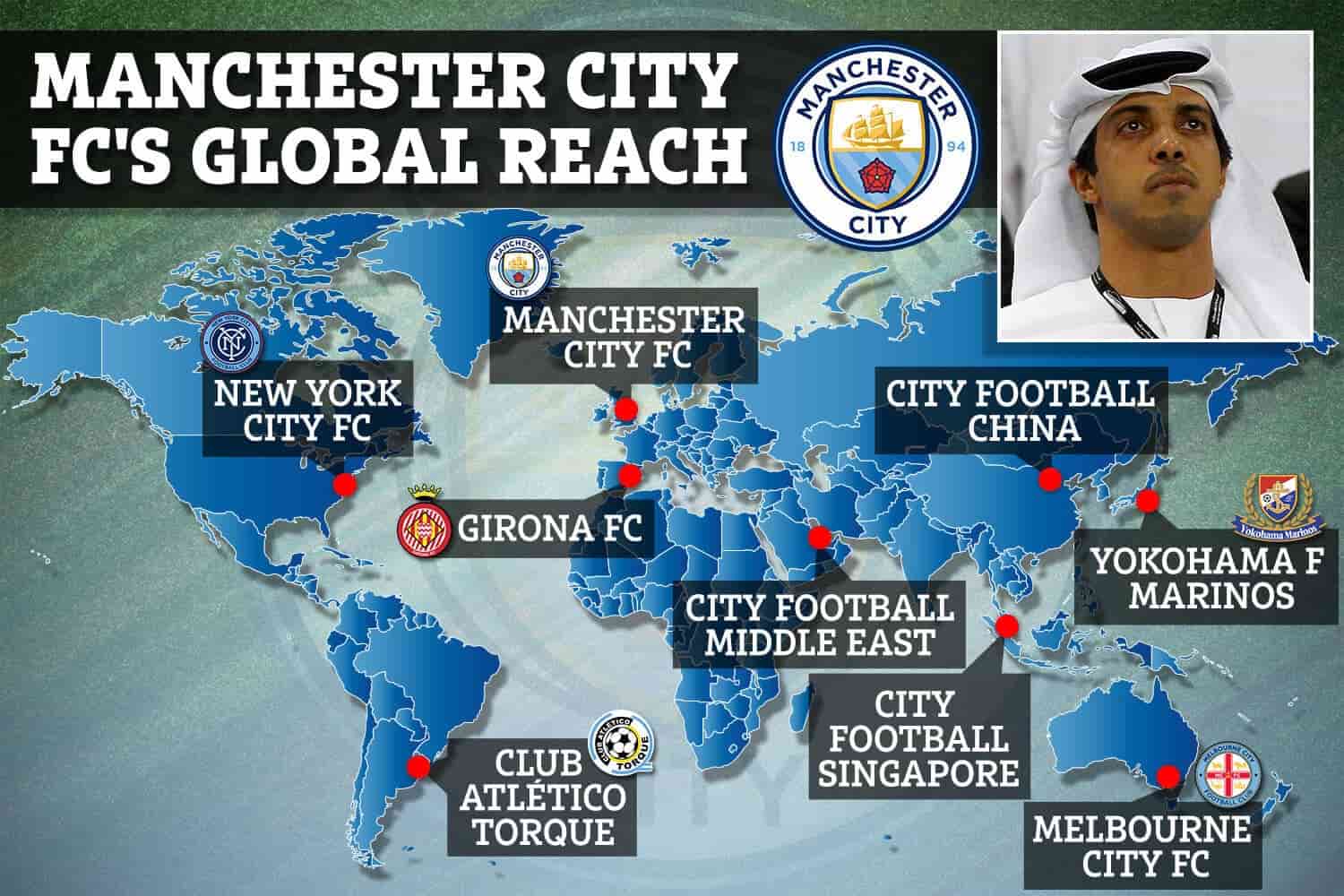
City Football Group (CFG) is the company that acquires Manchester City is planning to buy a club in India, reported by CFG executive Ferran Soriano. City Football Group also owns New York City, Melbourne City and Premier League club. The company has shares in four other sites across the world.

The owners of Premier League champions Manchester City are thinking of making investments in Indian club so as to expand their presence in Asia, Ferran Soriano mentioned.

The City Football Group acquires seven different clubs namely, League Soccer’s New York City FC, Japan’s Yokohama F Marinos, Spanish side Girona and A-League side Melbourne City. They are hopeful of getting through the deal to buy a club in India by the end of this year.

Ferran Soriano quotes, and was reported by BBC, “The company owners show interest in few markets and countries wherein the people have a genuine passion for football and of bigger opportunities that has been noticed in China and now even in India.”

The City Football Group has recently invested in Chinese team Sichuan Jiuniu, two weeks ago and has purchased shares of them, and now the company is heading to invest in India, Soriano mentioned.

From over two years, the CFG was studying the Indian market and observing closely over India and with this developments, the company needs to be patient and we will able to reach out a deal of investing in India by this year, he added.

CFG was established in 2013 when New York City FC was acquired and was the second team under CFG ownership next to Manchester City. From the past six years, CFG was able to make investments in five various clubs and Soriano is hopeful about more investments to come.

Soriano added, “We are not sure after 10 years what will happen, but the company might have 2 to 3 teams more. Although about the vision which we had from 6 years, I believe the company may have at least two to three more clubs.”

The CFG group has acquired stakes in Melbourne City, New York City, Yokohama F Marinos, Atletico Torque, Girona and Sichuan Jiuniu.

Trading News

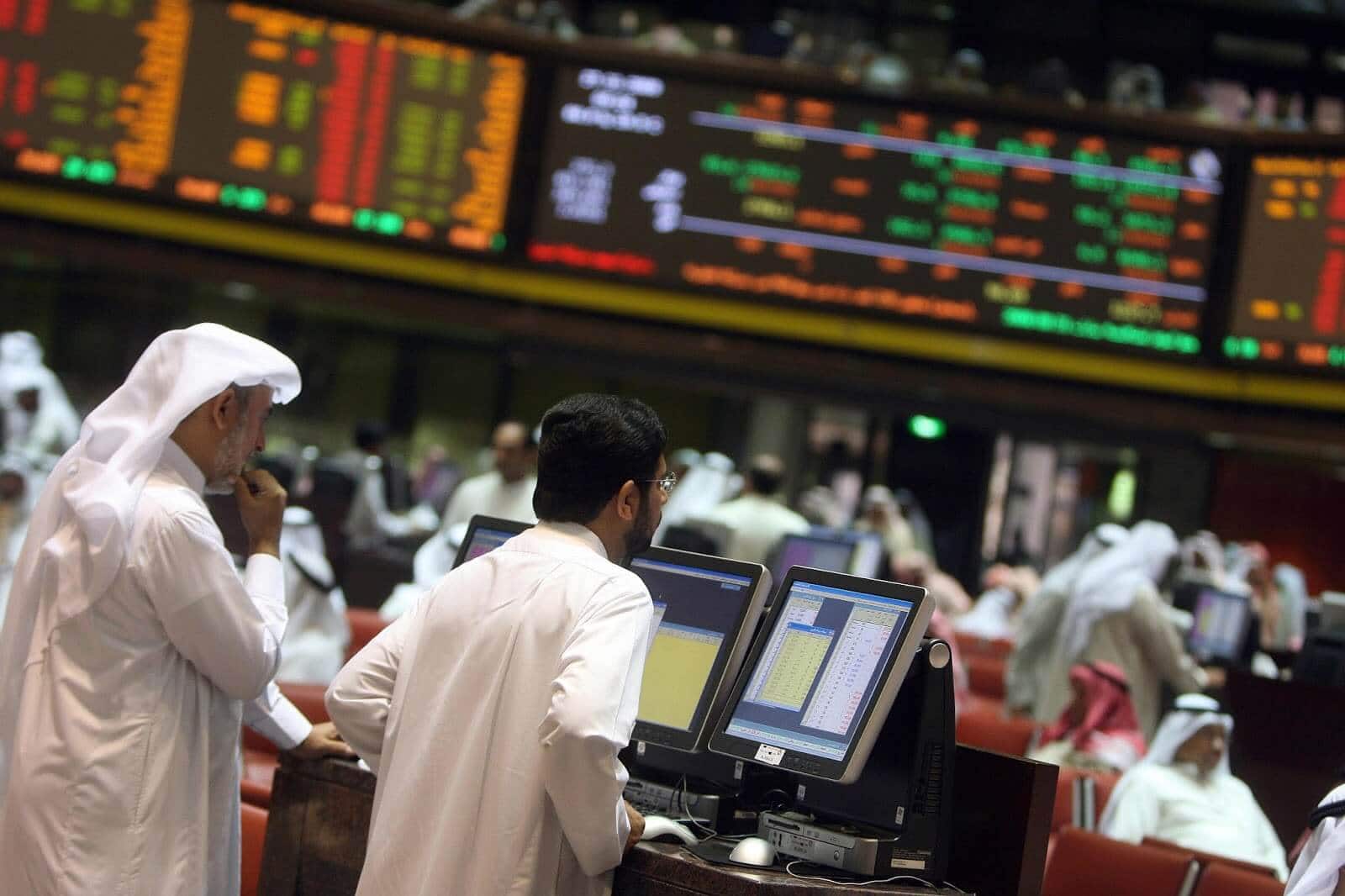
Saudi Arabia is an important country in the oil market and a member of the OPEC. Known for its production of natural gas and petroleum, it also has an emerging stock market called the Tadawul. It is the main stock exchange among the Gulf countries since 2007. Being a relatively new exchange, it did not offer derivative products like options or futures. But now the stocks in Saudi Arabia are gaining the attention of investors and fund managers as they are soon going to be listed in the emerging-markets benchmark.

The Dubai market has had a terrible few years due to the real-estate slump which is the backbone of the country’s economy, but despite that investors believe that the Dubai market offers better gains than the Saudi market.

But should investors switch to Saudi or the Dubai market is the question that needs to be answered?  

Some of the views expressed by experts:

Change global investments portfolio manager, Thea Jamison was of the opinion that the market in Saudi Arabia is expensive and when compared to Dubai, the returns and the operating margin are ‘not attractive’. Thea, says that the Saudi stocks are rallying due to the MSCI inclusion and thus the investors are optimistic about the stocks, but many companies are cautious about making any investments. Moreover, with the Saudi government adding stimulus to help the economy, companies will be under pressure to profitability making Dubai stocks a better option at least for now.

RWC Partners said that when compared to Dubai shares, the Saudi shares have always been expensive with fewer earnings for the value as the stocks have reached its maximum price. The RWC considers Dubai as a place which is good for companies which are looking to expand and foray into the African and the Middle Eastern markets due to it being a business hub. The property stocks in Dubai is expected to do well and yield great results. James Johnstone, who is the head of the RWC partners said, “We think the UAE has reached the bottom of its real-estate cycle. We have been using the opportunity to reduce some of our Saudi holdings and reallocate it back into the property stocks that are very cheap and attractively priced.”

The Saudi market is likely to join the MSCI emerging index from May and with Dubai posting strong fourth-quarter things deciding on where to invest is not going to be easy.

Company News

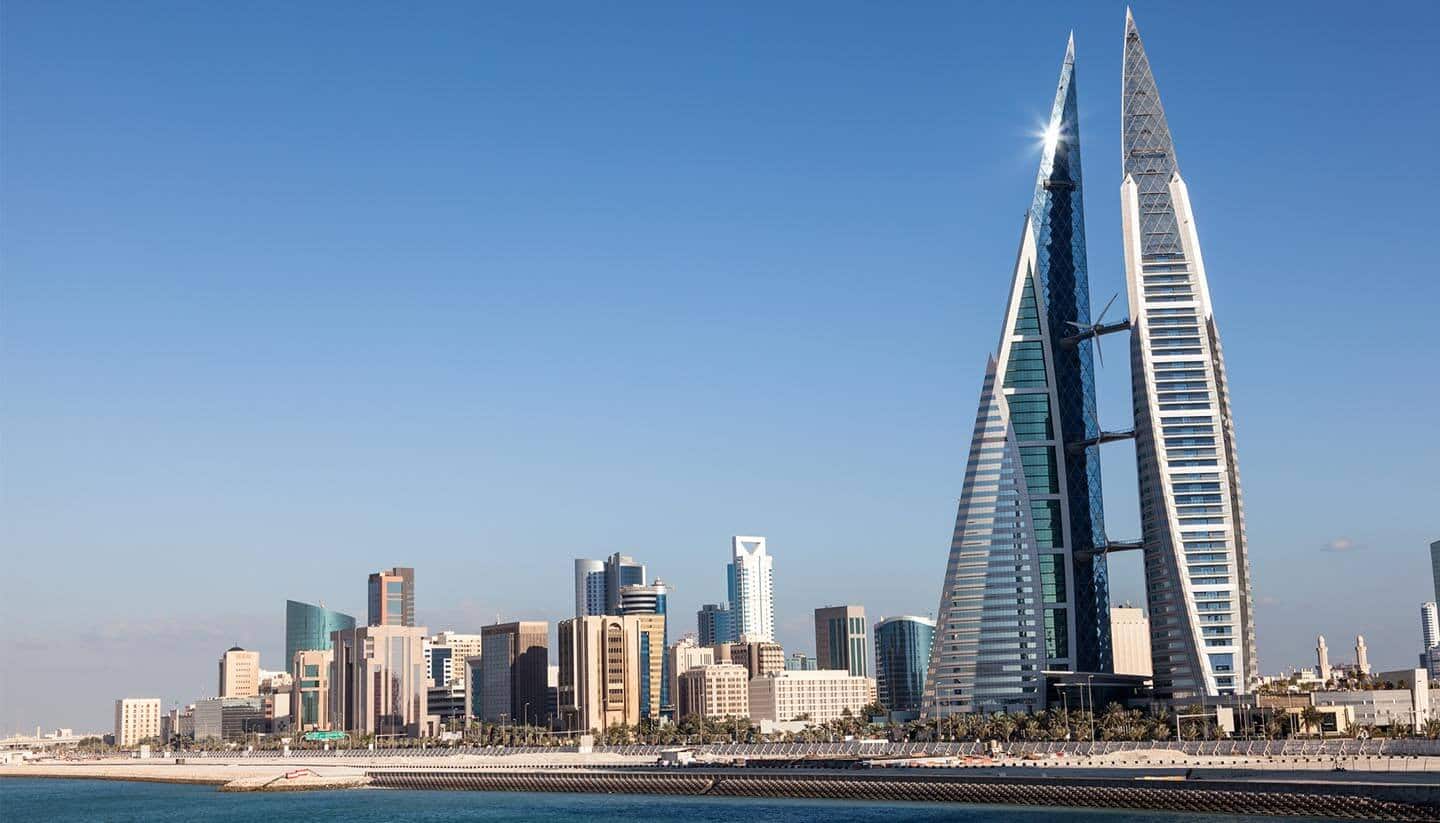
Bahrain is planning to grow and endorse themselves as a ‘financial tech hub,’ therefore, they went and approached Middle Eastern nations looking for participants. They are looking for Indian companies to participate in the fintech industry so that they can grow it in this region. Bahrain plans to develop the technology of blockchain in India as per the report of March 3rd by the Economic Times.

All the different types of options related to blockchain technologies like open banking, remittances, robot advisory, and crypto assets, Bahrain has planned to offer the Indian firms in an attempt to enhance fintech in this country. Dalal Buhejji, Senior Manager of Bahrain Economic Development Board (EDB), said that since after oil and gas the second highest contributor to the Gross Domestic Product is the financial service zone they want to grow this zone more.

Dalal Buhejji reported that in December 2018 few Indian firms had put an application on Bahraini fintech sandbox. On the other hand, there was a Memorandum of Understanding that was signed between EDB and the Maharashtra government. In order to promote fintech simultaneously at once on both the markets, they signed the Memorandum and developed the framework.

Dalal said that in the financial service sector innovations, Bahrain behaves like a test bed because this nation offers a lot of advantages which consist of doing business at low costs, appropriate accelerator, and incubators. These are just a few among many other advantages, she said.

She added that the proper ecosystem had been put together by Central Bank of Bahrain so that it supports growth and innovation. She added that they have recently witnessed various new regulation that is emerging to support digital assets, open banking and a draft regulation on robot advisory.

In February 2019, the new regulatory sandbox was launched which will permit blockchain and cryptocurrency firms to work in Bahrain. A formal regulation has not yet been passed. The firms have the permission to test their solution and speed up the firms’ entry within the market as the initiative is all set. They can test it on only a few users and can perform limited transactions.

Sandbox is usually looked at like a safe area for testing financial revolutions as it sees a limited raise of new products to choose consumers. In December 2018, a roadshow was done in Mumbai to attract fintech firms as India was considered as the key market.

Company News

Since the time digital currencies and assets have come into existence, firms that deal with them, have found it very difficult to get funds from traditional financial institutions as they have been resistant about offering bank services to them. There is one bank, however, which is going against the conventional way and offering banking services to cryptocurrency firms in Bermuda that is a US-based Signature Bank. They are going to offer services to both financial firms as well as cryptocurrency startups that have been struggling to get accounts from traditional banks.

Cryptocurrency industry that has needed financial services has been avoided by banks in Bermuda as reported by Royal Gazette. It has been agreed by Signature Bank that whichever firms are meeting the standards of both Bermuda and Signature Bank will be getting a complete range of financial services as per the report announced by the government.

There was a press release on 27th February where it was announced by the government of Bermuda that fintech companies that have a license would be offered banking services by Signature Bank which would include 66 startup firms that are already incorporated in the nation.

The Vice-Chairman of Signature Bank, John Tamberlane said that they were overwhelmed with the advancement Bermuda had made concerning the regulatory front and looking forward to work to get support from the Government of Bermuda to grow and expand fintech and crypto asset industry in Bermuda. In order to assist cryptocurrency, fintech and blockchain businesses, Bermuda rebuilt their regulatory structure. The Banks and Deposit Companies Act 1999 was revised by the government in July 2018.

It was announced by the Government of Bermuda that services were available and can be applied effectively immediately. To “promote Bermuda as the destination of choice for FinTech companies looking for a place to domicile,” Bermuda’s government was working on it as per stated by Premier David Burt. Further, Burt said that the success of the FinTech industry worldwide would depend on the capability of the business working in this industry so that the required banking services can be enjoyed.

For initial coin offerings in July 2018, a new regulation was proposed by the government which said that the person who issues ICO in Bermuda should issue information in detail regarding the projects which should include ‘all persons involved with the ICO.’ In October 2018, the very first certificate was awarded by the government under the new authorities.

Trading News

While the trade war with China rages, United States President Donald Trump has decided to focus on another trade agreement and this time he has turned his gaze at the preferential trade agreement with India, another giant economy in Asia. On Monday, the US President stated that preferential trade agreement is going to be ended for India since it is not in the US’ best interests. For decades, India has enjoyed being exporting products to the US to the tune of $5.6 billion per year without paying any duties. This move is directed at ending asymmetrical trade with India and remains a part of Donald Trump’s larger promise of substantially curbing the country’s trade deficits.

In a letter to the leaders of the United States Congress, Trump stated, “I am taking this step because, after intensive engagement between the United States and the government of India, I have determined that India has not assured the United States that it will provide equitable and reasonable access to the markets of India.” A copy of that letter has been sent to the Government of India as well, and the measures could go into effect in 60 days.

The entire issue is related to India being part of the Generalised System of Preferences (GSP) programme that gives preference to certain developing countries. The US believes that high tariffs imposed by India on US products and regulation that has hurt US companies have made the whole thing untenable. It is believed that one of the biggest reasons behind this move is the new regulatory measures for e-commerce companies that were imposed by India, earlier this year. Those measures adversely affected the businesses of Amazon India and Walmart’s Flipkart. Both companies have invested billions in the country, and the sudden change in the ground rules has not been taken kindly.

The being said, the Government of India is not perturbed at all regarding the move, and a source inside the government told Reuters that the ‘actual benefit’ received by the country stands at around $250 million. It is not a particularly large amount in the large scheme of things; however, the source did add that he hoped that this does not lead to barriers to trade with the US. Considering the fact that India is going to have its elections this year; it would be interesting to see if New Delhi retaliates in any way to this move from Trump.

Trading News

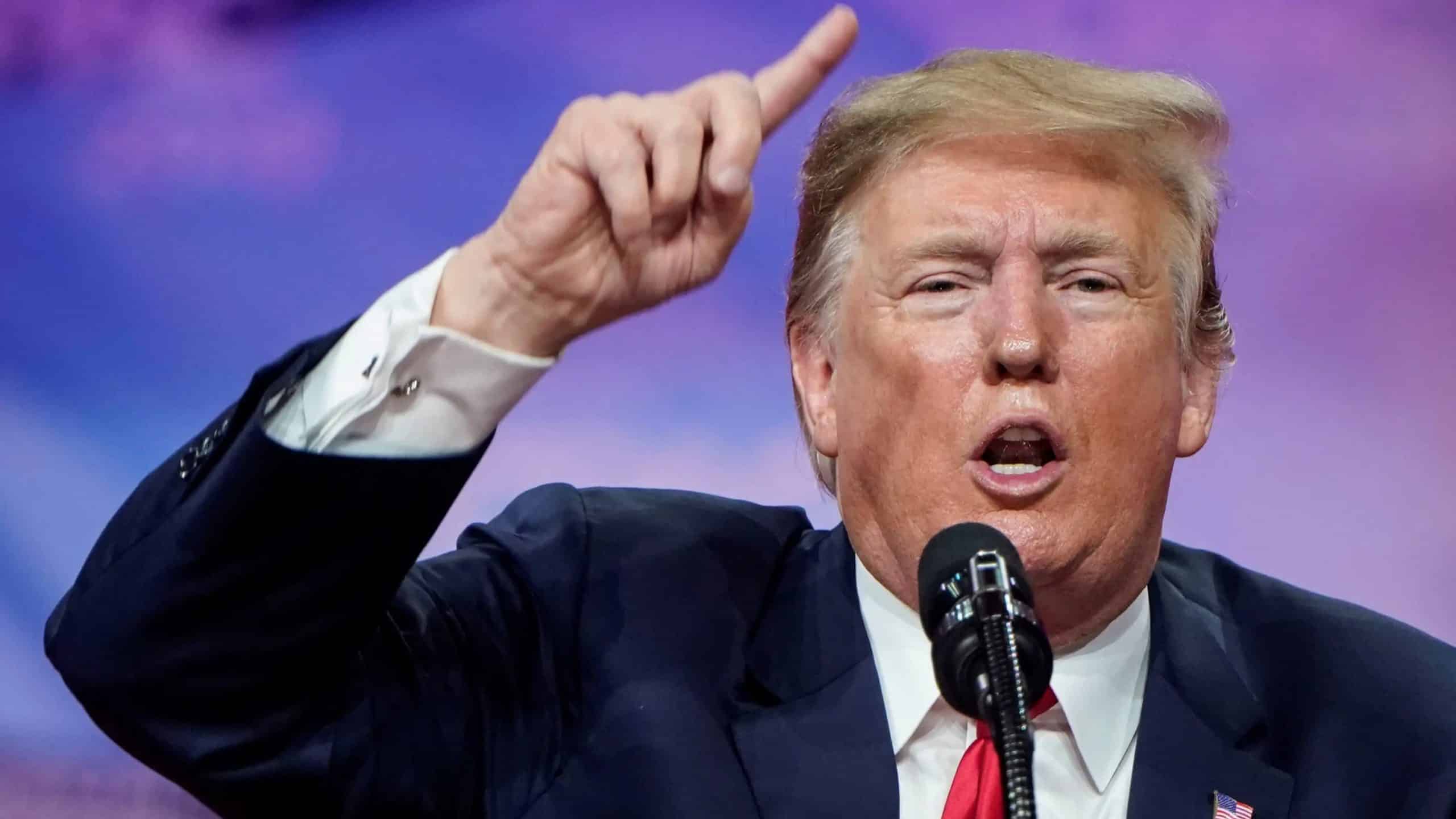
The U.S. President Donald Trump criticized the Federal Reserve again about its tight monetary policy which has made the dollar strong and as a result hurt the country’s competitiveness. At the annual Conservative Political Action Conference held in Oxon Hill, Maryland, Trump said that the gentleman at the Federal Reserve Bank likes a very strong dollar. Although, Trump mentioned his preference for a strong dollar, he mentioned that he would rather have a dollar that is strong and yet does not prohibit the United States from delaying with other nations.

Trump had made the economy an important part of his political platform. As a result, he has been repeatedly critical of the country’s central bank and its chairman, Jerome Powell. Although, Trump himself had appointed Powell, he remained critical of the Fed’s decision to raise interest rates several times last year. With rising concerns about slowing global economy trade war between the U.S. and China as well as financial markets volatility, the United States central bank has indicated that it will remain patient about the further tightening of the monetary policy.

The Federal Reserve had raised interest rates four times in 2018 as a part of tightening the monetary policy. On Saturday, Trump talked about lowering the dollar by avoiding quantitative tightening and by leaving the interest rates alone. He also mentioned that a weaker currency helps improve the competitiveness of a country’s exports. Powell, Chairman of Federal Reserve, has made it clear that he will not bow down to political pressure. He has already given a clear signal of the central bank’s independence in January 2019 by saying that he will not be resigning if requested to do so by Trump. This followed the reports in December that the United States President had discussed the feasibility of firing the Federal Reserve Chairman with his advisors after the interest rates were raised again by the Fed.

The Federal Reserve’s measure of purchasing large quantities of U.S. government bonds in order to boost economic growth especially during the financial crisis is called quantitative easing. This measure was taken by the Federal Reserve, which dropped its overnight lending rate to zero in order to lower long term lending rates.

According to investors, the Federal Reserve’s attempts at trimming its four trillion dollar balance sheet by at least $50 billion a month has resulted in tightening financial conditions. The Federal Reserve’s benchmark overnight lending rate is at present between 2.25 percent to 2.50 percent.