Stocks

Over the last two decades, many Chinese companies have become major players in industries that have traditionally been dominated by household global names, and in a new development, Chinese coffee house chain Luckin Coffee Inc and Starbucks’ rival is gearing up for a mega Initial Public Offering (IPO). However, what is even more interesting is the fact that the company is going to have its IPO at the stomping ground of its much bigger rival, the United States. According to sources which are close to the developments, the company is looking to raise as much as $800 million in its IPO in the US and have already set $100 million as the place holding the amount in its filings with the Securities and Exchange Commission. However, sources have revealed that the actual IPO is going to be a much larger one.

The sources who are aware of the developments have stated that the company is looking to raise a minimum of $500 million from the IPO, with the maximum target remains $800 million. That being said, the company has not yet revealed the number of shares which are going to be put on sale on the day of the IPO. It is a very exciting time for the company as it raised a staggering $150 million in its latest round of funding and is now valued at $2.9. However, with the IPO, they are targeting of valuation to the tune of around $5 billion and needless to say, it is all set to be one of the biggest listings in the US this year once trading goes live on the stock.

The reason behind listing in the US instead of places like Hong Kong is perhaps the fact that it has not yet turned a profit ever since it first opened for business in 2017. It is a well-known fact that most bourses outside of the US are far more conservative in nature and investors are reluctant to bet big on companies that can’t show profits, irrespective of the prospect of the business. However, when it comes to the US, that is not often the sole focus, and the potential investors try to work out whether the company in question can grow or not. In that regard, Luckin is in a good position since the company has grown at a tearing pace over the past few years and the number of cups of coffee that is being sold each day has grown exponentially. Last year, the company sold 8.7 billion cups, and they expect that figure to balloon to 15.5 billion cups in the next four years.

Trading News

Asian stock which had reached a 9-month high due to positive export and banking data in China continued to rally as the investors hoped that the Chinese economy would get better. Meanwhile, Wall Street underperformed as the quarterly earnings of major banks started pouring in.

In the market

Stocks: Asia-Pacific’s shares broadest index MSCI climbed by 0.3% mainly due to market gains in India and China. The index was at its 9-month high due to positive export and banking data in China. The Chinese shares reacted positively to the house pricing data and rose by 1.7%. The NSE, India climbed 0.8% as the country heads to general elections. In the other important Asian market, Nikkei was up by 0.2%.

The positives from the Asian market could not see through the pessimism seen in Wall Street as the banking earnings reports did not meet expectations. The major stock indexes were all lower than before with only the S&P 500 doing better.

The European shares picked up as Frankfurt and London shares rose to 0.3%.

Treasury yields: The 10-year US treasury bond yields were at 2.548% a fall from its previous high of 2.574%.

Commodities: The oil rally due to a supply crunch and also sanctions on Iran and Venezuela by the US halted as OPEC and Russia may increase oil production in a fight for domination with the United States. The US WTI crude was at $63.30 for a barrel a fall by 0.15 cents.

Spot gold suffered its fourth consecutive day loss and was at $1,286.21 for an ounce.

Currencies: The dollar was at 96.980 against the major currencies. Against the yen, it was at 111.94. The euro remained unchanged and was at $1.13045.

Senior Strategist Yukino Yamada talking about the recent developments in the Asian markets said ‘Recent Chinese data is boosting confidence in the Chinese economy while earnings have not been bad either’. On the Indian stock market doing well she said ‘Indian shares are rising on hopes on the country’s elections. In the past, they have tended to do well during a six-month period leading up to the election as well as one month after the election.’ To top it, the Asian investors became optimistic about the trade negotiations ending with a deal between China and the US. Wall Street will only hope that the earnings report that is due in this week by big corporates is not too bad as that could mean another downward spiral for the stocks.

Trading News

U.S. consumer prices went up the most in the last 14 months in March. However, the underlying inflation trend seems to slow down the domestic as well as global economic growth.

On Wednesday, a mixed report was released by the Labor Department which seemed to support the Federal Reserve’s decision to suspend its campaign in raising interest rates. The projections put forth by the U.S. central bank showed no interest rate hikes planned for this years, especially after the borrowing costs were lifted four-times last year.

The minutes of the Federal Reserve’s March 19-20 meeting was published on Wednesday. It showed that most of the policymakers saw the price pressures to be muted. However, they expected inflation to go up to reach the central bank’s target of two percent. The Federal Reserve’s inflation measure which includes personal consumption expenditures price and excludes energy and food is currently at 1.8 percent.

According to Joel Naroff, a chief economist at Naroff Economic Advisors in Pennsylvania, the inflation is likely to remain tame. He also said that the Federal Reserve seems to have gone on vacation and is likely to stay that way for a few more months.

The Consumer Price Index went up by 0.4 percent according to the Labor Department. This jump was encouraged by the prices increase of gasoline, food, and rents. In fact, this is seen as the biggest increase since January 2018.

In the past twelve months till March 2019, the CPI has gone up by 1.9 percent. The CPI went up by 1.5 percent in February alone. Economists who were polled by Reuters had forecast a 0.3 rise in March.

After excluding volatile components like food and energy, the CPI went up by 0.1 percent, thereby matching February’s gain. This CPI remained held down by the 1.9 percent drop in apparel prices.

Last month, the government introduced a new method to calculate apparel prices. This caused the apparel prices which had gone up for two consecutive months to be trimmed to 0.07 percent suddenly. Most economists expect a reversal this month.

In the past twelve months till March 2019, the core CPI went up by 2.0 percent, which is the smallest increase since February 2018.

The dollar was traded at a lower rate compared to a basket of currencies as the U.S. Treasury prices went up. Stocks on Wall Street also went up as well.

Inflation remained mute, as wage growth increased moderately even though conditions tightened in the labor market.

Stocks

There are many funds across the world that are known for driving changes in companies in which they have significant investment and so is the case most of the time, when Third Point LLC corners a large enough stake in any company. In a new development, that is the talk of the financial world at the moment, Third Point LLC is apparently going to raise their stake in Japanese electronics giant Sony Corp, and after the news was broken in a story, the shares of the company soared to new heights. Following the publication of the report in question, the shares in Sony went up by as much as 7%. While the surge in the share price is definitely a piece of good news for investors and shareholders, it is also necessary to note that if Dan Loeb owned Third Point is able to get their hands on more shares, then there is almost certainly going to be conflict in the company.

According to sources which are close to the developments, Third Point has decided to allocate a whopping $500 million for the purpose of buying the new batch of Sony shares, and it could go as high as $1 billion. The money is not a problem for the fund, as it already manages $14.5 billion in total assets as of today. Sony Corp remains one of the most valuable companies in Japan with a valuation of $55 billion and considering its dominance in both electronics and the entertainment industries, it could prove to be a hugely lucrative move from Third Point. However, it is also necessary to point it out that if Third Point does manage to pick up the shares that it has targeted, then the company is almost certainly going to demand management changes inside Sony. Hyundai faced a similar issue from Elliott Management recently, but their shareholders voted down the demands.

Sony’s studio business is something that could be a subject of takeover attempts in the years to come, but it is believed that the company has no plans to sell. However, getting in early might allow Third Point to be in a better position to get a good price on the stock and then have an active role in the decision-making process when the offers do come in. However, an analyst at Ace Securities dismissed the notion of sale with regards to the entertainment business. He said, “I don’t think a sale of the pictures business is an option for Sony now because entertainment content is becoming crucial for the company.”

Company News

In the industry of blockchain intelligence, Chainalysis is one among many high-profile companies and a well-known blockchain analytics firm that is situated in New-York. To allow law enforcement agencies, companies and governments to supervise transactions done by blockchain and keep track of any suspected illegal activities, it offers technology tools like proprietary Know Your Transaction. Illegal activities such as offering finance to terrorist and money laundering are tracked by this tool.

There were claims made that this type of firms that offer such tools might be circulating their user’s details. This allegation came to light in February last week when the controversy about acquisition made by Coinbase about Neutrino which is another blockchain analytics firm backlashed. In an interview, the senior executive of Coinbase gave the justification about the acquisition by claiming that their Coinbase’s previous intelligence tool suppliers had intentionally sold their users’ database to the third parties.

This allegation made by Coinbase about Chainalysis was clarified when Chainalysis issued an official statement which stated that their tool neither collects nor sells user’s personal information while it is providing services to digital currency exchanges.

To give the details about the service operations to the exchanges that are their clients there is a phrase known as Know-Your-Transaction (KYT) in Chainalysis. The clients are supposed to submit their transaction details by entering into this programme so that they can plug-in to the Chainalysis’s dataset.

Quite unambiguously Chainalysis had written on the topic of personal information of customers’ users that any connection from the transaction that happens among the person or the people who are involved in that transaction should be done externally and not on Chainalysis since the personally recognizable information from the client exchanges is not collected by them.

The executive of Coinbase did not express exactly which of the past intelligence companies had sold the data, but Chainalysis made it very clear that their firm does not need to store any information to carry out transaction analyses. Hence, there is no chance of them circulating any sort of personal information.

The statement made by Chainalysis continued further to say that they are focusing on targeting transactions depending on “indicators of risky behavior.” This type of destination addresses is known as ‘illicit entities’ such as terrorist funding organization or darknet market. Therefore, the main motive of the company’s blockchain analytics tools is to monitor transaction database of service-level and not to label each wallet of every user.

News

The Chinese tech scene has exploded over the last decade or so and it is no surprise that the appetite for funding China-based tech businesses has only grown in the recent past. However, the current trade tensions with the United States have presented another troubling problem for investors, who have been limited from investing in American companies.

The technology board in Shanghai will be similar to the one in Nasdaq, and according to latest reports, Chinese fund managers are setting up funds that will allow them to invest there. The technology board is going to free up investors from some of the regulatory restrictions that one usually associates with stock markets and naturally fund managers are eager to get in on the action. For instance, the maximum daily trading limit is going to be eased significantly.

According to information released by China Securities Regulatory Commission (CSRC), some of the best-known fund managers in China have sent in their applications, and within a week, the number of applications has swelled to in excess of 20. E Fund, Huaan, GF and Fullgoal are some of the asset managers who have submitted their applications. Despite the positive interest in the tech board, the tendency of many funds to engage in speculative investing presents a definite danger. In addition to that, it is also important to keep in mind that many of the funds do not have the relevant experience necessary to invest in tech stocks that are primarily focussed on growth in the initial years. It is also interesting to note that companies which have not yet turned a profit will also be allowed to list and that definitely presents an opportunity to fund managers to invest in tech firms that have the potential to grow into behemoths.

Although, the misgivings in some sections of the global media might not be misplaced, the establishment of the tech board is a bold move from China. The announcement was done by the Chinese President Xi Jinping himself and remains a hugely ambitious project that could re-energise the tech industry in the country. While the control over listing is going to be passed on to companies, the CRSC has stated that it is not going to be a free for all. Vice chairman of the CSRC Li Chao stated, “A company still needs to meet strict standards, and undergo relevant procedures to list. It’s not as if whoever wants to list, can list.” It is a totally new frontier for the tech industry and fund manager, but one that has the potential to take two separate industries to the next level.

Opinion & Analysis

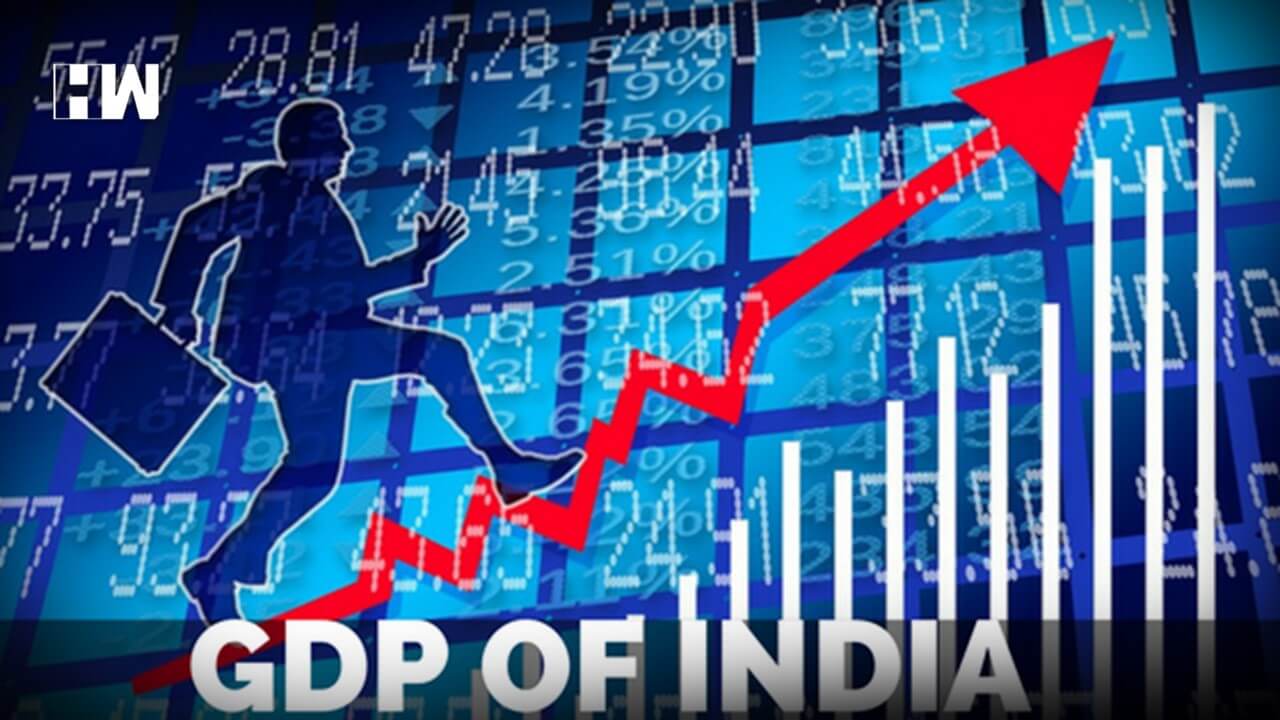
India’s Gross Domestic Product (GDP) growth rate in Q3 which ended on 31st December 2018 has stood at 6.6 percent; the information is according to recent government data which was released on Thursday. The growth rate is at a 5-quarter low. It is the slowest growth rate ever since the quarter that ended in September 2017. The GDP growth rate is lower than the economist’s estimation. As per Reuters poll, the news agency mentions that they had assumed to GDP growth rate to be around 6.9 percent. The assumption was based on more than 55 economists, who voted on the poll held from February 19 to 25; the average prediction was of 6.9 percent GDP growth rate.

Ministry of Statistics addressed in a statement that, the GDP growth rate for the current fiscal year 2018-2019 has been assumed to 7 percent in comparison to the year 2017 to 2018 which was at 7.2 percent.

As per the data released by the government, the GDP growth estimation for the previous quarter of July to September has been reconsidered from 7.1 percent to 7.0 percent. The third quarter growth rate for the current financial year has noticed a considerable fall of 8 percent from April to June 2018.

The GDP growth rate was at 7 percent a year ago, higher than the Q3 growth rate and there is a decline in the GDP rate from 7.2 percent in 2018-2019, which was released recently, Central Statistics Office stated.

Meanwhile, India is overtaking China to maintain the tag of world’s fastest growing economy. China’s economic rate was up at 6.4 percent during its third quarter.

Economists have suggested that the slowdown in GDP may direct the Central Bank of India to another rate cut during its policy review in April.

L&T Finance Holdings group chief economist, Rupa Rege Nisture stated that she had assumed the overall GDP growth for the fiscal year 2019 should be reconsidered and reviewed downwards because of the farm sector that had suffered a lot due to uneven rainfall, drained reservoirs in agricultural states and their negative effect on the cultivation of food grains. The GDP data has managed to correctly hold on to these events.

In January, the Central Statistical Office (CSO) in its first advance estimation had predicted that the Indian economy may grow to 7.2 percent for FY19.

CSO mentioned that Gross Domestic Product at Constant Prices (2011-2012) for the year 2018-2019 is most likely to achieve Rs 141 lakh crore which will be against the GDP’s First Revised Estimate for the year 2017-2018 of Rs 131.80 lakh crore, that data was published on 31st January 2019.

The Reserve Bank of India (RBI) had predicted the GDP growth rate to be at 7.4 percent in this current year, 2018-19. This GDP slowdown had led the RBI to cut the important interest rates and to modify their policy stance to neutral so as to push for expansion ahead of sharp inflation fall.

The RBI has estimated the GDP growth rate for the next financial year to be between the level of 7.2 to 7.4 percent in the first half and in Q3 GDP growth rate to be around 7.5 percent.

The GDP at constant prices for quarter one is at 8 percent and for quarter two is at 7 percent, the Central Statistics Office mentioned in a statement.

In January of 2018, growth rate of 8 core sectors has slowed down to 1.8 percent because of decline in the output of crude oil, electricity and refinery products. While in January 2018, eight infrastructure sectors such as, fertilizers, cement, electricity, crude oil, coal, natural gas, steel and refinery products had increased by 6.2 percent, as per the government data that was released on Thursday.

However, in January, the production of refinery products was down by 2.6 percent, crude oil by 4.3 percent and electricity by 0.4 percent.

During the time of Narendra Modi’s government, the highest GDP growth rate was at 9.2 percent which was noticed in January to March quarter of 2018, and the lowest GDP was registered at 5.6 percent in the later quarter of July to September of FY18.

Meanwhile, the next projection of GDP growth rate for the March quarter and the yearly assumption will be on 31 May, 2019; for the year 2018-2019.

Economist’s Analysis

There are few sectors that may record a growth rate of more than 7 percent namely, defence, public administration, construction and other services like, electricity, gas, manufacturing, water supply and other utility services and real estate, financial and professional services.

Trading News

Declaring the annual financial report card for 2018, HSBC on Tuesday admitted falling short of expectations on several fronts, following a challenging fourth quarter. Markets across the globe experienced sharp falls in business activity during the last quarter.

Europe’s largest bank’s reported pre-tax profits for 2018 stood at $19.89 billion, a 15.9% jump from the previous year. Total revenue reported for the last year was $53.78 billion, 4.5% higher than in 2017. However, the London based bank’s pre-tax profit for the year gone by was expected to be at $21.26 billion, a 23.8% hike from 2017. Revenue projections were at $54.674 billion, 6.28% higher than the previous year.

The lender bank warned that it might have to scale down investment plans to avoid missing a key target known as ‘positive jaws,’ tracks whether banks are growing revenues faster than costs, for a second straight year. The share prices of HSBC fell by 3%. The bank has attributed the shortfall of expectations to the slowing trade in China and the UK.

HSBC CEO John Flint said on Tuesday that the bank would be proactive in managing costs and investments to meet risk to growth ratios where necessary. However, he assured that they wouldn’t take short term decisions that would hurt business interests in the longer run. He stated that the key focus would be to moderate investments and not to cancel or change the shape of investments.

The Chinese economy has slowed down to a 28-year low at 6.6%. This has challenged HSBC’s plans to increase investments in Asia, from where the banking giant accumulates 90% of its total profits. One of the major reasons for the slowdown of China is its elongated trade tussle with the United States. And if Beijing and Washington don’t reach the point of mutual consent, businesses will continue to suffer in both countries.

Asian markets contributed $17.8 billion to the bank’s profits, 16% more than what they did in 2017. Flint said that though the profits from Asia would continue to grow, the growth rate will dip a little due to the Sino-US trade war.

On the other hand, business back home continues to suffer. The sword of a no-deal Brexit is hanging on the UK as the deadline for Britain’s exit from the European Union is approaching. HSBC recently set aside $165 million against possible future bad loans in Britain, which reflected potential economic suffering due to a no-deal Brexit. Commenting of UK figures, Flint said that the longer uncertainty hovers around, the worse situations will continue to be for their customers. Due to uncertainty, the majority of the bank’s customers are postponing investments, which has resulted in the slowdown of the UK economy.

The core capital ratio of HSBC dropped to 14% for December 2018, a 0.5% drop from the previous year’s corresponding period, mainly due to adverse foreign exchange movements. Nonetheless, the bank has announced that it will be paying the yearly dividend at $0.51 per share, which is more or less in line with what markets analysts had predicted.

Opinion & Analysis

The Royal Bank of Scotland (RBS) has reported profits of £1.62 billion for the year ending 2018. The year on year profit growth has been over 200% from £752 million in the preceding year. The Bank has revealed a near £1 billion windfall for the taxpayer.

This is the bank’s second consecutive year yielding profits, and its performance allows it to pay a more than expected dividend, with £977 million returning to the treasury. This is the first time since 2007 that the RBS has posted profits for two years in a row.

He further added that the bank is also announcing an intention to pay back more capital to shareholders, and claimed that £1 billion is about to be returned to the UK taxpayers for 2018.

The RBS will be paying a final ordinary dividend of 3.5p per share and a 7.5p special dividend. Ross McEwan, chief executive officer of RBS, said in a statement that this was a positive performance in times of economic and political uncertainty, commending the bottom-line profits than doubled from what the bank achieved in the preceding year. Apart from the profit figures, the annual report published by the RBS also showed that the pay package of McEwan from £3.5 million in 2017 to £3.6 million in 2018.

He further added that the bank is also announcing an intention to pay back more capital to shareholders and claimed that £1 billion is about to be returned to the UK taxpayers for 2018. McEwan said that they are very well positioned to support the UK economy accompanied by strong capital and liquidity levels. He also said that the total banks lending to business and commercial clients crossed the £100 billion mark at the end of 2018.

However, McEwan has warned against a no deal Brexit. In a recent interview, he opined that uncertainty over Brexit was hitting investments, and urged politicians to come up with a conclusion as early as possible. He stated that larger businesses have been pausing investments in the UK for the last few quarters. This might adversely affect small businesses who cater to the large ones, ultimately trickling down jobs and money that comes into the economy. He expressed his concerns on the approaching deadline of March end and felt that certainty over the big fallout is extremely crucial for business.

Nonetheless, the RBS has declared that it would pay £355 million as bonuses to staff. Past week RBS acquired shareholder approval to buy back shares of up to £1.5 billion value from the Treasury. The move aims to accelerate the privatization process by buying back 4.99% of the government’s stake per year. Currently, the British Government owns 62.4% shares in the RBS. As on today, the bank’s stock is trading around 240p per share, which is far less than 502p that the government paid as a bailout (£45b) during the peak of the 2008 financial crisis.

The Treasury plans to sell its stake in the RBS by 2024, with expected losses amounting to billions.

Company News

Jim Hackett, Chief Executive of Ford Motor Co, said on Thursday that the company would be aiming to double its annual operating profit this year. Ford, the No.2 automaker in the U.S. had mediocre gains last year. Hackett’s comments on the coming year’s profits were made in an email to the employees at Ford.

Ford has been restructuring its operations worldwide, including plenty of cuts in Europe. The company also recently announced its new alliance with Germany’s Volkswagen to introduce self-driving and electric vehicles. This move will help both the companies save billions of dollars.

Ford’s fourth-quarter results announced on Wednesday, comprised of $7 billion operating profit in 2018 along with a profit margin of 4.4 percent, which is comparatively lower than the 6.1 percent reported in 2017. Ford has announced that it is targeting 8 percent operating margin in the upcoming quarter.

According to the email Hackett sent to the employees, 2018 was considered a mediocre year. He thinks the $7 billion which comes to 4.4 percent operating margin to be only half of the appropriate margin. He also mentioned that the company would be aiming for $14 billion although he has not given a timetable as to when the $14 billion targets will be hit. A Ford spokesman clarified that Ford was demonstrating to the employees how the margin target translates to the overall profit.

With 20 months experience on the job, Hackett said that it is time to bury 2018 in a deep grave and mourn over what could have been and focus better on the coming year.

Ford did not share a specific financial forecast for 2019 with Wall Street. It only mentioned that there is a potential for improving earnings and revenue. This is in stark contrast to General Motors Co, which is Ford’s larger U.S. rival. General Motors forecasted higher 2019 earnings on Jan 11, surpassing analysts’ estimates.

Hackett also said that he was angry at himself while looking through the 2018 results of the company. He speaks in his email about the competition which is better and how he believes that Ford is better than its 2018 results.

According to Hackett’s email, Ford is considering moving its timeframe to introduce electric and self-driving cars in its portfolio. He is trying to find out why it missed the trends in China, where Ford is losing money.  With China being the world’s largest auto market, this issue needs to be tackled quickly if Ford plans on doubling its revenue in the coming year.