News

The on-going shutdown has affected the lives of many in the United States. The affected persons range from the federal employees to other businesses dependent on the Government. But, it is strange and equally surprising that the shutdown has also affected the United States President.

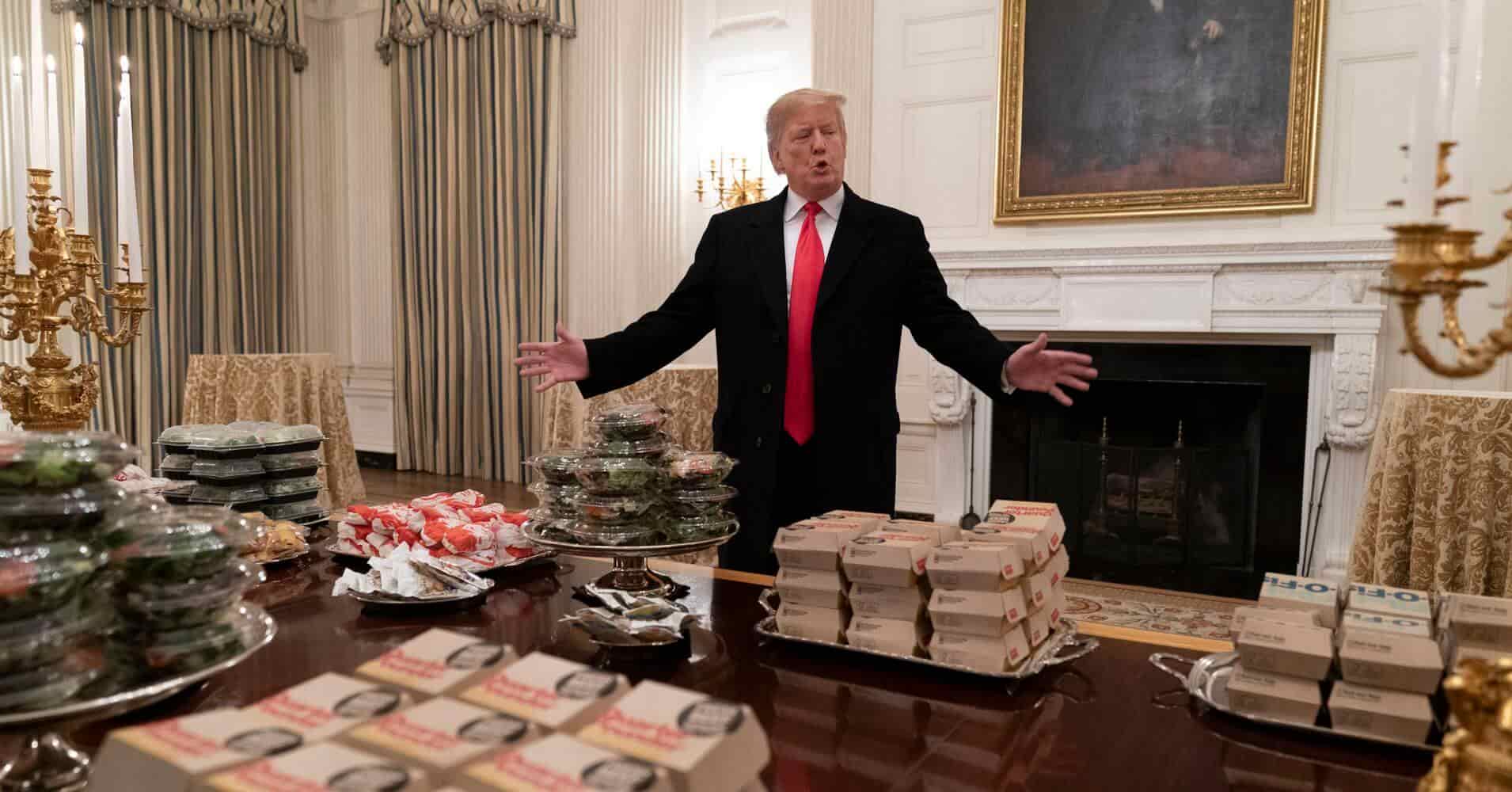
President Trump personally paid for an “all American” feast of burgers, pizza, and fries for a visiting college football champions in White House. President Trump had to do this as the White House chefs are among those federal workers who are furloughed owing to the partial shutdown. It should be reported here that the ongoing shutdown is the longest one in the history of the United States.

On Monday, the Clemson Tigers were invited by President Trump to the White House as they have won the national championship defeating Alabama Crimson Tide.

Having all the Chefs of White House absent due to the on-going shutdown, Trump used his own money to order burgers and fries from McDonald’s and the Wendy’s which he termed as the “great American food.”

He said that he had ordered American Fast food paid by the President himself, the food included lots of hamburgers, pizzas. He also added that he had hoped the team would like those foods more than he could offer.

Standing behind the spread of fast food, in the Dining Room of the White House, Trump said he likes them all, and he would like to see at the end of the evening how many are left.

White House Press Secretary Sarah Sanders said that the President had arranged a fun event to celebrate the College Football National Champion Clemson Tigers. As the Democrats are adamant on refusing the budget for the border wall, there is a shutdown, and the President had to pay on his own as due to the Shutdown, White House staff is also furloughed.

When asked about the choice of McDonald’s or Wendy’s Trump said he chose these outlets as those are all good American stuff, and the national champion team at the White House deserves a little celebration. Praising the team for the game, he said that the team had played fantastic against Alabama.

It was for the second time the Clemson Tigers were invited to the White House. They had visited the White House in June 2017 after winning the previous championship.

The football player walked into the event and found tables loaded with hamburgers from McDonald’s, Wendy’s and Burger King. Another table was full of Dominos Pizzas and fries.

President Trump explained that he had arranged a number of foods that are liked by the Americans throughout the nation and he would like to see how many are left after the end of the event. He also said that because of the shutdown he had to arrange the event like this.

He also added that he was happy about the Republicans sticking together for the greater good of the nation. Emphasizing on the border wall, he said it is needed from the security viewpoint, and the wall should have been done many years before. And he said he is confident that the wall is going to be built this time.

It should be reported here that the partial shutdown has reached 24th day due to the conflict between the Trump administration and the Congress over the funding of proposed U.S. – Mexico border wall. The lives of around 800000 federal workers have been affected by this partial shutdown. The cost of the proposed wall would be $5.7 billion and as per some experts in a week, if the Shutdown continues, the cost to the American economy will surpass the cost of the proposed wall.

The shutdown has closed temporarily many key departments like the State Department and not surprisingly the White House kitchen. Trump told at the event that he did not want to postpone the event until the shutdown ended.

The last record shutdown happened in 1995-1996 at the time of President Bill Clinton which lasted for 21 days.

Opinion & Analysis

After the global slow down and disappointing growth results from many countries, now Germany also reported the slowest economic growth since the last five years. The slowdown in Germany has added the problems of global downturn and trade conflicts between the countries.

Germany’s Government sources said that the economic growth eased in 2018 to 1.5 percent from 2.2 percent in 2017. However, being the major and dominant economy of the European Union, it successfully avoided the fear of fourth quarter recession.

Growth in Germany is traditionally linked with export, and it is also supported by domestic expenditures. Germany has managed well the unemployment rate at 3.3 percent. These all helped the country to bear the shock of the global downturn. It should be noted here that Germany has been growing for the last nine years.

The slowed growth of Germany has again raised the fear about the currency which is used by 19 European nations “Euro.” Along with the currency, the European Union is already facing the threat of Britain’s departure creating uncertainties about the future of the Union. Though the United States and Europe have imposed some tariff on each other, the biggest factor here would be the trade war between the United States and China. There are lots of companies that do businesses in these two countries; the trade war has lowered the investor’s confidence in those companies ultimately affecting the global growth.

China is Germany’s largest trade partner and owing to the large car market; China has been providing avenues of profit in car sales for German car makers like Daimler, Volkswagen, and BMW.

The European Central Bank has indicated that if the economy worsens further, it will have to postpone the first interest rate increase of the year by a few months. However, as per experts, the rate should remain unchanged through late 2020 owing to the condition of the economy.

German output fell by 0.2 percent in the third quarter due to many temporary factors like stricter emission testing rule and low demand in China. Though the fourth quarter figures are yet to come, two consecutive falls in quarter’s output ultimately imply situation very similar to a recession.

The statistics agency said they did not see a minus growth in the fourth quarter instead they are hopeful about positive growth. But, the agency cautioned that the figures as of now are on a preliminary stage and possess a huge potential to change at the final moment.

Opinion & Analysis

Foreign Direct Investment from China into the United States shrunk for the second year in a row.

According to the new data by the Rhodium Group, in 2018 Chinese FDI in the United States fell to just $4.8 billion — a massive decline from $29 billion in 2017 and $46 billion in 2016.

The figure of 2018 released by the independent group is a 90 percent decline from 2016 and the lowest level in FDI by China into the United States since 2011.

The report of the decline comes in between the on-going trade war between the two countries. China has been allegedly asking its companies to reduce their global holding and stocks so that it can reduce its debt level.

According to the same data, almost $13 billion worth of assets were sold in 2018 by China in the United States. China bought much of these assets in the 2015⎯2016 investment booms. Chinese net direct investment into the United States saw a decline of $8 billion in 2018, including those divestitures.

The group also added that there is also a $20 billion worth of divestitures that is still pending.

In recent months since the tariff war started between the two economies, Chinese companies have started selling assets. Anbang has already put up a number of its U.S. luxury hotels for sale, HNA Group has also allotted billions of dollars’ worth of assets for sale, Fosun International is willing to sell a stake in its New York property, 28 Liberty, and Dalian Wanda Group is looking for buyers for a sale of its stake in Legendary Entertainment.

Though Foreign Direct Investment from China into the United States fell, venture capital funding from Chinese resources into the United States has gained a record high of $3.1 billion, the Rhodium group said.

The National Association of Realtors data shows that amidst the contracting Foreign Direct Investment, Chinese investors are still on the top in buying residential housing in the United States both in terms of units and value. This shows the growing interest among the Chinese middle class in the American market.

Company News

After receiving criticisms worldwide for its role in eroding the local news business, Facebook has decided to invest $300 million in this segment over three years.

The Company said the investment in time and money would be a significant expansion of a plan to help newsrooms not only in the U.S. but also in abroad to create and sustain viable business models to survive.

The recipients of the investment said that earlier investments by Facebook were somehow linked to the social media company, but this time it is unique and nowhere linked to Facebook.

The investments that were made by Facebook previously in the news business segment were designed to encourage or force the media house to publish news on Facebook’s platform. Eventually, this model hurt many of the recipients as Facebook shifted its strategies.

Campbell Brown, Facebook’s vice president of Global News Partnerships, said Facebook would continue its fight against fake news, misinformation, and low-quality news on its platform. Along with that, it has an opportunity and responsibility to help local news business to grow and thrive.

Earlier Facebook was criticized heavily for its role in promoting hate speech, misinformation, and political meddling.

The first round of investment will be done in the United States. It will help augment resources for the local news businesses for local reporting, help research how to use technology to improve news gathering and create new products, recruit trainee community journalists and place them in local newsrooms and also help fund a program modeled after the Peace Corp, which will place 1,000 journalists in local newsrooms over the next five years.

Pulitzer Center will receive the first round of investment, Report for America, Knight-Lenfest Local News Transformation Fund, the Local Media Association, and Local Media Consortium, the American Journalism Project and the Community News Project.

Fran Wills, CEO of the Local Media Consortium, an alliance of 80 news companies representing 2,200 outlets said Facebook is helping the local news businesses to create new and unique news content for the community; it will in return open multiple revenue streams by attracting advertisers. Ultimately this will help the local businesses to grow like anything.

Last December, Facebook announced making an investment of $6 million in local publishers in Britain. It also has plans to expand the investment in the existing “Accelerator” program, which was launched last year to help local media businesses like San Francisco Chronicle and the Denver Post improving their news reporting in order to attract more number of subscribers and membership donations.

Wills said that it ultimately helps the news businesses to have credible content on their platform and Facebook’s this investment also will help the local community as well.

News

After the recent declaration by the Chinese Government of opening up its economy to the foreign players, it can be said that China has not lived up to its promises.

The most sought-after sector is still unreachable by foreign players. Foreign companies do not fully penetrate the country’s financial market. However, after a series of allegations by the companies globally, China has released a bunch of announcements in order to loosen the grip over the sector. Experts were surprised by the announcements at that moment. So, 2018 has seen opening up of the second largest economy of the world. But, there is a certain segment of the financial market, which still has no major access to the massive Asian market.

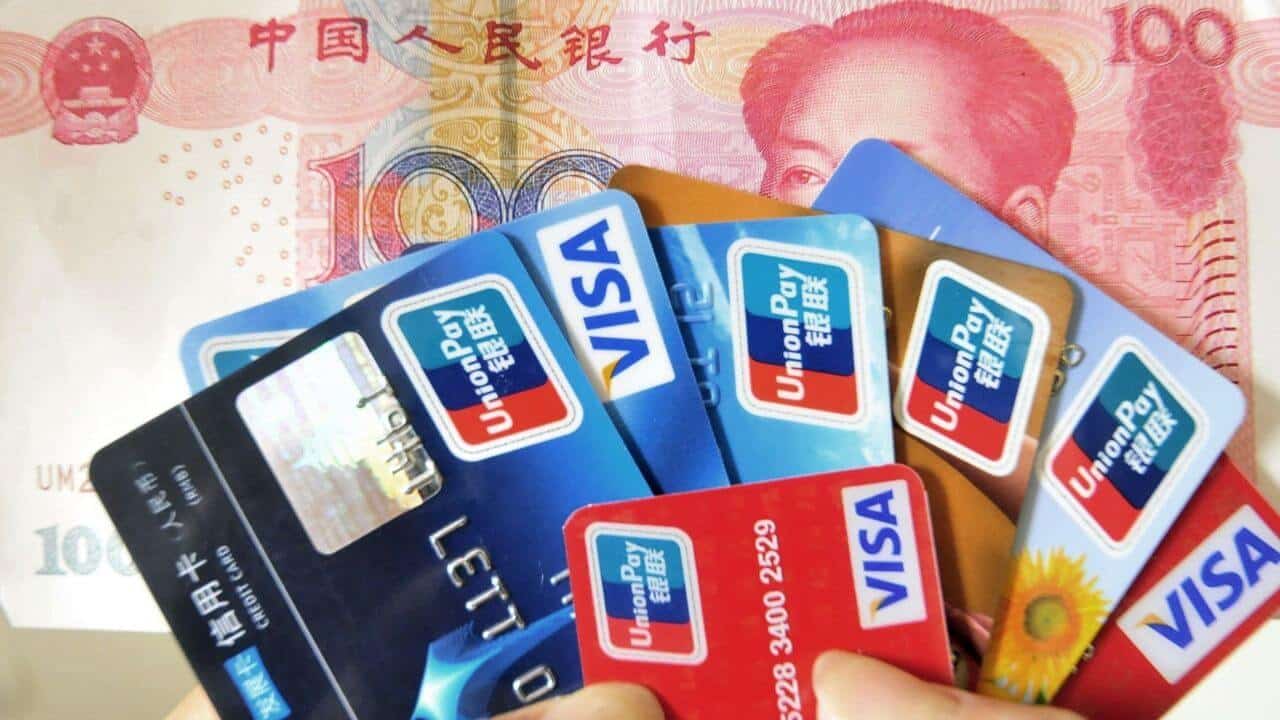
The segment in the question is Payment Services. As per some reports, People’s Bank of China has not yet formally acknowledged the application forms of Visa and Mastercard to allow these companies to process yuan payments. As per reports, the two companies have filed the application more than a year ago, and as per the regulations of the Central bank, once acknowledged, the decision on the application needs to be done within 90 days.

Though, Visa and MasterCard refused to give any comments on the whole episode. The central bank’s head of payments said that Mastercard had already withdrawn its application last June and Visa’s application lacked some supplement materials.

The Central bank’s representative also said that in the whole process the bank had never raised the issue of full ownership or the requirement of a joint venture in order to get full access to the Chinese market.

Once the two Payment majors get access to the Chinese market, they will have to compete with the local card payment company UnionPay. China’s Central Bank has the highest shares in the company, and it has the complete coverage in the local market, and it also has expanded in the foreign markets as well.

As per statistics, UnionPay has a market share of 36 percent in global bank card payments whereas Visa and Mastercard have 32 percent and 20 percent market share in bank card payment respectively.

China’s reluctance in giving foreign access-

Though there are concerns over China’s reluctance to provide access to its financial market, it has brought many changes recently on that front.

In November, the Central Bank of China granted access to American Express preliminary approval to process and settle domestic Yuan payments. However, it approved the access as American Express agreed to work in a joint venture with a local company Lian Lian.

After a few weeks, UBS announced having the permission of the China Securities Regulatory Commission for increasing stake in the local joint venture to a majority of 51 percent. UBS is the first foreign bank on the Chinese soil to own this much of ownership percentage.

In 2018, both President Xi Jinping and Premier Li Keqiang have announced that China would provide better access to its markets for the foreign companies. They also committed to removing the limit on the stock holding in banks, insurance, and securities sectors. They also would allow foreign investors to buy and trade on mainland-traded stocks.

Xiao Yuanqi, the spokesperson for the China Banking and Insurance Regulatory Commission, said China would further open up its financial market for the banks, insurance companies, and stockbroking agencies. It would be happy to serve as a hub for investment which in turn may bring in professionals and technologies.

However, critics say China has not lived up to the promises it made in 2001 at the time of joining the World Trade Organisation (WTO). Denying access to the bank card industry is just one example, and there are lots of industries it still provides no access to. They also accused China of violating norms of the WTO by putting a mandatory clause for payment companies to work with UnionPay for all Yuan dominated payments.

In the era of globalization, China is doing the same damage to global trade; it has been alleging the United States of. By not opening up its economy but pushing its exports, China has been able to increase its trade surplus globally. But, in the regime of WTO, this will not go unnoticed for very long. China should consider providing the same amount of access to foreign players; it has been receiving abroad.

News

US subscribers will see a rise in its monthly fee subscription by about 13 to 18%. The company spends a lot of its money on expanding beyond US shores and also on original content. After Netflix made this announcement, the shares saw a 6% rise in trading which is on top of the 30% increase posted this year.

The below plans are going to cost subscribers more:

  • The subscription for the basic plan will increase from $7.99 to $8.99.
  • The company’s most popular standard plan wherein videos can be streamed on two devices at the same time will see a price rise from $10.99 to $ 12.99 per month.
  • The premier plan wherein HD streaming can be done on up to 4 screens will be increased to $15.99 to $13.99.

Netflix competes with Amazon, HBO, AT&T and others and the extra money they get out of this price hike will help them further in their endeavor to invest in original movies and shows.

When will the prices be effective from?

The new pricing will be charged from immediate effect and now has an impact on all new subscribers of Netflix, and the same will be rolled out to its existing customers in the coming few months. The countries that will have to pay more other than the US are the Latin American countries where Netflix is available. Brazil and Mexico are the only two countries that are unaffected. Despite the rise in subscription charges, it is still cheaper when compared to HBO which charges $14.99 per month for its streaming services or to Hulu’s plan which ranges from $11.99 and above. That makes Netflix a provider of cheap entertainment despite price rise.

What Netflix gains?

Netflix has about 79 million subscribers from across the world, and the high prices could make many subscribers cancel their subscriptions. This situation is not new to the company considering something similar had happened in 2011 where it lost 600k subscribers after they separated the DVD by mail service and the video streaming options. However, Netflix thinks that it is still the best priced and hence the best alternative for people. The company is also likely to get many millions of dollars due to the price hike and compensate for the $8 million they spent in the year 2018 investing in original movies and tv shows. Netflix is confident that the subscribers will not mind the price hike as they have a great lineup of shows and movies.

Trading News

UK Prime Minister Theresa May suffered a humiliating and historic defeat on the Brexit deal in the House of Commons. Her deal was dismissed by the Member of Parliaments by 230 votes which is considered as the largest defeat suffered by a ruling government in UK’s history. 432 of the MP7s voted and out of them, 209 said ‘No’ to the deal. Earlier, May has postponed the voting from December to garner more support from the MP’s but despite that could not get them to vote for her Brexit Deal.

If the vote had been passed in the House of Commons, May had plans of making a departing from EU on Mar 29 and has also worked out on a transition period to thrash out details of a deal for free trade. Since the deal did not come through, now there is speculation about an early general election which could be another headache for Prime Minister May after Jeremy Corbyn has pressed for a no-confidence vote against the government.

Pound steadies but till when?

Despite May’s defeat in the exit vote, the Sterling has recovered, and that has taken the investors on a rollercoaster ride. The investors expected the Pound to slide down if May lost, but on the contrary, the Pound rebounded against the Dollar. Now that the ‘no-deal’ situation is highly probable with the huge defeat May has faced, the Pound is getting much support, and that is seen in the markets too. Even though the pound is steady for the time being, the future looks quite unstable as there is no telling about the outcome of the vote for ‘no-confidence.’ The Pound is expected to be stable for a short duration if Theresa May survives the vote of no-confidence. However, on the other hand, if she loses the pound can have a significant fall due to chances of a general election. The pound will remain volatile till the political situation stabilizes.

The GBP was at $1.284 against the dollar and was less by 0.1% and had regained a cent more than the lowest in the day after a huge margin defeated may. The trade funds that are focused on UK exchange are under tremendous pressure. The FTSE 100 ETF which a Tokyo based saw a decline of 1%, so were the shares in Asia-Pacific outside Japan. Shenzhen and Shanghai shares also saw a fall of 0.1%.

Opinion & Analysis

The official economic data released in Germany has said that there was weak growth in 2018 and has just managed to avoid a recession. Germany’s economy is the largest in Europe, and this slowdown has brought an end to the boom they saw in the past decade. As per the data released by the federal statistics, there was a reduction in growth from 2.2 % which was reported in the last two years to 1.5 % in 2018. In terms of GDP for 2018, it was €40,900 per person or €3.4 trillion. There was slight cheer at the end of the year when there were signs of recovery and dodging recession by a blink after having two-quarters of a dip in the output. The growing concern is that the slowdown is longer than what was anticipated and is not a temporary deviation anymore.

Possible Reasons for this Setback:

  • The government and a few experts say the reason for this economic state is due to a few ‘one-off’ factors which will probably be rectified in the coming year.
  • Low levels of water in the Rhine due to drought which affected raw materials shipping and chemical shipments.
  • Trouble in the auto manufacturing sector due to bottlenecks in production. The companies have to adhere to new emission standards set by the European Union which impacted production and sales.
  • Brexit impacted Germany as trade suffered.
  • US President Trump’s trade war with China and Brussels impacted exports.

A Silver Lining in the Gloomy Economy

The silver lining in all this economic gloom in Germany is that the consumer spending is good as the unemployment levels are at a historical low and the domestic fundamentals are strong.

Though economists are optimistic, lack of new structural reforms, lack of investment in infrastructures like airlines, railway, and digital technologies can hugely impact the economy and push it down further.

Many European countries like Italy are also in recession, and the going is getting tougher as the Eurozone as a whole is reeling from a decrease in demand for services and goods in 2018. That has made many forecasters alter their projections and predict a lower growth year on year. Moreover, there are many political concerns which have dented the consumer and business confidence which has resulted in less production. Also unless these concerns are addressed quickly even increased domestic spending will not be able to offset the impact of slow exports.

Company News

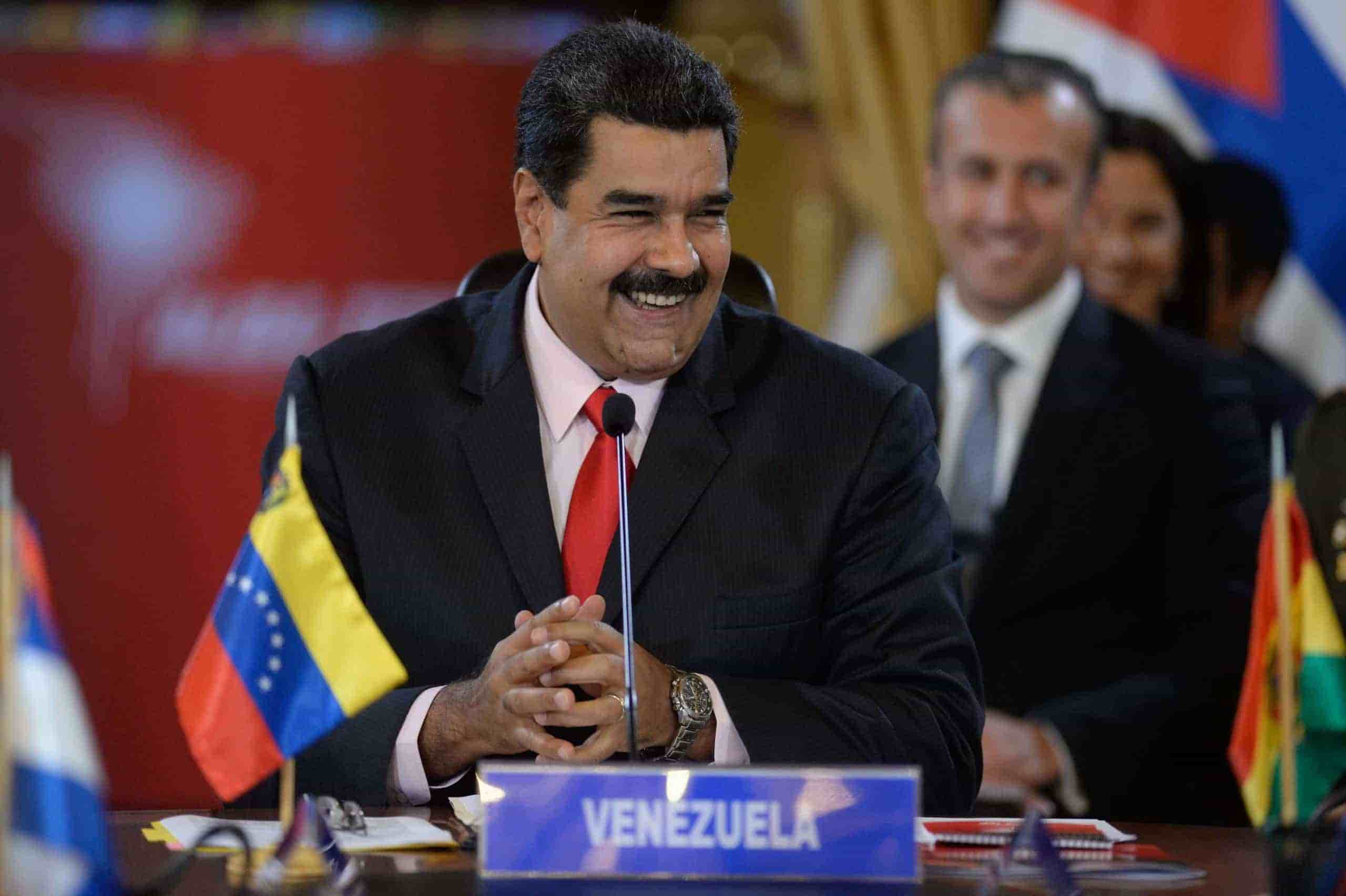
Venezuelan President Nicolas Maduro started his second term in office by delivering a state-of-the-nation speech on Monday and delivered a few fresh ideas to help the increasingly isolated country escape hyperinflationary collapse or a further downward spiral in 2019.

His election to the second term was full of criticisms that he had used unfair practices in 2018 elections and many countries around the world disavowed the regime.

He proposed a gamut of economic reforms including a 300 percent minimum wage hike, dialogue with business leaders, and increased use of an inexistent state-backed cryptocurrency.

As per economists and analysts, the measures declared by Maduro will not have much impact on the economy which is already in bad shape.

Asdrubal Oliveros, director of Caracas-based consultancy Ecoanalitica, said that the measures were déjà vu, it would have no ability to drag the Venezuelan economy out of the deep crisis it is experiencing.

The economists of Venezuela, however, had low expectations from Maduro’s speech. Maduro has been not very prompt in bringing economic reforms in Venezuela, and his recent plan of hiking wage by increasing the money supply will only create inflationary pressure. The measure will have more negative impacts than positive.

The new minimum wage of 18,000 bolivars per month – around $ 6.70, is enough to sustain a small family but with rising inflation, the purchasing power will be negligible or less than what it was before. It should be reported here that Venezuela has experienced very high inflation in recent times.

On Monday, Maduro told the all-powerful pro-government Constituent Assembly legislature that his second term would bring about many changes and create a boom in the Venezuelan market. He also said that others misinterpreted him as the enemy of the private sector. He also welcomed private businesses and enterprises to work in Venezuela, and he assured of every possible support for the next six years.

Maduro said in a confirming voice that there should not be any doubt that Venezuela is triumphing and it would become great, prosperous, and socialist. Agreeing to his point, the members chanted, “That’s how one governs.”

Maduro got elected to the post in 2013. People could easily relate to him as he belonged to lower middle class in his earlier days being a bus driver. But, he became infamous on the allegations of forcefully taking the power of the country in 2018 elections. He faced international ire by cuts in foreign financing and few allies abroad.

Critics in the United States and Latin America, as well as political opponents at home, are stating Maduro as a dictator. They blamed Maduro for his incapacity to bring about changes on the economic front and caused political failure.

But he has always alleged that he was a victim of U.S.-led “economic war” aimed at ousting him from power.

It should be reported here that during his previous term the Venezuelan economy was halved its size due to widespread recessions and a shortage of food and medicine have forced around 3 million citizens to leave the country.

In August 2018, the government tried to bring many reforms like devaluing the bolivar currency and lifting the minimum wage and taxes. But, these steps are seen as very little owing to the degree of crisis it is going through.

Later in the last week, the country’s opposition-led Congress, Juan Guido, said in a statement that he would replace Maduro from power with the support of the military. Several leaders in Venezuela requested Maduro to arrest Juan and prosecute him for treason. The intelligence agencies detained him for a brief period.

Even with facing allegations of being a dictator, he termed Brazil’s new right-wing president, Jair Bolsonaro, as the Hitler of the modern era. And he also declared that he would never bend inform of someone compromising the prosperity of Venezuela.

Trading News

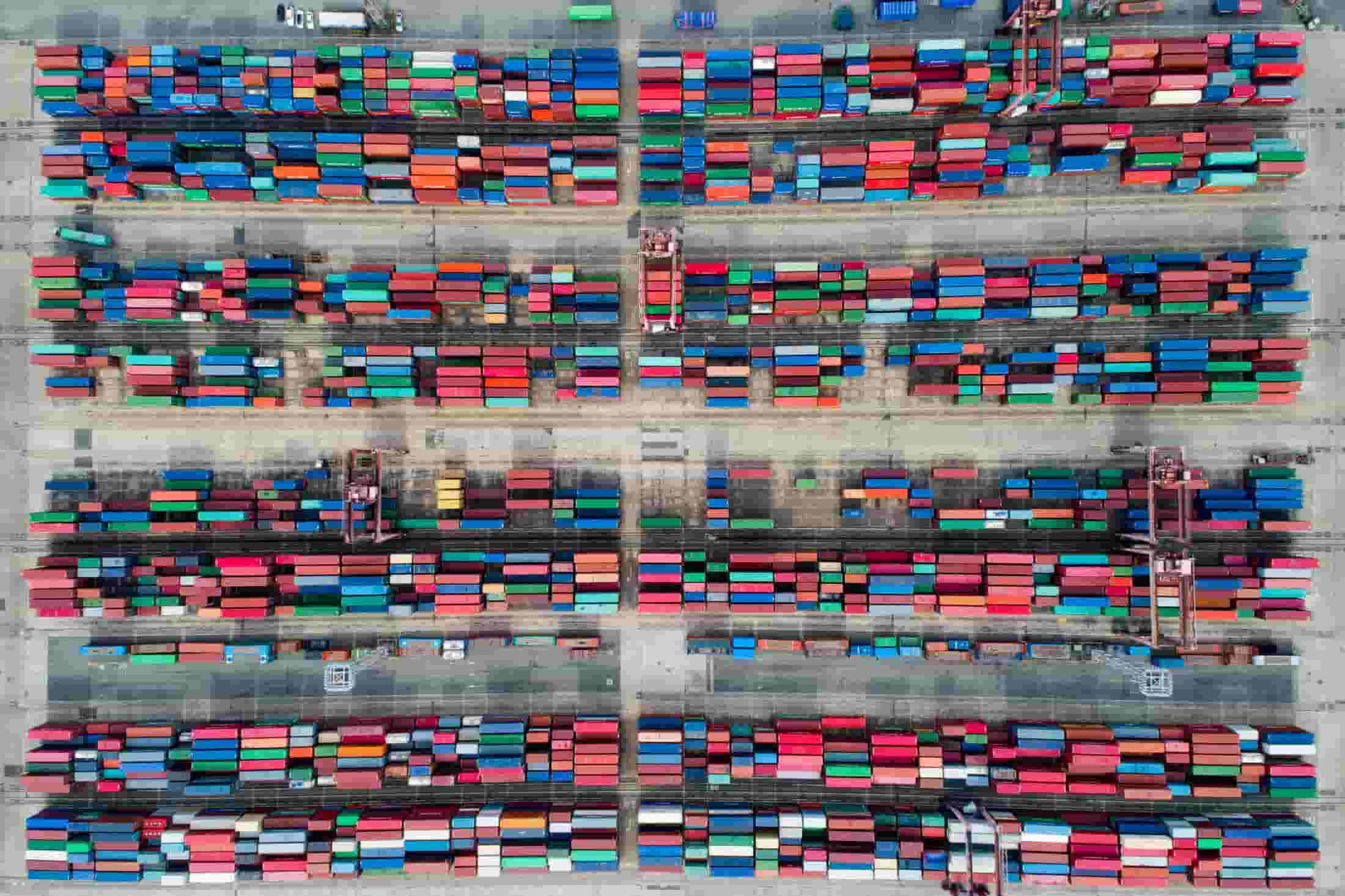
As the ongoing trade negotiations between the United States and China are giving both the parties some positive results, the new data by China may rock the relationship between the two largest economies in the world. China announced on Monday that it has the largest trade surplus with the United States breaking the record of the last decade, despite trade barriers imposed by the Trump administration on China.

According to government data, China’s trade surplus with the United States has grown by 17 percent in 2018 from 2017 and managed to touch $323.32 billion. And, it is the highest trade surplus since 2006. The deficit that the United States has with China must be a lot bigger than the figure released by China as China uses a different calculation method. It doesn’t consider the goods end up in the United States through other countries.

As per the data, exports to the United States rose 11.3 percent in 2018 whereas imports from the United States rose by a minimal 0.7 percent throughout the last year.

China confirmed that its overall trade surplus stands at $3351.76 billion for 2018 and exports inflated by 9.9 percent from 2017 and imports grew by only 15.8 percent over the same period.

According to Reuter’s records, China has the lowest overall surplus in 2018 since 2013, though the surplus with the United States increased. For 2018, the export growth also rose by the highest percentage since 2011.

China’s General Administration of Customs labeled external uncertainty and protectionism as the reason for this. It has been predicted that China will have slower growth in 2019.

Customs spokesman Li Kuiwen said Asia’s largest economy is growing steadily in 2019, but there are certain external headwinds it would have to face.

These data are being watched carefully to know the depth of damage inflicted by the ongoing trade war between the United States and China. As of now, it is evident that production metrics and export orders are falling owing to the trade dispute with the United States, as it is the largest trading partner of China.

Chinese Export and Imports-

China has experienced the biggest fall in exports in two years. It fell down by 4.4 percent in December from November.

Imports also contracted by 7.6 percent in December from November, making it the biggest decline since July 2016.

The trade surplus in November was $44.71 billion for China, and in December it had a surplus of $57.06 billion in trade while the analysts’ expectations were on the line of $52 billion.

As per the analysts, Chinese exports have not managed to sustain the November growth of 5.4 percent. It had a growth of 3 percent in December.

Import has seen an increment as well in December in comparison with November. It had risen by 5 percent in December whereas the rise in November was 3 percent.

Julian Evans-Pritchard, a senior China economist at Capital Economics, said exports in China fell because of the global slowdown and complex situation at the US trade scenario, whereas imports declined due to cooling of domestic demand.

China’s December trade surplus with the United States was $29.87 billion, and in November it has a whopping $35.54 billion as trade surplus.

Blaming the tariff war with the United States would be an injustice as China has its own domestic headwinds. Even China has accepted slowing down of growth, and it has been trying to manage the slowdown.

As of now, both sides are on the table negotiating the best terms for trade. Trump has been vocal about the rising trade deficit with China since his electoral campaigning. With more slowdown of the global economy in the year ahead, export for China will be low even if it manages to make a deal to get conducive tariff from the United States.