Trading News

For some traders understanding the CFDs’ trading charges is difficult as they vary according to the type of broker chosen and the market conditions. You can get CFDs for any financial asset; this offers a lot of variation to its traders.

While trading in CFDs, there are three ways how you are charged. First is ‘spread’ which is a difference between the ‘ask’ and ‘bid’ price. Spreads are not large, but when you are choosing a broker, you should pay attention to their spreads. Some brokers will claim to have no commission fee, but then they will have a wider spread to compensate. As a trader, it is important that you compare before deciding where to start your trading from. Some brokers use market made price with the spreads while there are other brokers, who will charge spreads according to the market movements.

Second is the commission charge, which may be about 0.1% of the value of the particular asset when you move in and out of the position. Some brokers even charge as high as 0.25% but even then trading in CFDs have lower commission then trading in actual stocks.

Additionally, all CFDs have overnight charges whenever a position is being held overnight. This interest rate is decided in advance. The charges vary with different assets, so make sure what interest rates your broker is charging for CFD trading. The charges are triggered when a trader passes the daily cut-off time. If a trader closes his positions before that time, no charges are levied to him.

One of the benefits of trading CFDs is that it doesn’t entitle the rights to the shareholders, but they get to enjoy the benefit when a share pays a dividend.  Thus most of the Brokers make a dividend adjustment to the traders’ account. It is a good thing for the traders who holds a long position on the underlying asset but for those taking a short position; this can be bad news as the account will be adjusted downwards.

Another cost that you will have is a charge for the trading platform, and this depends on the type of broker you are working with. This fee is normally monthly payments. Some brokers waive off this fees if you sustain a certain level of activity on your account.

Lastly, there can be ongoing costs of holding CFDs. CFDs value are updated in your account, and if the position is losing, the margin will be deducted from the balance in your account. If the position keeps on losing, you will get a margin call telling you to put money in your account on an urgent basis. The opposite is also true. If your position is making a profit, your account will be credited with the margin.

AAATrade.com, one of the established European based firms, offers an exhaustive list of CFDs products to trade with. The firm has a different account for the traders of different level. Spreads based account are for the beginners and Commission based accounts are best suitable for experienced traders.


Trading News

Stock markets across the world showed a mixed response, while the Asian shares fell due to fears of a global slowdown due to weak economic data from Germany and South Korea. The oil prices also reduced slightly after it hit a 7 month high earlier this week. The Wall Street stocks rallied as the earnings reports from major tech companies rolled in.

In the market:

Stocks

The Asia Pacific shares broadest index, MSCI fell by 0.5% as the South Korean economic data showed the economy had reduced in the first quarter fueling worries of a slowdown.

The Wall Street swung and ended lower as many companies reported their earnings with some missing the estimates and other like Microsoft posting a surprise profit. It reached the $1 trillion value for the first time predominantly due to its cloud computing. Facebook also beat the estimates for the first quarter. Investors are waiting for other companies to report to know if the stocks will rally.

The Nikkei ended the day with a rise of 0.5%. The Bank of Japan announced that it was in discussion to introduce a facility to expand its monetary policies by lending the traded funds. The announcement did not help the Nikkei as there was no consensus among the traders about what the move meant was it to improve cash or liquidity of the stock market. Leading strategist at Mitsubishi said ‘This is one technical move I would assume aimed at lack of liquidity in the stock market. I wouldn’t consider it as a monetary policy’.

Currency

The yen ended a little higher as the Bank of Japan decided to reduce the interest rates to as low as possible until 2020. The dollar index against six major currencies was at 98.189 and was down by 0.15%. The euro was steady at $1.1157 and the pound was at $1.291 hitting a two-month low. The Canadian dollar was also reaching a 4 month low and was at C$1.3488 for a dollar as the Bank of Canada reduced the growth forecast.

Commodities

The Brent Crude futures were at $74.75 for a barrel a rise of .25% and the WTI crude futures remained at $65.93 for a barrel. The oil prices which reached a 6 month high earlier this week continues to remain in that range as there were reports that the US will stop waiver to all countries importing oil from Iran. Moreover, the OPEC has already cut supplies which have added to the price rise.

Trading News

Asian stock which had reached a 9-month high due to positive export and banking data in China continued to rally as the investors hoped that the Chinese economy would get better. Meanwhile, Wall Street underperformed as the quarterly earnings of major banks started pouring in.

In the market

Stocks: Asia-Pacific’s shares broadest index MSCI climbed by 0.3% mainly due to market gains in India and China. The index was at its 9-month high due to positive export and banking data in China. The Chinese shares reacted positively to the house pricing data and rose by 1.7%. The NSE, India climbed 0.8% as the country heads to general elections. In the other important Asian market, Nikkei was up by 0.2%.

The positives from the Asian market could not see through the pessimism seen in Wall Street as the banking earnings reports did not meet expectations. The major stock indexes were all lower than before with only the S&P 500 doing better.

The European shares picked up as Frankfurt and London shares rose to 0.3%.

Treasury yields: The 10-year US treasury bond yields were at 2.548% a fall from its previous high of 2.574%.

Commodities: The oil rally due to a supply crunch and also sanctions on Iran and Venezuela by the US halted as OPEC and Russia may increase oil production in a fight for domination with the United States. The US WTI crude was at $63.30 for a barrel a fall by 0.15 cents.

Spot gold suffered its fourth consecutive day loss and was at $1,286.21 for an ounce.

Currencies: The dollar was at 96.980 against the major currencies. Against the yen, it was at 111.94. The euro remained unchanged and was at $1.13045.

Senior Strategist Yukino Yamada talking about the recent developments in the Asian markets said ‘Recent Chinese data is boosting confidence in the Chinese economy while earnings have not been bad either’. On the Indian stock market doing well she said ‘Indian shares are rising on hopes on the country’s elections. In the past, they have tended to do well during a six-month period leading up to the election as well as one month after the election.’ To top it, the Asian investors became optimistic about the trade negotiations ending with a deal between China and the US. Wall Street will only hope that the earnings report that is due in this week by big corporates is not too bad as that could mean another downward spiral for the stocks.

Trading News

U.S. consumer prices went up the most in the last 14 months in March. However, the underlying inflation trend seems to slow down the domestic as well as global economic growth.

On Wednesday, a mixed report was released by the Labor Department which seemed to support the Federal Reserve’s decision to suspend its campaign in raising interest rates. The projections put forth by the U.S. central bank showed no interest rate hikes planned for this years, especially after the borrowing costs were lifted four-times last year.

The minutes of the Federal Reserve’s March 19-20 meeting was published on Wednesday. It showed that most of the policymakers saw the price pressures to be muted. However, they expected inflation to go up to reach the central bank’s target of two percent. The Federal Reserve’s inflation measure which includes personal consumption expenditures price and excludes energy and food is currently at 1.8 percent.

According to Joel Naroff, a chief economist at Naroff Economic Advisors in Pennsylvania, the inflation is likely to remain tame. He also said that the Federal Reserve seems to have gone on vacation and is likely to stay that way for a few more months.

The Consumer Price Index went up by 0.4 percent according to the Labor Department. This jump was encouraged by the prices increase of gasoline, food, and rents. In fact, this is seen as the biggest increase since January 2018.

In the past twelve months till March 2019, the CPI has gone up by 1.9 percent. The CPI went up by 1.5 percent in February alone. Economists who were polled by Reuters had forecast a 0.3 rise in March.

After excluding volatile components like food and energy, the CPI went up by 0.1 percent, thereby matching February’s gain. This CPI remained held down by the 1.9 percent drop in apparel prices.

Last month, the government introduced a new method to calculate apparel prices. This caused the apparel prices which had gone up for two consecutive months to be trimmed to 0.07 percent suddenly. Most economists expect a reversal this month.

In the past twelve months till March 2019, the core CPI went up by 2.0 percent, which is the smallest increase since February 2018.

The dollar was traded at a lower rate compared to a basket of currencies as the U.S. Treasury prices went up. Stocks on Wall Street also went up as well.

Inflation remained mute, as wage growth increased moderately even though conditions tightened in the labor market.

Trading News

Ping An Bank Co., a Chinese bank is performing at its best at the moment after its dismal performance last year. This has given hope to the investors that the strength of the lender in retail banking will help shoulder the country’s economic slowdown. Ping An Bank shares went up by 39 percent this year. This is the largest gain seen on the CSI 300 Banks Index. According to the analysts in the industry, the bull run will probably continue. The rise of share prices has stoked demand for its $3.9 billion convertible bond sale, which offers nearly 1,400 times the amount.

With Chinese banks benefiting from the pledge made by policymakers for regulatory and capital support, China Merchants Bank Co. and Ping An Bank are reaping the rewards for their concentrated focus on retail banking.  The sector is dominated by the Shenzhen based lenders where competition is slightly less fierce and offers higher returns than in the corporate lending sector.

According to Liao Chenkai, an analyst at Capital Securities Ltd, investors are open to paying a premium to retail banking even during the economic slowdown as it is less recurrent than wholesale banking. He also mentioned that although China Merchants Bank and Ping An have a lot in common, the former bank trades at a higher premium which will probably cause Ping An bank shares to rise further.

China Merchant Bank shares were traded at almost 1.6 times its forecast price while Ping An shares were traded at almost the same forecast price.  The transition of Ping An Bank from corporate to consumer backing began in the year 2016, several years behind the China Merchants Bank. At the tie, retail contributed only forty-one percent of its profit. When the share prices rose to 68 percent in 2018, the bad-loan ratio of Ping An Bank stood at around 1.05% which was lower than the corporate lending bad-loan ratio at 2.49 percent. However, Ping An Bank’s return on equity remains at eleven percent which is lower than the sector’s average, as the bank continues its transition.

The fourth quarter net income of Ping An Bank beat market expectations and triggered a rally among the mid-sized banks in the country. China International Capital Corp. has forecasted about 17.6 percent gain compared to the average 9.4% for China listed banks. According to analysts, retail banking is bright at the moment due to its ability to being less capital consuming and able to provide earnings stability.

Trading News

Oil prices dropped on Wednesday as a result of the bullish output forecasts by two of the biggest U.S. producers. The OPEC led production cuts that led to a buildup of weekly U.S. crude oil stockpiles also had a role in the oil prices falling on Wednesday.

International Brent crude futures dropped 39 cents to $65.47 per barrel from their last settlement. Brent fell to its lowest point at $65.22 on Wednesday earlier in the session.  

The U.S. West Texas Intermediate crude oil futures also went down by 0.7 percent to $56.15 per barrel.

According to Benjamin Lu, an analyst at Philip Futures, a Singapore based brokerage firm, crude oil futures will continue to have trouble as markets try to balance between rising U.S. production levels and OPEC led cuts. He also said that the rise in event-driven trading was also responsible for increasing market volatility.

Exxon Mobil Corp and Chevron Corp released Permian Basin projections on Tuesday, which pointed to increased shale oil production.

This will result in cementing the two companies as dominant players in New Mexico and West Texas field, with at least one-third of the Permian production coming under their control in the next five years.  American Petroleum Institute released data that showed a larger than expected gain in U.S. crude stockpiles.

U.S. crude inventories went up by 7.3 million barrels in the last week. This showed an increase of 1.2 million barrels compared to analysts’ expectations. According to Kim Kwang-Rae, an analyst at Samsung Futures, Seoul, saw a rise in U.S. crude inventories weighs heavily on oil prices. Rising concerns about the increasing oil production in the Permian region is also another reason for dropping oil prices.

U.S. Department of Energy’s Information Administration will be releasing official data later on Wednesday.

The rise in oil production in North America undermines the efforts led by OPEC (Organization of Petroleum Exporting Countries). U.S. crude oil inventories have gone up by 7.3 million bpd last week alone.  OPES and its allies had pledged to reduce its output to 1.2 million bpd (barrels per day).

With the ongoing U.S- China trade talks, the market is on the lookout for further signs for resolving the conflict between the world’s two largest economies. According to Mike Pompeo, U.S. Secretary, the U.S. President Donald Trump is not willing to accept any deal that is not perfect. However, Trump is open to work until an agreement is reached with Beijing.

Trading News

Saudi Arabia is an important country in the oil market and a member of the OPEC. Known for its production of natural gas and petroleum, it also has an emerging stock market called the Tadawul. It is the main stock exchange among the Gulf countries since 2007. Being a relatively new exchange, it did not offer derivative products like options or futures. But now the stocks in Saudi Arabia are gaining the attention of investors and fund managers as they are soon going to be listed in the emerging-markets benchmark.

The Dubai market has had a terrible few years due to the real-estate slump which is the backbone of the country’s economy, but despite that investors believe that the Dubai market offers better gains than the Saudi market.

But should investors switch to Saudi or the Dubai market is the question that needs to be answered?  

Some of the views expressed by experts:

Change global investments portfolio manager, Thea Jamison was of the opinion that the market in Saudi Arabia is expensive and when compared to Dubai, the returns and the operating margin are ‘not attractive’. Thea, says that the Saudi stocks are rallying due to the MSCI inclusion and thus the investors are optimistic about the stocks, but many companies are cautious about making any investments. Moreover, with the Saudi government adding stimulus to help the economy, companies will be under pressure to profitability making Dubai stocks a better option at least for now.

RWC Partners said that when compared to Dubai shares, the Saudi shares have always been expensive with fewer earnings for the value as the stocks have reached its maximum price. The RWC considers Dubai as a place which is good for companies which are looking to expand and foray into the African and the Middle Eastern markets due to it being a business hub. The property stocks in Dubai is expected to do well and yield great results. James Johnstone, who is the head of the RWC partners said, “We think the UAE has reached the bottom of its real-estate cycle. We have been using the opportunity to reduce some of our Saudi holdings and reallocate it back into the property stocks that are very cheap and attractively priced.”

The Saudi market is likely to join the MSCI emerging index from May and with Dubai posting strong fourth-quarter things deciding on where to invest is not going to be easy.

Trading News

While the trade war with China rages, United States President Donald Trump has decided to focus on another trade agreement and this time he has turned his gaze at the preferential trade agreement with India, another giant economy in Asia. On Monday, the US President stated that preferential trade agreement is going to be ended for India since it is not in the US’ best interests. For decades, India has enjoyed being exporting products to the US to the tune of $5.6 billion per year without paying any duties. This move is directed at ending asymmetrical trade with India and remains a part of Donald Trump’s larger promise of substantially curbing the country’s trade deficits.

In a letter to the leaders of the United States Congress, Trump stated, “I am taking this step because, after intensive engagement between the United States and the government of India, I have determined that India has not assured the United States that it will provide equitable and reasonable access to the markets of India.” A copy of that letter has been sent to the Government of India as well, and the measures could go into effect in 60 days.

The entire issue is related to India being part of the Generalised System of Preferences (GSP) programme that gives preference to certain developing countries. The US believes that high tariffs imposed by India on US products and regulation that has hurt US companies have made the whole thing untenable. It is believed that one of the biggest reasons behind this move is the new regulatory measures for e-commerce companies that were imposed by India, earlier this year. Those measures adversely affected the businesses of Amazon India and Walmart’s Flipkart. Both companies have invested billions in the country, and the sudden change in the ground rules has not been taken kindly.

The being said, the Government of India is not perturbed at all regarding the move, and a source inside the government told Reuters that the ‘actual benefit’ received by the country stands at around $250 million. It is not a particularly large amount in the large scheme of things; however, the source did add that he hoped that this does not lead to barriers to trade with the US. Considering the fact that India is going to have its elections this year; it would be interesting to see if New Delhi retaliates in any way to this move from Trump.

Trading News

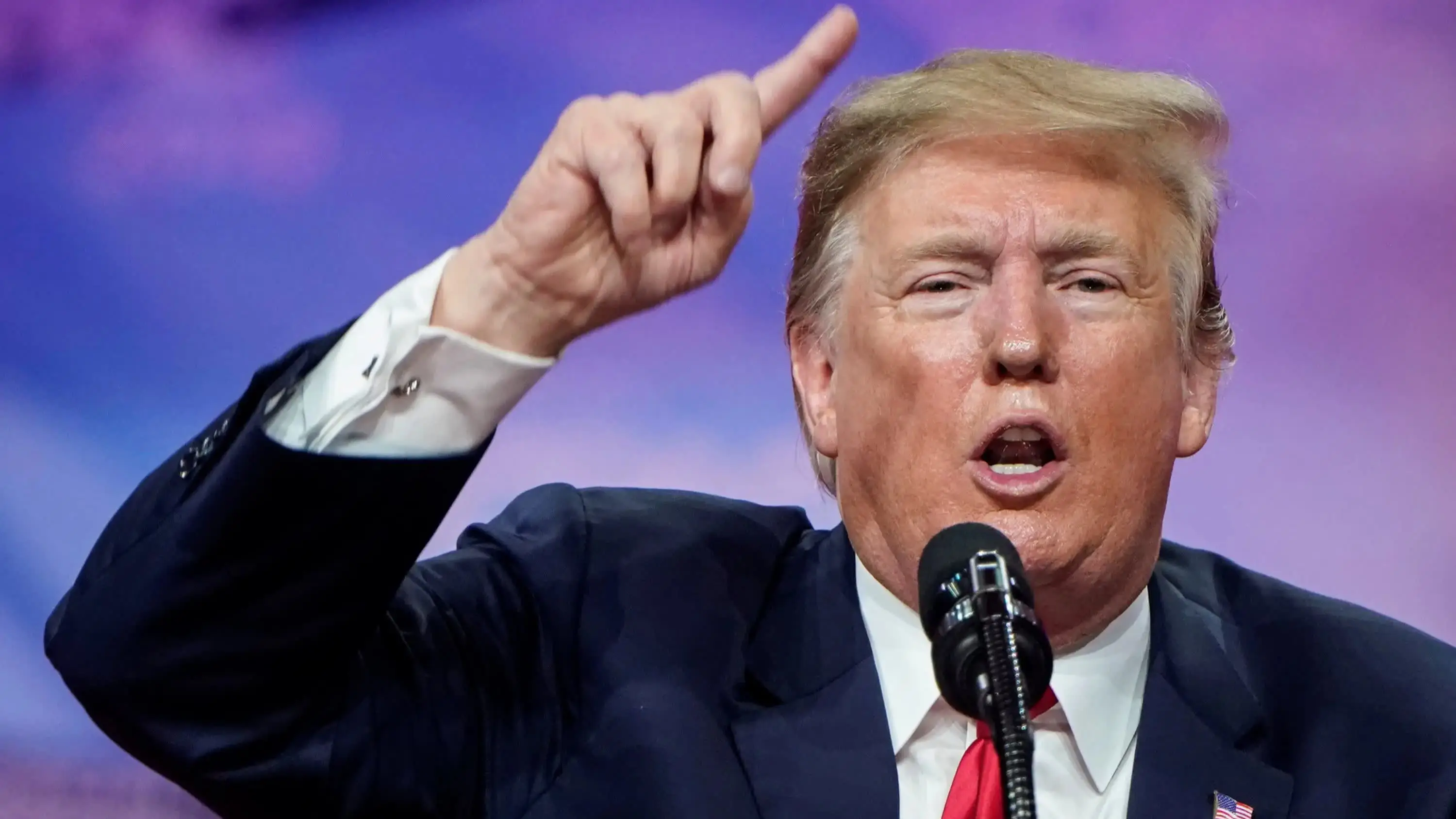
The U.S. President Donald Trump criticized the Federal Reserve again about its tight monetary policy which has made the dollar strong and as a result hurt the country’s competitiveness. At the annual Conservative Political Action Conference held in Oxon Hill, Maryland, Trump said that the gentleman at the Federal Reserve Bank likes a very strong dollar. Although, Trump mentioned his preference for a strong dollar, he mentioned that he would rather have a dollar that is strong and yet does not prohibit the United States from delaying with other nations.

Trump had made the economy an important part of his political platform. As a result, he has been repeatedly critical of the country’s central bank and its chairman, Jerome Powell. Although, Trump himself had appointed Powell, he remained critical of the Fed’s decision to raise interest rates several times last year. With rising concerns about slowing global economy trade war between the U.S. and China as well as financial markets volatility, the United States central bank has indicated that it will remain patient about the further tightening of the monetary policy.

The Federal Reserve had raised interest rates four times in 2018 as a part of tightening the monetary policy. On Saturday, Trump talked about lowering the dollar by avoiding quantitative tightening and by leaving the interest rates alone. He also mentioned that a weaker currency helps improve the competitiveness of a country’s exports. Powell, Chairman of Federal Reserve, has made it clear that he will not bow down to political pressure. He has already given a clear signal of the central bank’s independence in January 2019 by saying that he will not be resigning if requested to do so by Trump. This followed the reports in December that the United States President had discussed the feasibility of firing the Federal Reserve Chairman with his advisors after the interest rates were raised again by the Fed.

The Federal Reserve’s measure of purchasing large quantities of U.S. government bonds in order to boost economic growth especially during the financial crisis is called quantitative easing. This measure was taken by the Federal Reserve, which dropped its overnight lending rate to zero in order to lower long term lending rates.

According to investors, the Federal Reserve’s attempts at trimming its four trillion dollar balance sheet by at least $50 billion a month has resulted in tightening financial conditions. The Federal Reserve’s benchmark overnight lending rate is at present between 2.25 percent to 2.50 percent.

Trading News

The US and China negotiators are very close to reach out to a deal to end the trade war. The Trumps administrator is thinking of withdrawing almost entire tariff hike on the Chinese products. The US can only remove the tariff hike if and only if China abides by its promise of protecting intellectual property rights and purchasing American goods, sources informed to Wall Street Journals.

There are important issues that still remain to be settled; meanwhile, the deal is still in discussion. US and China have agreed on a deal that needs Beijing to buy larger American agricultural goods, energy goods and seeks to remove some barriers that do not allow American Companies to operate in China. If China accepts the above condition, then the US is ready to remove its tariff hike on Chinese goods of worth 200 billion dollars out of 250 billion dollars of Chinese imports which are currently under the American charges.

One of the most important sticking points is whether the tariffs should be immediately withdrawn by the US or should the US wait for a little more time so that they can keep an eye over China and see whether it is following its promise, the sources mentioned. The US seeks to go ahead with the threats of tariffs hike to pressurize China and to make sure that China does not back out of the deal and withdraw the taxes completely when Beijing has implemented all the promises made in the agreement.

During the ongoing negotiation, the US had urged China not to bring in World Trade organizations cases in response to the US tariffs which needs to be levied so as to execute the deal, a person familiar with the talks informed.

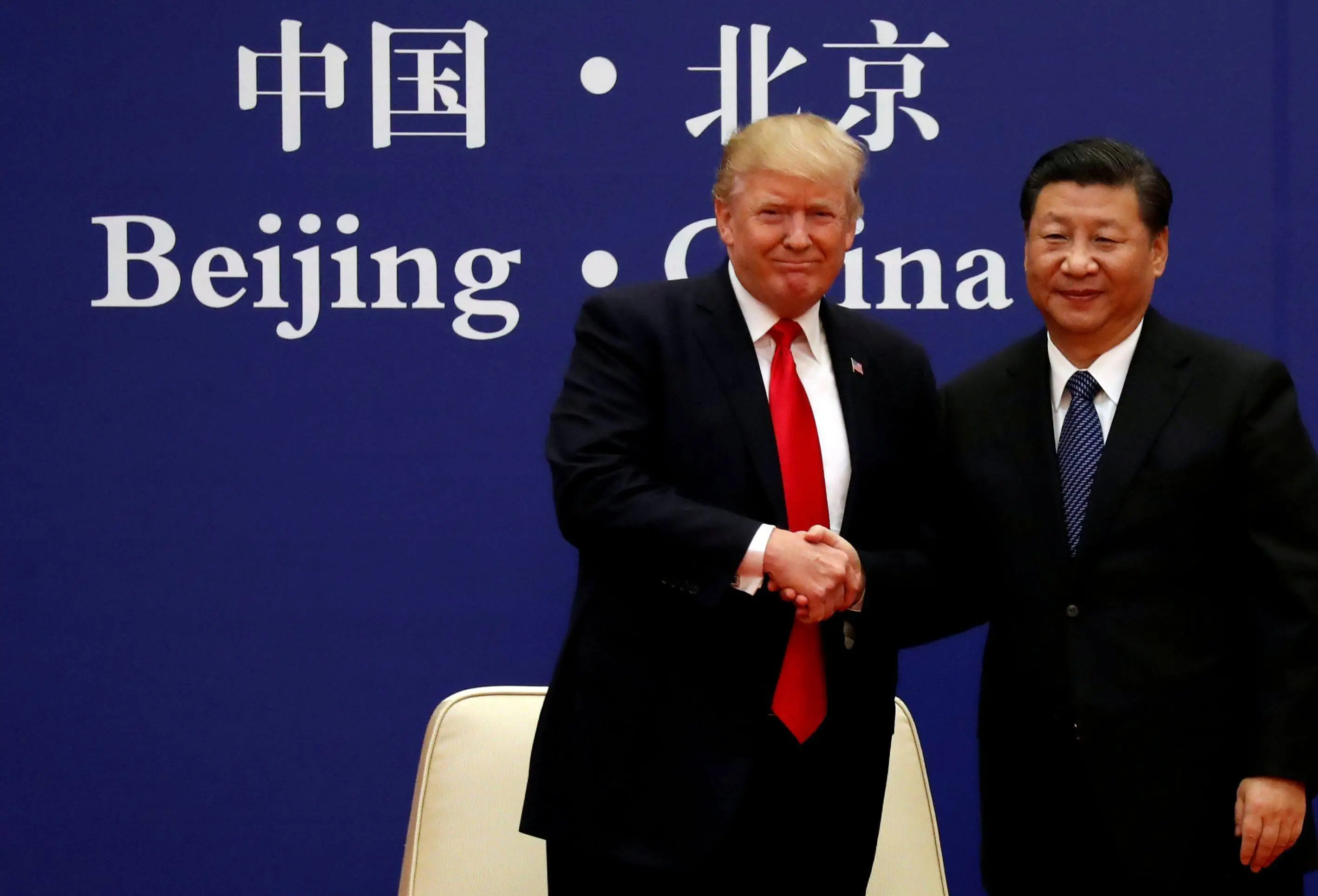
The Summit Dates between the US President Trump and Chinese President Xi still needs to be finalized, delegates from both the side stated. The Wall Street Journal reporters had earlier mentioned the summit date to be on March 27 so as to end the trade war.

Sources say that China has presented that it will reduce the tariffs on Chemical, US farm, auto and other US products. Few sources also say that China may purchase natural gas of worth 18 billion dollars and also promises to speed up the process of withdrawing foreign ownership limitations on ventures namely Auto industries and to decrease the tariffs on imported vehicles by less than 15 percent, Wall Street Journal reports suggest.

Meanwhile, Trump along with his Economic team members have given a positive signal of reaching out a deal and sealing it. Earlier, Trump had extended the plan of increasing the tariff hike on Chinese goods that was supposed to take place on March 1.

On Friday, citing the delay over the tariff hike, US President had mentioned Beijing to remove all tariffs immediately that are levied against the US agriculture products.

The U.S and Chinese delegates are regularly in touch with each other through phone or video conference to strike the details of the deal.

However, the Trump administration is pressurizing China to approve the enforcement mechanism so that if China fails to keep its promise, then the US can immediately impose the tariffs hike on Chinese goods. Trump was accusing China of illegal trade practices for a year now and also delaying the promise of moving the economic power back to the US.

The Chinese delegates have offered to increase the purchases of American goods by around 1.2 trillion dollars for the next 6 years, a person familiar with the negotiation stated. But, it is still not known how Beijing is going to follow it if the tariffs hike will not be lifted along with other trading barriers, the person added further. In 2017, China had purchased around 130 billion dollars of US goods, reports according to the US figure.