Trading News

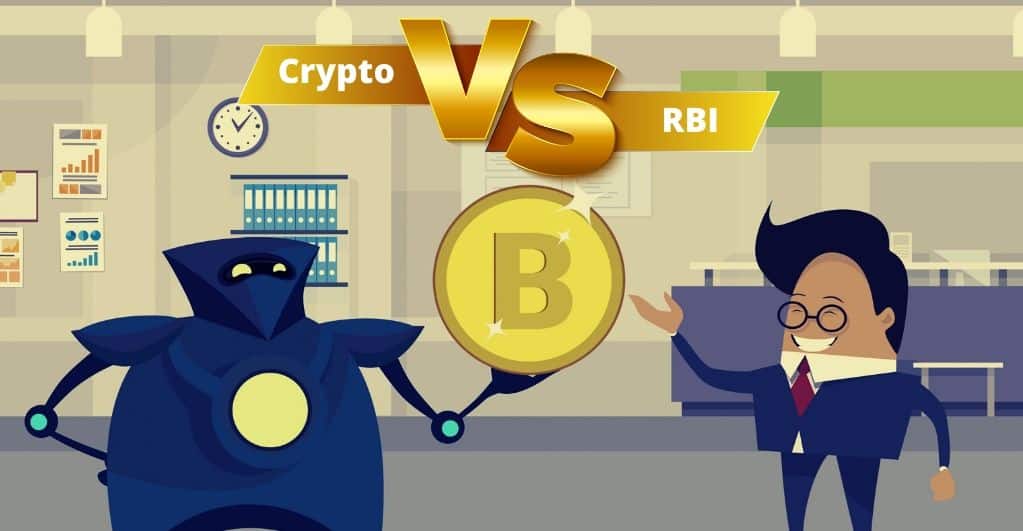
In a recent declaration from the Reserve Bank of India (RBI), it remarked that the citizens of India don’t need cryptocurrencies as the nation’s mainstream financial system had already been working on solutions for cross-border remittances. However, RBI pointed out the legal status of cryptocurrencies in the nation and confirmed that there is no ban on cryptocurrencies.

In RBI’s response to IAMAI’s petition, the bank clarified that the cryptocurrencies are not banned in India; rather, it made it clear that commercial banks and other several regulated financial establishments are prohibited from offering their services to the cryptocurrency business.

The RBI vs crypto hearing has witnessed innumerable happenings in the last few days. You can get a detailed look at what took place inside the court room yesterday.

The RBI also stated that,

The RBI has been able to ring-fence the entities regulated by it from being involved in activities that pose reputational and financial risks along with other legal and operational risks.

It was a response from the Central bank to a petition filed by the Internet and Mobile Association of India (IAMAI), which requested the Central bank to re-evaluate 2018’s circular to refrain from dealing with cryptocurrencies.

The IAMAI members comprise of cryptocurrency exchanges, which had earlier approached the Supreme Court of India against the RBI action. Earlier this month, in a hearing, the association put forward that banning the trading of cryptocurrencies with the absence of law was a legal business activity; yet, RBI had efficiently banned it by obstructing the access to banking channels.

Further, the RBI had highlighted a few risks, which included money laundering and terror financing by using cryptocurrencies. The supporters of crypto had argued that cryptocurrencies open up the financial sector, which creates a more comprehensive ecosystem. Few of them suggest that payments using cryptocurrencies are much faster and cheaper than mainstream counterparts.

As far as RBI is concerned, cryptocurrencies raise money laundering threats and may finance terrorist attacks explaining,

Any possible avenues which facilitate anonymous cross-border fund transfer have to be acted upon swiftly and stringently dealt with. It is an admitted fact that VCs have been used to purchase illegal and illicit goods ranging from guns and ammunition to drugs.

The Response from RBI also disclosed that, during the discussions earlier in 2018 with the government on whether to regulate or ban cryptocurrencies, the RBI stated that ICOs are prohibited and asset funds in virtual currency are not allowed to operate or set up within the Indian Jurisdiction.

As per legal experts, the viewpoint on crypto trade might pose a risk to sovereignty could be a weak point if not attested with few examples of using virtual currencies to fund terror attacks in the past.

After looking at the developments throughout the day, CryptonewsZ reported that RBI had not done good research before announcing its anti-crypto directive.

News

India is undergoing a revolutionary wave of technology. It seems adamant to catch up on the technological fronts with the developed nations like the United States. Users want the quickest of services with super speed internets and network capabilities. 5G has already been planned to set up in a number of cities in the country.

TRAI chief, Ram Sevak Sharma, also shares the same opinion. On Tuesday this week, he said in a statement that India will not be behind on the technology graph after the on-time inauguration of the fifth-gen network or 5G network. The Telecom Regulatory Authority of India chairman thinks India has become the pioneer of advanced and innovative technologies.

Now, we have come to a stage where technology develops in India first. With 5G, we will no longer remain behind the technology curve,

said the chief at the Telecom Summit 2020 conducted by the Ph.D. Chamber of Commerce and Industry and TEMA, the Telecom Equipment Manufacturers Association.

He also highlighted certain fundamental features of this next-gen 5G technology that included, highest throughputs, zero-latency communications, and huge machine-to-machine interaction.

He also emphasized certain challenges that exist in the widespread implementation of the technology, which includes limited funds. Also, deploying the 5 gen networks will require low fiber backhaul, which looks quite limited currently.

There are less than a third of mobile towers connected to fiber backhaul when compared to China that has more than 80% connected. The telecom sector should not be considered as a money-making machine for local bodies,

Sharma said.

He went on stating that telecom must be perceived as a vital area of services to the citizens and therefore, certain issues like the Right-of-Way or RoW must be catered to. And it will be only a matter of time Indians will be leveraging the lightning speed networks effortlessly.

Company News

Amid the ongoing trade war prevailing between the US and China, Taiwanese Apple partner Pegatron has decided to set up its production base in Vietnam, claimed recent reports. The world’s two largest economies are locked in a severe trade war and it has already begun showing an impact on electronic companies.

With this move, Pegatron will emerge as the latest Apple assembly partner to make its presence felt in Vietnam as many companies are striving to diversify beyond China, according to highly placed sources. Due to the current tussle between the two countries, companies are exploring alternatives to China so that they can evade US tariffs.

According to the latest developments, the Taipei listed Pegatron has also rented a base in the Haiphong’s northern city where it is expected to make styluses for Samsung Electronic’s smartphones, claimed people familiar with the matter.

Apart from Pegatron, two separate leading iPhone assemblers, known as Wistron and Hon Hai Precision Industry, have also chalked out plans to develop manufacturing facilities or establishing additional capacity in Vietnam. As of now, all three companies are not making iPhones in Vietnam and there are no forthcoming plans as well, as per finance news today.

It is interesting to note that GoerTek has begun to make AirPods in Vietnam. Meanwhile, two more assembly partners of Apple, known as Compal Electronics and Luxshare Precision Industry, have already made their presence felt in the country.

According to reports, the nearly two-year-long battle in trade between the US and China put a huge dent on the image of China. However, a few days back, Beijing and Washington inked a phase one trade pact but a broadening of the supply chain is important in the long run as labor costs have begun to surge in China.

Company News

The Japan-based global payment network operator JCB Co., Ltd. and blockchain technology provider, Keychain, today signed a strategic agreement. The companies announced that they are going to collaborate to leverage the power of blockchain in the payments space.

Keychain has developed its range of services in the blockchain space considerably and some of its services include customization of digital assets as well as settlements. The main product is the solution accelerator and helps its clients to build new applications.

JCB, which has grown into a sizeable payments company, will try to bolster its cybersecurity, as well as the integrity of its operations by using services from Keychain. On the other hand, JCB will also leverage Keychain’s expertise with blockchain technology to provide its customers with new ways of making payments. Either of the two companies didn’t mention the financial details of the deal.

Company News

Multinational chemical firm BASF will sell its subsidiary BASF Construction Chemicals to an affiliate of global private equity fund Lone Star for euro 3.17 billion on a cash and debt-free basis.

The deal will be completed by Q3 of 2020, subject to approval from relevant authorities.

Member of Board of Executive Directors BASF SE Saori Dubourg said,

Under the umbrella of Lone Star, the Construction Chemicals team can focus on a growth path with an industry-specific approach.

The BASF Construction Chemicals business operates production sites and sales offices in 60 countries and employs over 7000 people. It generated sales of euro 2.5bn in 2018.

Lone Star President of Europe Donald Quintin said that the BASF Construction Chemical business fit into their overall strategy and would complement their other investments in the construction materials sector.

Praising the quality manpower at BASF, Quintin said,

We highly value the industry-wide recognized knowledge and competence of BASF’s Construction Chemicals experts, backed by a strong track record in innovative products and a compelling R&D pipeline. We look forward to jointly pursuing a growth-oriented business approach.

In India, the BASF Construction Chemicals business is merged with the surface technologies sector. It generated sales of INR 484 crore in 2018–2019.

Company News

The sanctions in the United States have made Chinese telecom giant Huawei look at South Korea for its rising demand for telecom and smartphone equipment. The company has also vowed to raise its investments in South Korea, according to the head of global media and communications at the company Karl Song Kai.

Huawei is the world’s second-biggest smartphone manufacturer and number 1 when it comes to telecom equipment. However, US sanctions have disrupted its operations considerably. The company announced that it is going to bump up its purchases from South Korea to $11.1 billion this year from $10.6 billion in 2018.

Karl Song Kai stated,

As (the) U.S. (is) getting close-minded, I believe this is an opportunity for other countries such as South Korea. In 2020, we’ll buy more Korean-made products and invest more in South Korea.

While Huawei has been banned from the United States, additional sanctions barred American companies from selling chips and other materials.

Hence, Huawei has found it increasingly more logical to source those products from South Korea. Other than South Korea, vendors from many other nations have also been roped in by the company. The head of the company’s operations in South Korea, Shawn Meng, stated that the country is one of the most important markets for Huawei.

Company News

The U.S. Missile Defense Agency, Pentagon, has taken note of the advances made by Russia and China in hypersonic missiles technology. Accordingly, it is developing a space sensor system to intercept hypersonic missiles in the air.

The US aims to develop space sensor technology for tracking incoming hypersonic missiles. This technology is called Hypersonic Ballistic Missile Tracking Space Sensor (HBTSS).

The US Missile Agency is currently testing Phase IIa of HBTSS.

According to Missile Defence Agency spokeswoman Maria Njoku, the HBTSS will be integrated with the National Space Defence Architecture, which deploys different systems in different orbits to detect and track conventional ballistic missiles as well as other threats like ICBMs.

Explaining how HBTSS will work, Njoku said,

HBTSS will be a network of sensors on a constellation of satellites in orbit around the Earth with the ability to observe global threats without the line of site limitations of ground-based radars.

The Missile Defence Agency has also awarded Phase II development projects for HBTSS to L3Harris, Raytheon, Northrop Grumman, and Leidos.

The main difference in intercepting ballistic missiles and ICBMs compared to hypersonic missiles is the response time. ICBMs allow a response time of 20 minutes, which allows firing of 1 or 2 interceptors.

Hypersonic missiles travel at five times the speed of sound and can be maneuvered in flight to travel close to the earth to escape radar detection. Added to this is the fact that they can be fired from mobile launchers or warships.

Hypersonic missiles are of two types, the Hypersonic Glide Missiles (HGV) and the Hypersonic Cruise Missiles (HCM). HGVs are carried by rockets and released 40-50 km above the earth. HCMs have engines mounted on them and are released 20-30 km above the ground.

The radars deployed today do not have the range to detect incoming hypersonic missiles in time to launch interceptors to destroy them. The radar systems require airborne sensor node to extend their range. By the time you detect an incoming missile, it is already too late. Detection is required at the launch itself.

HBTSS is being designed to detect and continuously track hypersonic threats with a single sensor payload. It will give time to military commanders on the ground to take countermeasures to destroy the missiles in the air.

Trading News

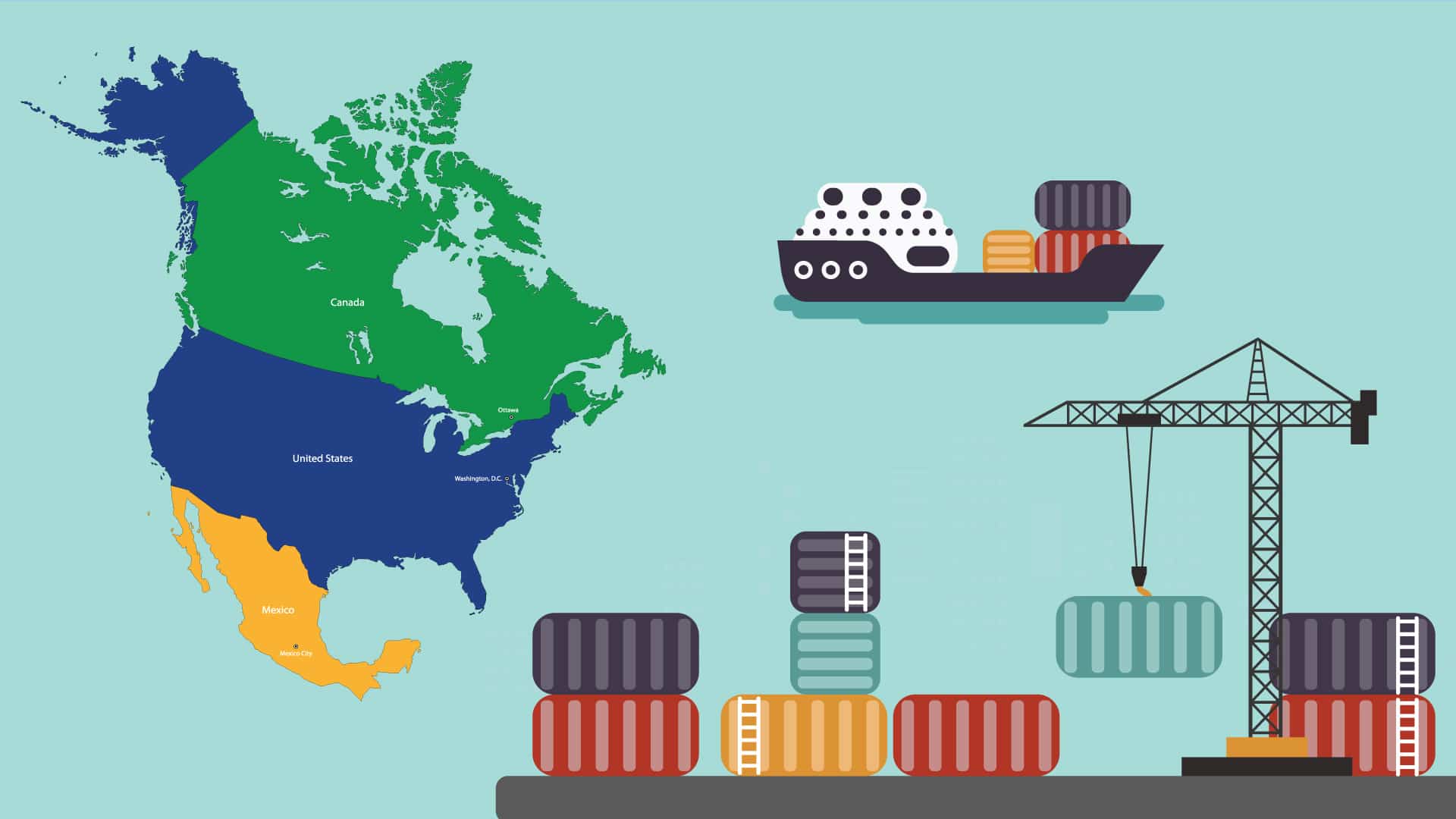
The Senate in Mexico has passed the US-Mexico-Canada Agreement (USMCA) trade deal by an overwhelming majority of 107-1.

Mexican President Andres Manuel Lopez Obrador said,

In Mexico, we did our part. The executive (branch) signed and the Senate ratified the USMCA. Now it is up to the Congress of the United States and Canada to do the same. This is good news.

The USMCA will cover $1.2B in trade every year and support 12 million jobs in the US account for a third of US agricultural exports.

The USMCA replaces the North American Free Trade Agreement (NAFTA). US President Trump had opposed NAFTA and said that it favored Mexico and Canada over Americans. His administration had initiated talks with the two countries to make changes in NAFTA. The result was the USMCA.

The US government had finalized the USMCA last year, but it faced opposition from the Democratic Party and hence, the government began consultations with Democrat leaders in the House to address their concerns.

In a major concession to the Democrats, a clause for a 10-year cap on production of patented biologics was removed and cap on production was retained at eight years in Canada and five years in Mexico. This was done to allow greater control over drug-pricing.

Democrats also secured major concessions in worker rights, including those of migrant workers and preventing gender discrimination at the workplace.

After months of negotiations and getting the House Democrats on Board, the three governments of the US, Mexico, and Canada finally signed the USMCA on Tuesday. The US and Canada are likely to take up the Bill in early 2020.

Mexico’s chief negotiator Seade urged the US and Canada to pass USMCA quickly for better jobs and living standards in the region.

Company News

Amazon has termed the claims made by consulting firm ShipMatrix “inaccurate.” ShipMatrix claims that Amazon’s on-time delivery rates had fallen to 93.7% in the week ending December 7 compared to 98.2% during the previous week, which also included Thanksgiving.

Amazon spokeswoman Rena Lunak admitted that some deliveries were delayed due to bad weather but asserted that the company had regained control of the situation.

The on-time delivery rate for Amazon van drivers is important because they account for the major chunk of deliveries of Amazon products.

Amazon charges its Prime users $119 per year with free delivery within 1 or 2 days. It said in April that it would spend $800M to cut delivery times from 2 days to 1 for them. Its network of van drivers is expected to deliver 275M packages this year between Thanksgiving and Christmas, which is double that in 2018. Analysts have warned that Amazon’s delivery times leave very little room for error and failure to meet the deadlines.

ShipMatrix President Satish Jindel has pointed out that other carriers like UPS, FedEx transfer Amazon products by air over long distances, but still, their on-time delivery rates are similar to that of Amazon van drivers. Thus, just bad weather cannot be alone held responsible for the drop in on-time delivery rates. Satish said that as Amazon is a retailer, supplier and delivery firm the company might be facing problems in fulfilling the rush of orders in the festive season. In other words, it may be blaming the weather for covering up its failures in fulfilling orders on time.

Amazon began its involvement in the delivery of goods after a massive upswing in orders in 2013 which had caused a breakdown in its supply chain. This resulted in delayed delivery of products and upset the customers. Amazon’s logistics unit has many warehouses, almost 50 planes on lease and 30,000 delivery vans.

Company News

Leading comparison platform SingSaver has announced that it has secured a brokerage license from Monetary Authority of Singapore (MAS) here on Thursday. Now, after this move it will be able to offer more than 100 insurance policies from 12 providers at its platform.

SingSaver will now provide instant digital comparisons of insurance products in various categories that may include travel, home, and maid. The new broking team of the company will now be able to offer their advice to consumers on insurance.

SingSaver’s new license as an insurance broker is nothing less than a landmark achievement as it will now spread its wings beyond credit cards and personal loans.

Meanwhile, SingSaver.com.sg has been assisting Singaporeans in discovering the correct credit cards, personal loans, along with various other financial products with convenient comparison tools.  It strives to offer the most updated correct data and personal finance guides.

Earlier this year in August, SingSaver’s parent group CompareAsiaGroup secured US$20 million in Series B1 investment. CompareAsiaGroup has the backing of IFC World Bank, Alibaba, Experian, and Goldman Sachs.