Uncategorized

, reflecting a modest dip of about 0.8% from the previous close .

Here’s a well-structured, SEO-optimized, human-like article to explore “NVDA Stock Price | NVIDIA Share Value, Charts & Market Updates”:


Quick Answer

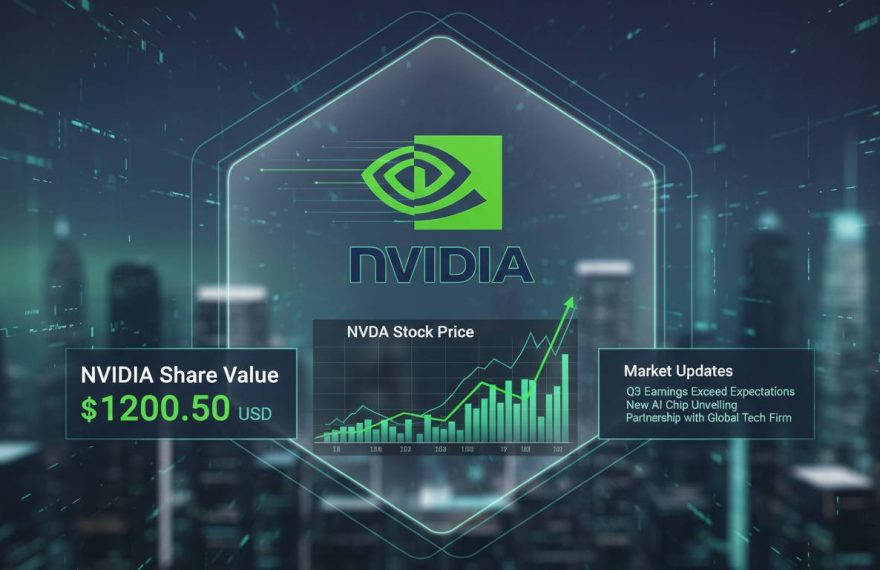
NVDA stock is trading near $188–$189 as of mid-February 2026. The price reflects recent volatility tied to AI-driven demand, upcoming earnings, and broader tech spending trends. There’s been a sharp rally recently, but some caution remains as investors await the next financial results.


NVDA Stock Price Snapshot

Nvidia’s share price opened at about $191, reached a high near $192, and closed around $188.50 on February 10. Trading has been active, with volumes surpassing average levels . After-hours trading shows minor recovery trends, hovering around $189+ .

This price movement reflects both investor excitement and market jitters amid choppy headlines and forward uncertainty.


What’s Driving the Stock Now?

1. AI Capex & Tech Sector Momentum

A key push came from strong capital expenditure by major tech firms—such as Amazon and Alphabet—focused on AI infrastructure, fueling Nvidia’s chip demand. The stock surged nearly 8%, closing at $185.41, before gaining further strength .

2. Analyst Optimism & Fundraising Potential

High-profile analysts raised their 12-month targets—some setting sights on $300, driven by Nvidia’s dominant AI accelerator market share and hefty EPS forecasts . Meanwhile, OpenAI’s potential $100 billion funding round may further benefit Nvidia indirectly .

3. Earnings Anticipation & Market Position

The next earnings release is due February 25. Projections stand around $1.52 EPS and $65.6 billion in revenue . With strong Accumulation/Distribution and EPS ratings, many expect Nvidia to stay resilient .

4. Macro Trends & Competitive Pressures

Investors are balancing optimism with caution. Emerging rivals like Broadcom and AMD pose competitive threats . Meanwhile, memory cost concerns and shifting tech sentiment add pressure .


Trend Overview (Past Few Days)

  • Feb 6–7: Stock leapt nearly 8% to $185.41, amid AI capex momentum .
  • Feb 9–10: Slow consolidation around $188–$190, as markets adjusted .
  • Today, Feb 11: Slight dip to $188.54; investors await earnings signal .

Expert Insight

“Nvidia continues to benefit from surging AI infrastructure demand, but forward-looking capital expenditures and earnings will be critical in sustaining momentum.”

This aligns with commentary from William Blair’s Sebastien Naji and other analysts noting tech spending as a major tailwind for Nvidia .


Charts & Key Metrics at a Glance

  • Current Price: ~$188.50
  • 52-Week Range: ~$86.62 to ~$212.19
  • Market Cap: ~$4.6 trillion
  • Volatility: High beta (~2.1) reflects sensitivity to broader tech sentiment
  • Recent Target Range: Analysts suggest a path to $215–$300 for 2026

What Comes Next?

  • Earnings (Feb 25): This is the key event. Strong performance may extend the rally. Misses could trigger pullbacks.
  • AI Spending Trends: If tech giants reassure on budgets, momentum may hold.
  • Competitive Watch: Reaction to rivals’ moves—Broadcom, AMD—and OpenAI’s funding updates could sway sentiment.

Summary

Nvidia’s NVDA stock hovers near $188–$189, warmed by recent AI spending momentum and bullish analyst sentiment. Strong upcoming earnings and continued data center demand may drive further gains. But caution remains—competitive dynamics and macro shifts could introduce volatility.


FAQs

What’s the current NVDA stock price?

It trades around $188–$189 as of mid-February 2026, after a recent rally and slight pullback .

Why did Nvidia’s stock jump?

Heavy AI infrastructure spending from companies like Amazon and Alphabet, plus investor anticipation ahead of earnings, drove recent gains .

When is Nvidia’s next earnings report?

Nvidia is set to release Q4 earnings on February 25, 2026, with projections around $1.52 earnings per share and $65.6 billion revenue .

How high are analysts targeting the stock?

Targets vary. Cantor Fitzgerald sees a path to $300, while average estimates range from $215–$230 depending on AI growth scenarios .

Should I be cautious?

Yes. Despite strong fundamentals, risks include competition from Broadcom/AMD and shifting tech investor sentiment .


This snapshot lays out a clear, up-to-date view of NVDA stock—its current level, driving forces, future catalysts, and investor considerations.

Uncategorized

The current Amazon stock price is $206.96, reflecting a slight dip of approximately –0.84 USD (–0.8%) on February 11, 2026. Amazon is navigating a volatile period marked by heavy capital investments, shifts in profitability, and a complex macroeconomic environment.


Market Snapshot and Real-Time Update

Current Price at a Glance

Amazon (NASDAQ: AMZN) is trading near $206.96, marginally underperforming its own recent average yet holding in a $161–$259 annual range. This positions AMZN slightly off from its 52-week high but visibly above its low, suggesting moderate stability amid fluctuations.

Why the Price Matters

Real-time tracking is essential. Investors use AMZN’s movements as a signal for broader tech sentiment and AI-driven infrastructure funding trends. Amazon’s share price isn’t just about retail strength—it’s tightly tied to AWS, ads, and AI infrastructure rollouts.


Key Drivers Affecting Amazon Stock

1. Aggressive AI-CapEx Strategy

Amazon shocked investors with a $200 billion capital expenditure plan for 2026, aimed at AI, robotics, semiconductors, and satellite ventures. The sheer scale spooked markets, with shares dropping between 5.5% and 11% shortly after the announcement amidst cautious sentiment.

CEO Andy Jassy defended the move:

“We’re now double the power capacity that AWS was in 2022, and we’re on track to double again by 2027.”

2. AWS Growth—and Its Margin Impact

Despite macro concerns, AWS remains a significant profit engine—accounting for roughly 60% of operating income, despite comprising a smaller slice of revenue. In Q4 2025, AWS grew 24% year-over-year, beating expectations and aiding Amazon’s overall revenue of $213.4 billion (up 14%)—though operating income guidance came in softer than hoped.

3. Strategic Partnerships and AI Positioning

Amazon isn’t just spending—it’s aligning. AWS struck a multibillion-dollar chip supply deal with STMicroelectronics, securing future semiconductor access and potential equity stakes. Meanwhile, its investment in Anthropic underscores its AI ambitions. These moves reinforce investor confidence in Amazon’s long-term infrastructure leadership.

4. External Pressure & Broad Market Context

Investor reaction also derives from sector volatility. This week’s stock market rally (Dow crossing 50,000) favored chipmakers and stable tech names, while Amazon slid—not on fundamentals but notably on growth concerns tied to its ambitious capex.


Structural Dynamics and Long-Term Outlook

A. High Valuation Reflects Investor Expectations

Amazon currently trades at a premium P/E ratio—ranging between 31x and 34x forward earnings. Analysts remain supportive. For example:
– Citizens reaffirmed a price target of $300 (nearly 45% upside).
– Consensus targets edged close to $289, with some forecasts even more bullish.

B. Retail Restructuring and Workforce Cuts

Amazon has significantly trimmed headcount—about 30,000 corporate roles since late 2025 including closures in Go and Fresh formats—favoring grocery-enhanced delivery and Whole Foods integration. This reflects a leaner direction amid efficiency drives.

C. AI Infrastructure vs. Near-Term Profitability

Heavy AI and logistics investments may dampen immediate margins, but the infrastructure edge could yield meaningful returns in the years ahead. UBS estimates added capex through 2027, resulting in potentially $20 billion in free cash flow by 2028—assuming steady AWS growth.


Summary of Market Sentiment

  • Short-term volatility remains. Shares remain sensitive to guidance and capital spend signals.
  • Long-term prospects hinge on AI capacity payoff. If AWS and infrastructure investments scale as hoped, Amazon could emerge stronger.
  • Valuation justifies cautious optimism. Analysts broadly remain bullish, even as the stock trades at elevated multiples.
  • Strategic partnerships and restructuring enhance credibility. Moves like STMicro and workforce streamlining show Amazon is positioning intentionally.

Conclusion

Amazon’s current share price of $206.96 masks a more complex story. On one hand, frontline earnings beat and AWS momentum underscore its underlying strength. On the other, the enormous capex plan harshly jolted near-term sentiment. The path forward is a balancing act—bearish pressure today, but potential dividends in the next wave of cloud and AI infrastructure growth.

Strategic investors should watch closely how capex translates into margin gains. If AWS continues to scale, and Amazon’s AI infrastructure strengthens, the stock could well match lofty analyst projections. In the meantime, cautious optimism isn’t just warranted—it’s the smart play.


FAQs

What’s driving Amazon’s stock near-term volatility?

The main trigger is Amazon’s $200 billion capital spending plan for 2026—far above past levels. Investor concern over the immediate pressure on profits led to sharp price dips.

How important is AWS to Amazon’s value?

Crucially important. While AWS may represent a smaller portion of overall revenue, it generates around 60% of operating income, making it Amazon’s most profitable segment.

Should investors worry about Amazon’s valuation?

Amazon trades at a premium P/E—roughly 31–34× forward earnings. That’s elevated, but many analysts maintain bullish forecasts up to the $300–$320 range based on AWS and AI potential.

What are Amazon’s major strategic moves right now?

Key moves include cutting workforce post-pandemic, re-focusing retail operations toward grocery delivery, launching AI tools like Bedrock and AgentCore, and securing hardware partnerships—e.g., STMicroelectronics.

Is Amazon a buy at current levels?

It depends. For long-term investors who believe in AI infrastructure scaling, Amazon may offer attractive upside. For more risk-averse investors, the near-term capex pressure could warrant caution.

When could Amazon’s investments start paying off?

Signs could emerge over the next 2–3 years. UBS estimates a potential $20 billion boost in free cash flow by 2028 if execution stays on track.

Uncategorized

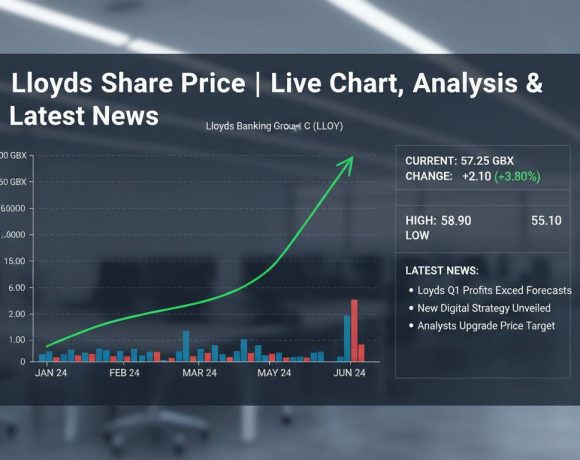
Lloyds share price is currently trading around 106–107 pence, near a two-month high, supported by strong 2025 profits, upgraded 2026 guidance, and a confident buyback program. Despite lingering risks from motor finance provisions, the stock’s trajectory appears grounded in solid fundamentals.


Live Share Price Snapshot

  • As of February 6, 2026, Lloyds closed at 106.75p, reflecting brief intraday highs of 114.60p, a notable rebound from recent dips.
  • Earlier in February, the stock hovered between 105–112p, showing steady momentum.
  • On February 10, however, it slipped 2.33% to £1.03, outperforming some market trends but still tracking about 10% below its 52-week high of £1.15 from February 4.

2025 Performance & 2026 Outlook

2025 stood out for Lloyds with a 12% surge in pre-tax profits to £6.7 billion. Revenue climbed 7% to £18.3 billion, driven by higher net interest and fee-based income.

  • Shareholder returns soared: dividend increased by ~15% and supported by a £1.75 billion buyback.
  • Guidance for 2026 remains upbeat: net interest income expected around £14.9 billion, return on tangible equity (RoTE) projected above 16%.

These results point toward a bank hitting its stride, with operational diversification, AI investments, and digital initiatives anchoring its strategy.


Catalysts Supporting the Share Price

  1. Strong Profit and Diversity Gains
    Diversification into insurance, wealth, and pensions lifted non-lending income by 9%, shielding Lloyds from pure interest income swings.

  2. Aggressive Capital Return Strategy
    Significant buybacks and dividends have buoyed earnings per share and investor confidence.

  3. Operational Momentum and Forward Guidance
    Upgraded forecasts for net interest income and RoTE suggest continued strength ahead.
    Emphasis on digital banking and AI supports future earnings potential.


Key Risks to Monitor

  • Motor Finance Provisions
    Lloyds has earmarked nearly £2 billion for motor finance mis-selling costs over recent years. While this helped quantify the risk, further adjustments could still unsettle the stock.

  • Interest Rate Movement
    Expected rate cuts by the Bank of England may squeeze net interest margins, despite the bank’s hedging strategies.

  • Valuation Stretch
    Analysts warn the current valuation—P/B around 1.2–1.3x—is above historical norms, leaving little margin for error.


Forecasts and Analyst Sentiment

  • Consensus targets range from roughly 99p to 110p, suggesting a moderate upside. Some more bullish scenarios project as much as 15–20% growth.
  • A move past £1 per share would be symbolic—marking a milestone not seen since 2008. Several forecasts suggest it’s within reach if momentum holds.
  • Optimistic views anticipate the share price hitting 110p or more by year-end, backed by consistent returns and recovery narratives.

Summary

Lloyds Banking Group’s share price is in a strong position, buoyed by robust financials, strategic diversification, and shareholder-friendly capital allocation. The stock trades near recent highs (~106–107p), with upside potential if economic conditions remain favorable.

Still, headwinds like lingering provisions, rate cuts, and valuation concerns warrant caution. A sustained push above the £1 level would mark a turning point but is not devoid of risk.


FAQs

What is Lloyds share price today?
Currently trading around 106–107p, near two-month highs, with previous intraday peaks at ~114p.

Why did the share price fall to £1.03 recently?
On February 10, a 2.33% drop was seen during broader market weakness, placing it about 10% below its 52-week high.

What drove Lloyds’ 2025 profit growth?
A 12% profit rise to £6.7 billion was supported by rising interest and fee income, along with diversification into wealth and insurance.

Is Lloyds expected to hit £1 per share?
Many analysts believe the £1 mark is reachable in 2026, with targets ranging from 99p to 110p, depending on economic and operational momentum.

What are the main risks to Lloyds’ share price?
Key risks include motor finance-related charges, potential net interest margin pressure from BoE rate cuts, and a valuation above historical averages.

How is Lloyds rewarding shareholders?
Strong annual results were followed by a 15% dividend increase and a £1.75 billion share buyback to bolster share price and earnings per share.

Uncategorized

PLTR stock price is currently around $139.51, reflecting a recent dip despite strong earnings. The company’s Q4 2025 results showed 70% year-over-year revenue growth, driven by a staggering 137% surge in U.S. commercial revenue, though the stock has pulled back amid broader tech sell-off concerns.


PLTR Stock Snapshot and Current Value

Palantir (ticker: PLTR) trades at approximately $139.51 as of February 11, 2026, with slight intraday decline citeturn0finance0. This positions the stock well below its 52-week high near $190, achieved in August 2025 . Despite pullbacks, the company remains highly valued, backed by aggressive growth in revenue and commercial adoption.


Q4 2025 Performance: Explosive Growth with Robust Margins

Palantir delivered one of its most impressive quarters yet. Q4 2025 total revenue jumped 70% year-over-year to $1.41 billion . The U.S. commercial segment skyrocketed 137%, making up a substantial portion of that growth . Adjusted operating income hit $798 million (57% margin) and adjusted free cash flow reached $791 million (56% margin), placing Palantir among rare software firms that scale profitably at hypergrowth . Adding to this, the “Rule of 40” score—a combined growth and margin metric—stood at an exceptional 127% .


Analyst Sentiment: Mixed Views Reflect High Stakes

Despite strong results, investor reactions have been volatile. The stock recently fell 11% following earnings, as investor caution around AI-led software valuations grew . Similarly, some analysts like Brent Thill (Jefferies) continue to sound bearish, warning that Palantir’s rich valuation leaves it vulnerable amid AI narrative shifts .

On the other hand, bullish voices remain. Daiwa upgraded PLTR to “Buy,” citing its expanding AI contract base and strong 61% projected revenue growth . Dan Ives of Wedbush describes current weakness as a “garage sale” opportunity, assigning a price target near $230, while Bank of America sees the company’s “secret sauce” in agentic AI and forward-deployed engineers as a catalyst toward $215 and projecting $10 billion in commercial sales by 2030 .


Strategic Context: Why Valuation Is So High

Palantir’s valuation sits at the upper echelons of the software space. In August 2025, the stock traded at a staggering 214 times forward earnings, versus the S&P 500 average of 22× . Jefferies emphasized this premium is near double that of peers like CrowdStrike, Snowflake, and Cloudflare . That said, the company’s consistent beats, guidance upgrades, and strong AI integration give supporters confidence in sustained upside.


Hidden Strengths: AI Platform and Commercial Expansion

Palantir’s AI Platform (AIP) continues to drive adoption across industries. Strong contract momentum is evident: Q4 saw record-large deals—61 contracts over $10 million—and U.S. commercial remaining deal value surged 145% year-over-year . Collaborations with firms like Accenture and HD Hyundai, plus initiatives like Chain Reaction and new developer tools, are broadening Palantir’s footprint in sectors such as energy, defense, and manufacturing .


Narrative Snapshot

“Palantir’s Q4 confirms it has crossed into a new phase: hyper-growth in U.S. commercial AI deployments paired with elite margins and cash generation, positioning the company as one of the few enterprise software firms simultaneously scaling revenue, profitability, and strategic relevance in the AI era.”
— Investor Relations takeaway via LinkedIn

This sentiment underscores how rare it is for a tech company to pair explosive growth with such healthy margins—an edge few publicly traded software companies enjoy.


Conclusion

Palantir’s current stock price (~$139.51) reflects short-term investor caution mixed with high expectations. Yet, fundamentally the business shows no signs of slowing. Q4 2025 results—highlighting 70% revenue growth, 137% surge in U.S. commercial revenue, elite margins, and a 127% Rule of 40 score—demonstrate operational strength backed by real, demand-driven adoption of AI solutions. While valuation debates and AI market sentiment will keep volatility alive, long-term bullishness rests on Palantir’s rare combination of scalable growth, profitable margins, and trusted enterprise presence. Strategic watchers may see current weakness as a rare blend of caution and opportunity—provided high multiples align with continued execution.


FAQs

What is Palantir’s current stock price?
Currently around $139.50 as of February 11, 2026, reflecting slight intraday downtrend on top of market-wide tech softness citeturn0finance0.

Why did PLTR stock drop despite strong earnings?
The decline reflects concerns over rich valuation multiples (many analysts cite forward P/E well above market norms) and broader AI/software sector pullback—even amid strong Q4 results and guidance .

How did Palantir perform in Q4 2025?
Q4 2025 revenue rose 70% to $1.41 billion, with U.S. commercial revenue soaring 137%. Adjusted operating margins hit 57%, free cash flow margin 56%, and Rule of 40 score reached 127%. Deal flow was strong with record large contracts .

Are analysts optimistic about Palantir’s future?
Views are mixed. Some, like Daiwa or Bank of America, have raised price targets citing Palantir’s AI edge. Others, including Jefferies, remain cautious given valuation risks and shifts in AI sentiment .

What sets Palantir apart in the AI space?
Its Artificial Intelligence Platform (AIP), forward-deployed engineer model, and deep enterprise/government penetration are key differentiators. Strategic partnerships and toolkits are broadening its commercial addressable market .

Is PLTR a buy now?
That depends on risk tolerance. Bullish investors note current weakness may offer a buying window. More cautious ones point to stretched valuations and potential AI sentiment shifts. Continued execution will be key to maintaining confidence.

Uncategorized

Archer Aviation stock (ACHR) is currently trading around $7.17 as of February 11, 2026. It’s pulled back roughly 20% year-to-date, reflecting both investor caution and heightened volatility in the eVTOL space .


Stock Snapshot & Recent Price Action

Price Overview

– Current trading price is approximately $7.17 .
– The stock has seen a rough start to 2026, with a decline of about 20% year-to-date .

Recent Market Moves

– On February 6–8, it rallied more than 12%, ending around $7.30, driven by speculative trading in small-cap techs .
– Some of that rally looks like a short-lived bounce as investors await tangible progress .


Strategic Footprints & Corporate Developments

Rising From Vision to Execution

Archer is transitioning from aspirations toward actual operations. It’s advancing toward initial revenue and gradually shifting focus from ideas to real delivery .

Partnerships and Acquisitions

  • Defense: In late 2024, partnered with Anduril on hybrid eVTOL for defense .
  • Hubs & Tech: Acquired Hawthorne Airport in LA (planned as eVTOL hub), and snapped up tech from Lilium, Overair, plus IP assets .
  • Global testing: Completed flight testing in UAE and set up a launch edition program with early revenue recognition expected .

These moves bolster both its operational runway and credibility.


Financial & Operational Terrain

Balance Sheet Strength

Archer has a solid liquidity buffer—over $2 billion in cash and equivalents—backed by low debt levels . That gives it resilience in the face of ongoing losses.

Profitability Traction

Still pre-revenue, with widening losses. Q3 2025 net loss was $130M, with GAAP operating expenses near $175M . Free cash flow remains deep in negative territory, though some improvement compared to prior years .

Commercial Visibility

  • Management hinted at revenue recognition in 2026 via the Launch Edition aircraft program .
  • Analysts expect modest 2026 revenue—possibly around $32M, with strong ramp-up potential in 2027 (~$305M) if production scale-up with Stellantis holds pace .

Analyst Sentiment & Forecast Lights

Price Target Range

  • Consensus price target centers near $12.40, suggesting ~70% upside .
  • Broader range spans from a low of $8 to a bullish high of $18 .
  • Zacks estimates average target of $11.61, implying ~30% upside .

Rating Landscape

  • Moderate Buy consensus across analysts .
  • Canaccord Genuity holds a Buy with a $13 target; H.C. Wainwright goes as high as $18; others like Needham and Cantor Fitzgerald align around $10–13 .
  • J.P. Morgan is more cautious with an $8 target .

Key Catalysts and Risks

What Could Drive the Stock Higher

  • FAA certification progress and first deliveries (especially Launch Edition sales in UAE) could unlock revenue momentum.
  • Defense contracts via Anduril partnership could add meaningful cash.
  • Strong cash reserves and acquisitions enhance strategic positioning.

What Keeps Investors Wary

  • No commercial revenue yet; heavy losses persist.
  • Execution risks—from certification delays to production ramp.
  • eVTOL market remains nascent and speculative; success is far from guaranteed.
  • Legal & competitive pressures, including ongoing litigation (e.g., with Joby) .

Concluding Thoughts

Archer Aviation sits at a critical inflection point. Its stock, currently trading around $7.17, has seen significant volatility in early 2026. While its strategic moves and cash position provide a sturdy foundation, the path to meaningful revenue and profit remains fraught with uncertainty. Analysts are divided—some foresee double-digit upside, others urge caution. This is a high-risk, high-reward play best suited for investors with conviction in the future of eVTOL and Archer’s ability to deliver.


FAQs

What is Archer’s current stock price and recent trend?
It’s trading around $7.17 as of February 11, 2026. The stock is down roughly 20% year-to-date, though it briefly rallied over 12% in early February before settling back near current levels.

When might Archer start generating revenue?
Management expects initial revenue from the Launch Edition aircraft in 2026, particularly from UAE operations, marking the shift from prototype to commercial operations.

How strong is Archer’s financial position?
Very strong for a pre-revenue company. They hold over $2 billion in cash, have minimal debt, and recently acquired strategic assets like Hawthorne Airport and patents.

What are analyst targets for ACHR stock?
Targets range widely—from $8 to $18. The consensus sits around $12–13, indicating notable upside if the company executes as planned.

What are the biggest risks investors should know?
Delayed FAA certification, scaling production, continued cash burn, unproven commercial demand, and legal challenges all loom as material execution risks.

Is this stock appropriate for all investors?
No. Archer stock suits investors comfortable with speculative growth plays. It’s a high-risk opportunity that hinges on technology commercialization and regulatory milestones.


This analysis aims to provide clarity without overselling the story. The future looks promising, but the path is anything but certain.

Uncategorized

CDSL’s share price currently trades around ₹1,400 to ₹1,480, showing recent upward movement while still below its 52-week high of ₹1,989. The stock offers modest yields and strong growth fundamentals but comes with a relatively high valuation, calling for cautious optimism.


CDSL Share Price Snapshot

In early February 2026, CDSL shares were between ₹1,366 and ₹1,400 on the NSE—depending on the source—marking modest gains over previous close levels.

Meanwhile, older data from December 2025 placed the price higher around ₹1,479, illustrating recent volatility but overall sideways movement.

As context, the 52-week high stands close to ₹1,989 (achieved in December 2024), while the low hit around ₹1,047 in March 2025.


Technical & Valuation Insights

Strong Bounce, But Valuation Stays Elevated

CDSL has bounced significantly from its March 2025 low of ~₹1,047, climbing over 60% by mid-2025—reflecting renewed optimism despite profit challenges.

Despite that upside, valuation ratios remain rich. Current P/E stands in the 58–65 range, while PB hovers between 15 and 17. These multiples are quite high for the financial services sector, especially given slower growth expectations.

Technical Indicators Signal Momentum

On February 9, 2026, a 20-day moving average crossover—a bullish sign—appeared on the charts, historically followed by average gains of around 4.6% over the next week. This suggests some short-term technical optimism.


Business Fundamentals

Operating Without Debt, Growing Accounts

CDSL continues to shine operationally with zero debt for several years. It outpaces its three-year revenue CAGR—clocking an annual growth rate of around 32% compared to 25% historical-on-average.

As of March 2025, it crossed a landmark of 15.3 crore demat accounts, controlling nearly 79% of the market by account count. Its reach spans nearly the entire country via thousands of distribution points.

Recent Earnings: A Mixed Picture

In Q1 FY26 (ended June 2025), consolidated net profit fell about 24% YoY to ₹102 crore, disappointing investors.

Q2 FY26 (ended September 2025) saw modest recovery: revenue dipped marginally, while PAT slipped around 13.6% YoY to ₹140 crore. Although revenue held steady, earnings remained soft.

Brokerages like JM Financial downgraded CDSL despite some sequential growth in deposition and data services, citing concerns around valuations and lower trading turnover trends.

“Despite strong quarterly growth in certain segments, valuation concerns and falling market turnover weigh heavily on near-term earnings prospects,”—JM Financial analyst commentary.


Strategic Outlook

Catalysts on the Horizon

There are several possible growth drivers that can bolster investor sentiment:

  • Integration with LIC could open new avenues of business and client base.
  • Continued dominance in demat accounts and zero debt profile support long-term stability.

Watch This

However, risks shouldn’t be overlooked:

  • High valuation multiples (P/E, PB) may limit upside without stronger earnings.
  • Declines in trading activity could hinder turnover-based revenue streams.

Conclusion

CDSL’s stock sits at the intersection of sturdy fundamentals and lofty valuation. Its leadership in depository services, growing account base, and debt-free balance sheet provides a solid foundation. Yet, recent earnings softness and high multiples warrant caution.

In short: expect sideways-to-modest upside over the short term, but keep a close watch on growth catalysts and market sentiment shifts that could tilt momentum.


FAQs

What’s the current price range for CDSL?

Shares trade around ₹1,366 to ₹1,400 in early February 2026. Recently, prices fluctuated between ₹1,300–1,480 depending on market sources and timing.

How has CDSL performed recently?

The stock rebounded over 60% from its March 2025 low (~₹1,047), though it remains below its ₹1,989 peak.

Is CDSL overvalued?

Valuation ratios remain high—P/E in the 58–65 range and P/B around 15–17—making the stock rich compared to peers.

What are the main strengths of CDSL?

Key advantages include a debt-free operating model, strong market share in demat accounts (nearly 79%), and a robust revenue growth outpacing historical averages.

Why did analysts downgrade CDSL?

Despite some QoQ segment growth, analysts flagged high valuation and slowing trading turnover as risks that could hamper earnings.

Forex News

Singapore’s forex trading market has grown incredibly over the past few years. It is the largest fx trading center in the Asia Pacific and the third largest, following New York and London. Statistics show Singapore’s share in global FX volume rose from  7.7% in April 2019 to 9.5% in April 2022. Moreover, there is a 45% hike seen in fx average daily trading volumes from April 2019 to April 2022 as it reached US$929 billion. Currently, the fx sector of Singapore trades above $0.5 trillion every day, having a considerable impact on the global market. Continue reading to know more about how Singapore’s trading market contributes to the global financial market.

Singapore’s Forex Market: Overview

Despite the high volatility in currency markets following rate hikes by the US Federal Reserve and other central banks in 2022, the Singapore dollar stood stable, keeping faith among forex traders of Singapore. Currently, it continues to be the best-performing currency in the region. Market experts speculate this currency will further strengthen this year. 

The Monetary Authority of Singapore (MAS) is Singapore’s Central Bank and financial markets regulatory body. Hence, every the best forex broker in Singapore must follow the norms of MAS for the smooth and progressive function of forex trading in Singapore. 

Singapore has become Asia’s top financial center while ranking third in terms of forex turnover by country and terms of financial secrecy (Tax Justice Network). Along with the growing trade, financial institutions began to develop, and maritime insurance,  trade finance companies, and currency services also grew. 

Singapore is the most significant financial center; the FX trading activity shows a significant increase in volume from investment institutions like insurance houses, hedge funds, and asset managers. With Asian investment flows expected to increase, the fx market has attracted many new regional forex players.

Factors Contributing to Singapore’s Forex Trading Growth 

Singapore FX trading is the best pick for investors looking to add stocks to their portfolios. Singapore has become the favorite trading place for investors and traders. The attraction of more investors and traders is that they can trade over 550 SGX-listed companies here while enjoying low fees and transparent pricing. 

Several more factors contribute to forex trading growth in Singapore, such as geographic location, technological advancement, favorable government policies, and skilled workforce. 

Regulations

Singapore has strict government regulations for all financial institutions. The Monetary Authority of Singapore (MAS) ensures a favorable environment for traders, investors, and other businesses to provide high security, safety, and transparency. The government authorities keep track of smooth functioning and low corruption rates. 

Geographic location

The geographical location of Singapore has played a vital role in its growth. The country’s trading facilities and dedicated banking support are difficult in any other region. Moreover, Singapore’s regulator has joined forces with the financial industry to develop Singapore as an FX trading hub and to expand the FX market infrastructure. 

Technology

Technology advancement has helped increase trading volumes. Trading currency through the online exchange has simplified the trading process and is also time-saving compared to traditional brokers. Online trading platforms have allowed traders to trade from any location at their preferred time. Traders can check the price of currency pairs from their online trading platforms anytime. Many platforms nowadays provide forex signal services to help traders make the right decisions. 

Workforce

Singapore’s regulatory framework ensures that a highly educated and skilled force manages Singapore’s FX market. MAS continuously tried to build a sustainable pipeline of professionals and experts in the financial sector. MAS also takes the initiative by providing training for finance professionals to help them develop their skills. With the help of such programs, MAS aims to provide opportunities for its people to attain technical expertise and global exposure.

Thus, geographical location, strict regulations, strong governance, technological advancement, and skilled workforce have attracted more foreign investors to Singapore’s forex trading. These factors have played a major role in Singapore’s Forex Trading Growth.

Impact of Singapore’s Forex Trading Growth on the Global Market

Singapore’s forex trading growth has contributed to the overall growth in the forex market. As per the Bank for International Settlements (BIS) reports, Singapore alone is responsible for  7.6% of global forex trading volume. Singapore is known to be the third-largest forex trading center in the world, with around a 45% increase recorded in fx average daily trading volumes from April 2019 to April 2022. 

Current statistics show that Singapore’s FX market trades around $0.5 trillion daily, which considerably impacts the global market. Singapore’s forex market growth has also led to growth in market liquidity. More financial institutions and traders are participating in the market, increasing the currency supply for trading. 

Challenges and Future Outlook for Singapore’s Forex Market

Although there are numerous benefits of trading in the Singapore forex market, another side must be understood. There are certain challenges that even the best forex trading platform Singapore is facing.

  • The wide range of forex markets in Singapore provides numerous options to trade. Hence, it gives tough competition among Singapore’s best forex trading platforms. 
  • Singapore’s strict and changing regulatory infrastructure could potentially limit many currency pairs, further limiting the forex trading options.
  • With the increase in trading activity, there is always a risk of hacking or cyber-attacks. This can impact the reliability and number of participants for trading.

However, we can also see a bright future and expect continued growth in the fx market. 

  • The adoption of digital technologies and advanced learning is likely to help sustain Singapore’s leading position in the Asia-Pacific region and also across the world.
  • Singapore’s regulatory environment and location will increase demand for forex trading in Singapore. 

Conclusion

Overall, we can see tremendous growth in forex trading in Singapore in the past two years, making it number one in the Asia Pacific region and the third largest in the world. Advanced technology and the regulatory environment are key factors contributing to growth in the trading market. Certain challenges might affect the percentage of trading volume in the near future. However, there are other factors to deal with such challenges, and the growing interest in forex trading among the people will take forex trading in Singapore to greater heights.

News

Understanding Ripple

The criticism on the valuation of Ripple is mainly focussed on XRP which is the native cryptocurrency of its platform. Many people stated that XRP still has not gained any sort of traction in the market to estimate its real valuation. But the traction of XRP can be estimated because its valuation is calculated as an asset and a channel of the transaction between banks on its platform. The role of XRP in the ecosystem of Ripple has transformed into a critical determinant of its overall valuation of the industry.

What Is Ripple(XRP)?

Ripple (XRP) is one of the reputed cryptocurrencies of the globe which also has strong competitors. The best part is centralized unlike other cryptocurrencies such as ethereum or bitcoin. In fact, cryptocurrency is interlinked with various banks, businesses as well as investment institutions across the world. It is extremely counterproductive as the investors believe that the selling point of cryptocurrency is the external companies as well as its freedom. Cryptocurrency experts are also claiming that it is the main factor behind the success of Ripple. Now to understand the price prediction of Ripple, the most important point to understand what is Ripple XRP is and how is it different from other cryptocurrencies. You can view the complete crypto future details here to know more information.

How Does Ripple Works?

The majority of the banks use the Society for Worldwide Interbank Financial Telecommunications (SWIFT) system for processing international transactions. And this technique is very effective and it also involves operational overhead due to the use of the new technologies. Ripple ails in offering an efficient system for the direct money transfer which settles in real-time. When it comes to traditional money transfers, investors should interact with one another to figure out how to coordinate numerous systems and determine whether or not they are compatible. However, with Ripple, you may connect it and construct a worldwide network while adhering to the norms and standards. Not only that, but you may communicate with people in a more clear and straightforward manner. Furthermore, because there are several systems involved, traditional financial institutions may take a few days to complete transactions. This will make the current environment sluggish, costly, and error-prone, perhaps harming the ecology. RippleNet now has On-Demand Liquidity, which helps to eliminate the need for pre-funding for cross-border transactions.

What is Ripple vs. Bitcoin?

Ripple is a private company that aims to develop the cryptocurrency XRP as well as the RippleNet network. Another thing to be noted is that it is a cryptocurrency as well as a payment settlement system. Bitcoin on the other hand is a blockchain-oriented technology. Now we will be discussing the key differences between ripple and bitcoin.

Transaction Speed

Ripple mainly provides a cheap and fast transaction by allowing the high-speed exchange of currencies, low cost, and payment settlements. On the other hand, Bitcoin acts as a decentralized digital currency that focuses on the resistance to centralization and censorship.

Supply

The total supply of Ripple is 100 billion XRP among which more than 45 billion are currently circulating in the market. And the supply of Bitcoin is 21 million out of which over 18 million is in circulation.

Technologies

The bitcoin network depends on blockchain technology which is a shared public ledger that includes all the confirmed transactions as well as the mining concept for validating transactions. Ripple on the other hand makes use of the consensus ledger.

Will Ripple’s Price Go Up?

The Ripples plays a similar role to that of U.S. dollars in the international market. Its current price is $0.831 as well as a market cap of $39.337 billion. This makes XRP the 8th largest cryptocurrency in the globe. According to the latest forecast, the Ripple price is estimated to reach $2.5778 at the end of 2022. For a long-term xrp forecast you can get more details here.

Experts Talk About XRP Price Prediction

The price of XRP is going to rise high in 2022 and could touch $2.054 as per the WalletInvestor. But in the end, it can also decline to $0.56 at the end of the year as the Economy Forecast Agency. The highest price of the Ripple XRP is predicted to reach $12 by PrimeXBT.

Conclusion

The technology trend has altered dramatically in terms of convenience and speed, and information is now going all over the world. However, money transfers have proven difficult, as has the changeover to email form letters. In terms of value transfer, cryptocurrency has seen substantial development. Crypto, on the other hand, when viewed in a larger sense, lacks interoperability with traditional money systems. Ripple’s major purpose is to smoothen and speed up money transfers by utilizing blockchain technology.

Stocks

On Tuesday, Cathie Wood-led Ark Invest reduced its holdings in Coinbase Global Inc, marking the Cryptocurrency exchange company’s stock’s second straight day of selling.

The prominent money management business sold 5,855 shares in Coinbase via the Ark Innovation ETF, valued at $1.46 million. On Tuesday, shares of the Cryptocurrency exchange finished 2.80%, down at $249.33 a share. Since its spectacular NASDAQ debut in mid-April, Coinbase shares have dropped approximately 24%.

Bitcoin is up by 10.31% this week and is trading at $56,382. While Dogecoin is down by 7.99%, it has experienced increased trading activity, contributing to Coinbase’s income. Shiba Inu, a meme coin, is up 52 percent this week and is attracting a lot of attention.

The Ark Next Generation Internet ETF and the Ark Next Generation Internet ETF are two additional Ark exchange-traded funds that own Coinbase stock.

Before Tuesday’s transactions, the three ETFs had 6.27 million shares in Coinbase, valued at roughly $1.60 billion.

Some more key trading happened for Ark

PayPal Holdings Inc. was sold for 26,901 shares, valued at $6.88 million. The payments company’s stock ended the day 0.31 percent down at $255.85 per share.

Wood’s primary investment technique is to buy on the low end of the market. Her funds were purchased in the short-term losses in Bitcoin, Zoo, Ginkgo Bioworks, and Peloton after it was hammered by a short-seller at various points this year. She believes Bitcoin will reach $500,000 in the next five years.

Coinbase stock is also held by two additional funds, the Ark Next Generation Internet ETF and the Ark FinTech Innovation ETF. All three companies own 6.3 million shares worth around $1.6 billion. In April, the crypto exchange began trading on the NASDAQ.

On Monday, the Ark Innovation ETF added Teledoc, Intellia, and Crispr Therapeutics to its holdings. The company sold around 16,000 shares in BYD, a Chinese electric car firm backed by Warren Buffett.

Forex News

Contracts for Difference (CFDs) are arrangements made in financial derivatives trading. The difference in the settlements between an open trade price and a closing trading price is cash-settled; no delivery of securities or physical goods occurs with CFDs. Traded directly with a broker instead of the market, CFDs allow buying and selling of underlying instruments at a future point but at a rate stipulated today. So, be very careful while trading CFDs. This article will discuss how to make a trading plan for trading CFDs, the tips to become a successful CFD trader, and how to find the best CFD broker. 

How to Build a Trading Plan for CFDs? 

The goal of CFD trading is to close positions with profits. To do this, you need a plan. Since CFD trading is leveraged, a good CFD trading plan is vital to have. Once individuals know about the advantages of CFDs trading, they wish to get started right away. But resist the temptation and spend time considering how you will approach and handle your CFD trades before putting your capital at risk. To build a CFDs trading plan, consider the following: 

Your Strategy: Create a strategy that you can use again and again. Without proper planning and trading strategy, you would find it hard to find out what happened because of good management and what happened with your luck. 

Entry Point: You should find out which trades you want and what circumstances will activate an entry in a position. Ensure that you do not change reasons for entering a trade after entering it. After you begin doing it, you can explain getting into a trade by changing the reason around. 

Exit Point: You should know where you’ll exit a position. Also, make out how much risk you can take before placing a trade. Although you cannot tell your exit point always, you should be clear with the conditions that should be satisfied to exit a trade.  

Record-Keeping: Be clear about keeping a track record of all your trades. With proper record-keeping, you can look back and find out things you need to change. 

Tips to Trade CFDs Successfully 

If you want to bolster your profits while trading CFDs, you should consider the best tips given by the experts. Learn from the mistakes of top traders and avoid falling into expensive pitfalls. 

Maintain a Journal

Keep a journal to write descriptions of your crushes for entry/exit points, position size, price, and more. It will be your trading book to look back at your mistakes. A CFD trading journal is often overlooked, but its use can be invaluable. By maintaining a CFD trading journal, you can identify patterns, streamline strategies, and look at your emotions while trading. A good CFD journal should include: 

  • The instrument
  • Reasons for a trade, news-based, technical, and more
  • The time of entering/exiting a trade
  • Was it a loss or profit?
  • Your learnings from the trade
  • Review of the trade performance

Control Your Leverage 

If you make the right trade, leverage can be your biggest asset. If you are winning, you are attracted to boost your position size. But there is a possibility of loss as well. You have to be smart. No one wants the stress and margin calls that come with huge losses. To begin with, you should start small. As your money grows, you can increase your leverage slowly.

Education

The best traders and investors don’t stop learning. Stay updated with the market developments while perfecting and practicing CFD trading strategies. You can also learn from successful traders. For this, you can use many resources like courses, blogs, forums, PDFs, videos, eBooks, and more. 

Use Stops 

If used correctly, stops can help minimize your losses and keep you longer in the game. Every trade you make should have a clear stop. Ensure to outline a CFD stop out of the market hours and religiously stick to it. It will help you predict maximum losses. 

Demo Accounts 

Once you have done your research and got the capital for trading, it is hard to resist trading. Test your strategies using a demo account. Most brokers these days offer practice accounts. These accounts have virtual money. It makes them the best place to try their trading strategies and make mistakes before investing real money. Demo accounts are also an efficient way to try a broker’s CFD trading platform. With them, you can ensure that the broker has all the analysis and charting tools a trading plan needs. 

How to Choose a CFD Trading Broker? 

To assist you in the broker selection procedure, here is a guide of main factors that you should look at while selecting a CFD trading broker: 

Regulations: This is the first thing to look at when choosing a CFD broker. A good broker should be regulated by competent regulated agencies. For example, you must select the best Australian forex brokers regulated by ASIC if you are from the Australian region. By working with regulated brokers, you get the guarantee that the broker meets the standards imposed by regulatory bodies. 

Trading Software and Platform: You should make sure that a trading platform is reliable. Most brokers offer traders many trading platforms to select from. A good broker has many trading platforms and the best software. The vital features of a trading platform include: 

  • Risk management tools
  • 1-click trading
  • Wide variety of technical indicators
  • Complete charting package

Customer Services: Most new traders forget to consider customer services while choosing a broker. They don’t realize that customer services play an essential role in their trading experience. Irrespective of how knowledgeable or experienced a trader is, there is a time when help is needed. Check whether the broker has different ways to contact their customer support. 

Account types: Most CFD brokers offer traders a range of trading accounts that cater to different types of traders. They generally include – a Micro account, a mini account, and a standard account. With both the mini and micro accounts, a low initial investment is needed to start trading. However, with a standard account, the minimum investment amount may differ from one broker to another. You should choose a trading account that best suits your investment capital. 

Conclusion

Trading CFD is less risky as compared to other instruments. Still, it can be quite challenging to create and implement a profitable strategy while trading. If you wish to become a successful and profitable CFD trader, you’ll need to use various educational resources and follow the above tips. 

However, now you have learned how to build a trading plan for CFDs, you also need to start with a good platform for it, check out the Review of CMC Markets and understand it in detail, and start exploring your strategies with it and earn huge profit.